
What Are the Best Giant Lanterns for Events in 2026?
In 2026, giant lanterns can turn an ordinary event space into a vivid destination. Picture a glowing dragon above a festival entrance, oversized flowers along a garden path, or softly lit spheres reflected in a pool. The best choice depends on more than size. It should suit the event’s theme, audience, venue, and budget.
This guide compares popular options, including custom-shaped lanterns, traditional-style designs, and illuminated arches. It also considers practical details: indoor or outdoor use, lighting effects, materials, installation needs, and how each design appears after dark. A lantern that looks impressive in a product photo may feel overwhelming in a low-ceilinged hall. Scale matters. So does the viewing distance.
There is no perfect choice. A large centerpiece may draw attention but leave less room for guests, while several smaller pieces can create a more balanced route through the venue. That trade-off is easy to overlook. Before booking, ask suppliers for actual dimensions, recent event photos, setup requirements, and care guidance. These details help planners judge quality beyond polished promotional images. The recommendations ahead are intended to make comparison easier, not promise that one design will fit every occasion. A little uncertainty is useful; the right lantern should look striking and work well in its real setting.
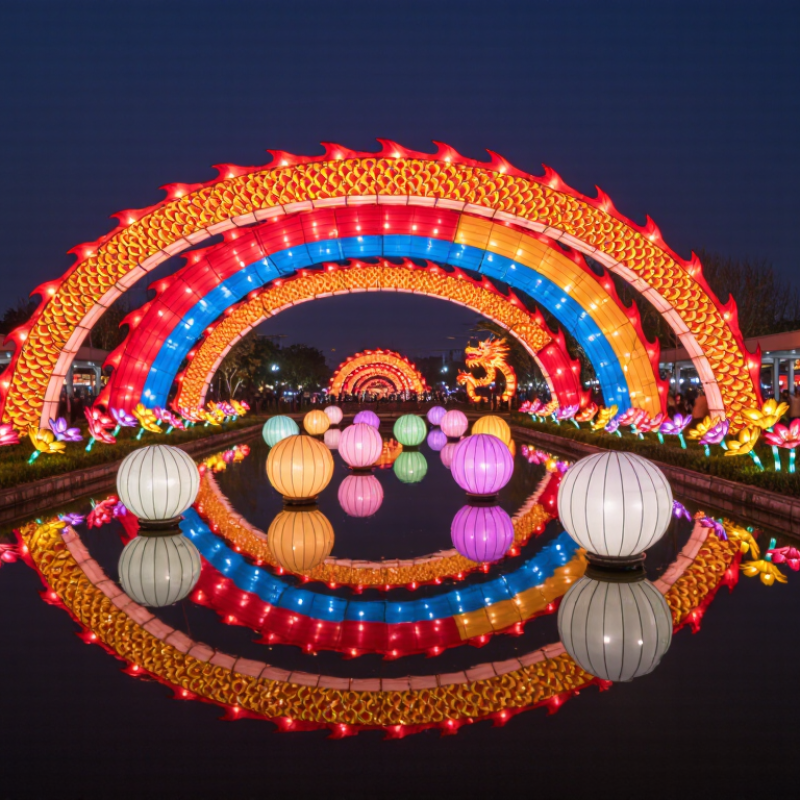
What Giant Lanterns Are and How Events Use Them
Giant lanterns are oversized illuminated forms built around lightweight frames, often covered with fabric, paper, or other translucent material. Internal lighting makes their shapes visible after dusk. Some stand several metres tall; others hang above walkways or move as part of a parade. Their scale gives a venue a clear visual landmark, even when guests are spread across a large outdoor space.
Events use giant lanterns to shape how people move and gather. A glowing arch can mark an entrance, while smaller clusters can guide visitors through a garden path. At a festival, a lantern may become a meeting point or a backdrop for photographs. The details matter: warm light softens a courtyard, while brighter colours show up better against a dark stage. Keep it simple. Too many large pieces can block sightlines or make a space feel crowded.
Good planning starts with the site, not the lantern. Check ceiling height, ground conditions, wind exposure, power access, and the distance guests will stand from the structure. Ask the event crew to confirm stable anchoring, suitable lighting equipment, and materials appropriate for the venue. A design that looks effortless in a rendering may need extra support outdoors. That part is easy to underestimate. A small test setup can reveal awkward shadows, dim corners, or cables crossing a busy route before guests arrive.
Major Types of Giant Lanterns for Different Event Settings
What Are the Best Giant Lanterns for Events in 2026?
Major Types of Giant Lanterns for Different Event Settings
The right giant lantern depends on how guests move through a space. Walk-through arches and illuminated tunnels suit entrance paths, winter markets, and garden trails. They create a clear visual moment. Freestanding animal, flower, or abstract lanterns work well in plazas and exhibition halls, where visitors can view them from several angles. Suspended lantern canopies add atmosphere to covered dining areas, but need suitable rigging and enough ceiling clearance.
For parades and processions, lightweight mobile lanterns are easier to carry than large fixed sculptures. Courtyards can accommodate oversized centerpiece forms, while narrow walkways usually benefit from smaller, repeated displays. Keep it simple. A striking shape can still feel awkward if it blocks circulation or hides signs. Check wind exposure, power access, setup time, and the route used to move each piece into position.
Lighting choices affect operating needs, too. The U.S. Department of Energy’s Energy Saver guidance says LEDs use at least 75% less energy than incandescent lighting and can last up to 25 times longer. These figures compare lamp types; actual savings depend on the lantern’s design and usage. Ask for fixture wattage and weather ratings, then test the lantern after dark. Colors may look different in person.
How Lantern Design, Materials, and Lighting Affect Performance
For giant lanterns in 2026, design is more than appearance. A broad, sculpted silhouette can read clearly across a plaza, but deep folds may hide light and collect rain. Choose frame and covering materials for the actual venue: lightweight fabric eases installation, while reinforced seams and stable supports help in breezy conditions. Check how the material diffuses light before production. A small sample test can reveal harsh hotspots that drawings miss.
Lighting affects energy use, heat, and visual comfort. The U.S. Department of Energy’s Energy Saver guidance says LEDs use at least 75% less energy and last up to 25 times longer than incandescent lighting. That makes LEDs a practical choice for long event hours, though output and color still matter. Match brightness to viewing distance; excessive intensity can wash out fine details. The International Energy Agency has reported that lighting accounts for roughly 15% of global electricity use, a reminder that efficiency matters beyond one installation. Still, efficiency alone does not guarantee a beautiful result. Warm-white LEDs can make translucent fabric feel inviting, while cooler tones may flatten its texture. Test the lantern at night, from the audience’s viewpoint. Small adjustments matter.
How to Choose the Best Giant Lantern for an Event
Choosing a giant lantern starts with the event space, not the catalog photo. Measure the ceiling height, doorways, and clear floor area before comparing designs. A lantern that looks dramatic online may block sightlines or feel cramped beside a stage. For outdoor events, consider wind exposure and how securely the structure can be anchored. Check the maker’s setup instructions and ask who is responsible for installation.
Then match its scale, shape, and light output to the event’s purpose. A tall, softly lit lantern can mark an entrance, while several smaller forms may guide guests along a walkway. Ask whether the lighting is adjustable and whether cables can be routed safely away from foot traffic. Confirm the frame and covering suit the expected conditions, and request setup and packing dimensions if storage space is tight. Details matter.
The budget should include delivery, assembly, power, and removal—not just the lantern itself. Request recent event photos, exact measurements, and care instructions before booking. There is no perfect scale. I’d rather leave extra breathing room than discover, during setup, that the centerpiece overwhelms the room.
Safety, Installation, and Emerging Lantern Trends in 2026
For 2026 events, giant lanterns can create a memorable focal point, but size changes the safety plan. Check the frame, fabric, lighting, and anchoring method before installation. Choose materials with documented fire-performance information, and use lighting designed for the setting. Keep lanterns clear of exits, heaters, and overhead hazards. Small details matter.
Before raising a lantern, assess wind exposure, ground conditions, and the expected crowd flow. Secure bases with suitable ballast, not improvised weights, and follow the supplier’s load guidance. Have a qualified crew assemble larger structures and inspect connections, cables, and lighting. Route power leads away from walkways or protect them with proper covers. Leave enough space for maintenance access. Rushed installations happen, and they are worth reconsidering.
Emerging trends include modular frames, repairable components, and programmable low-voltage LEDs that shift color or brightness during an event. Some designs use recycled or reusable fabrics, though durability and fire documentation still need checking. Sensors can adjust lighting to changing conditions, but extra technology also adds setup and testing time. Ask for drawings, weight details, and care instructions before booking. A striking lantern should look good in daylight, too.
What Are the Best Giant Lanterns for Events in 2026? — Safety, Installation, and Emerging Lantern Trends in 2026
| Lantern Type | Indicative Size | Best Event Use | Installation Considerations | Key Safety Checks | 2026 Planning Trend |
|---|---|---|---|---|---|
| Freestanding frame lantern | About 1.5–4 m tall; dimensions vary by design. | Festival entrances, plazas, gardens, and photo areas. | Use a level base and secure the frame using a method approved for the surface and site conditions. Keep exits and accessible routes clear. | Check frame stability, ballast or anchoring, trip hazards, and the venue’s wind limits. Reassess outdoors if weather changes. | Reusable frames with replaceable decorative skins can reduce the need to rebuild the entire display for each event. |
| Suspended lantern cluster | Individual lanterns are often about 0.3–1.5 m across; overall cluster size depends on spacing and ceiling height. | Indoor halls, covered walkways, dining areas, and stage backdrops. | Attach only to suitable structural points. Have a qualified rigger assess load capacity, suspension hardware, and clearance before installation. | Verify suspension points and secondary retention where required by the venue or local rules. Keep lanterns clear of sprinklers, detectors, and hot equipment. | Layered arrangements and programmable LED color are increasingly used to create adaptable scenes without changing the physical installation. |
| Walk-through lantern arch | Commonly designed around a clear opening of roughly 2–3 m high; final dimensions must suit the site and audience. | Entry moments, procession routes, and designated event photo points. | Confirm the clear opening, queue space, accessible circulation, and a stable support plan. Allow access for assembly and inspection. | Avoid sharp edges and exposed cables. Keep the route unobstructed and provide a plan to close the feature if it becomes unstable. | Interactive lighting and motion-responsive effects are options, provided sensors and cables do not create crowd-flow or accessibility hazards. |
| Large illuminated sculpture | Often 3 m or taller; footprint, weight, and support needs are design-specific. | Central festival installations, public squares, and large exhibition spaces. | Plan transport, lifting access, assembly space, and a site-specific foundation or anchoring system. Obtain structural review for large or exposed installations. | Assess wind exposure, stability, public separation, electrical protection, and emergency access. Follow the venue’s inspection and shutdown procedures. | Modular construction can make large displays easier to transport, repair, and adapt to different sites. |
| Inflatable illuminated lantern | Typically a few metres high; exact size and operating requirements depend on the inflatable and blower system. | Temporary outdoor events where quick setup and a lightweight display are priorities. | Provide the specified power supply and secure all anchor points. Allow clearance for the blower, airflow, and maintenance access. | Follow manufacturer operating limits, monitor anchoring and weather, protect electrical connections from moisture, and deflate if conditions exceed the approved limits. | Compact transport and fast deployment remain useful for temporary events; low-energy LED lighting can reduce lighting power demand. |
| Fabric lantern with LED lighting | From tabletop scale to several metres tall; fabric, frame, and lighting configuration vary. | Indoor celebrations, cultural events, covered venues, and installations requiring diffuse light. | Use the intended frame and lighting arrangement. Route cables away from walkways and avoid pressing fabric against lighting components. | Use cool-running LED sources, inspect cables and connectors, and check the fabric’s fire-safety documentation against venue requirements. Never assume decorative fabric is flame-retardant. | Energy-efficient LEDs, repairable components, and reusable fabrics are practical choices for lower-waste event design. |
Note: Size ranges are indicative examples for planning, not product standards. Confirm actual dimensions, weight, electrical requirements, fire documentation, structural loads, wind limits, and installation methods with the supplier, venue, qualified installers, and applicable local regulations.