10 Best Recycled Plastic Building Materials for Sustainable Construction?
Sustainable construction is increasingly vital in a world facing climate change. The use of recycled plastic building materials can significantly reduce waste and promote a circular economy. According to a report by the Ellen MacArthur Foundation, the construction industry generates nearly 40% of global waste. This staggering statistic highlights the urgent need for sustainable alternatives.
Recycled plastic building materials offer numerous benefits. They are durable, versatile, and lightweight, making them an ideal choice for modern construction. A study from the American Society of Civil Engineers indicates that using recycled materials can lead to a reduction in carbon emissions by up to 30%. However, challenges remain, such as inconsistent quality and limited awareness among builders.
The potential of recycled plastic materials must be explored further. Many architects struggle to integrate these materials into mainstream designs. Education and collaboration within the industry are crucial to overcoming these barriers. By embracing recycled plastic building materials, the construction sector can make strides toward sustainability while addressing pressing environmental concerns. The journey is not without its obstacles, but the rewards can be transformative.
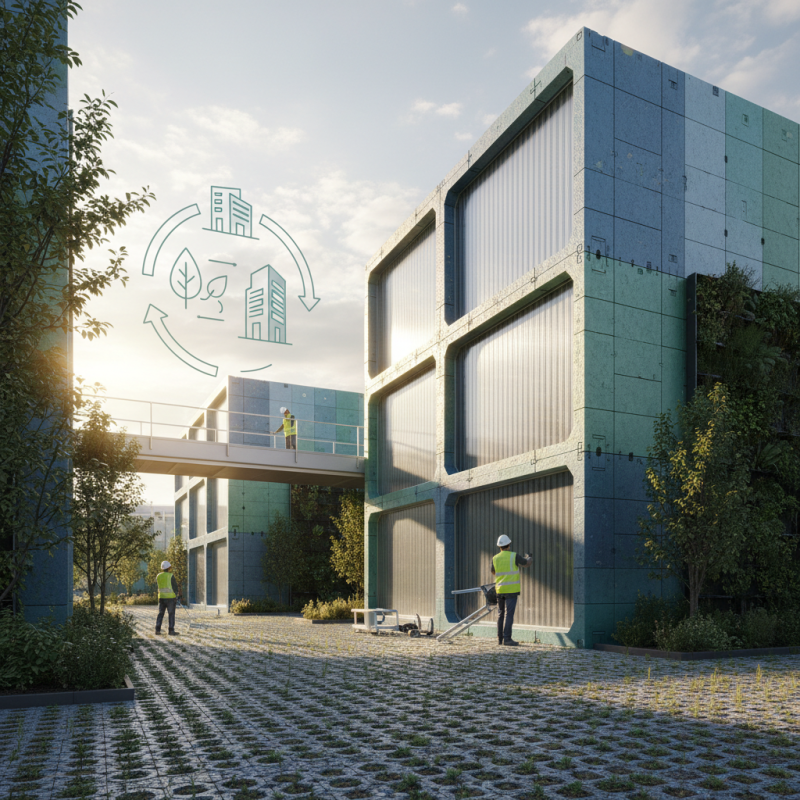
Overview of Recycled Plastic Building Materials in Construction
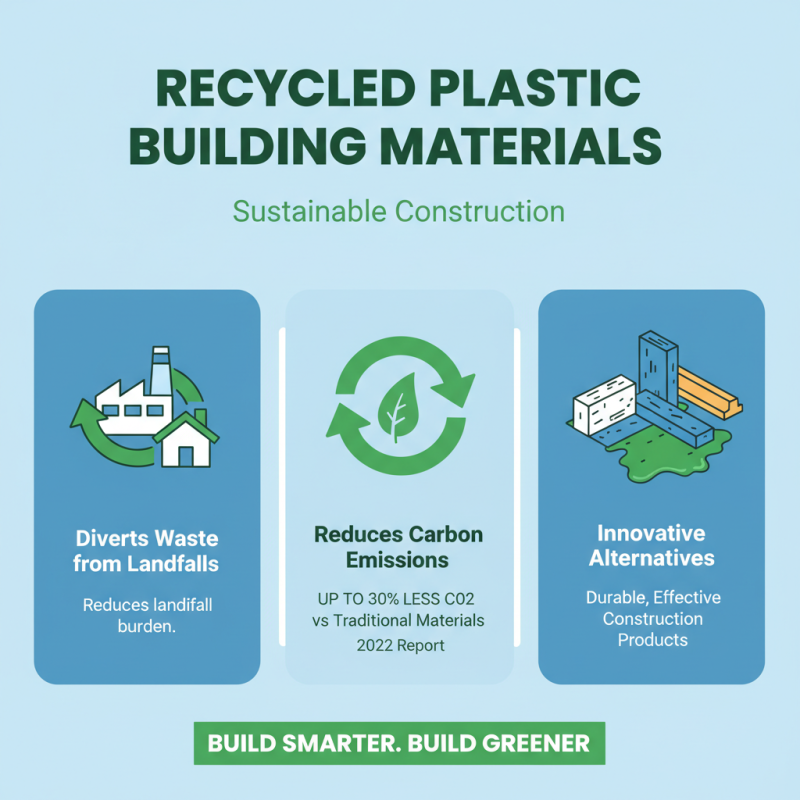
Recycled plastic building materials are gaining traction in sustainable construction. According to a 2022 report, using recycled plastics can reduce carbon emissions by up to 30% compared to traditional materials. These innovative products help divert waste from landfills while providing effective construction alternatives.
However, the industry still faces challenges. Not all recycled materials are suitable for every application. Quality can vary widely, impacting durability. The American Society for Testing and Materials (ASTM) notes that standards for recycled plastics are still developing, making it hard to determine their long-term performance in construction.
Despite these issues, the potential for recycled plastics is enormous. Using post-consumer plastics can save significant energy during production. It requires 88% less energy to produce recycled plastics than new ones. As awareness grows, more research is needed to ensure these materials meet the necessary standards. Sustainable construction is a journey, and the development of recycled plastic building materials is a step in the right direction.
Environmental Impact of Recycled Plastics Compared to Traditional Materials
The environmental impact of recycled plastics is increasingly significant in construction. Compared to traditional materials like wood or concrete, recycled plastics can reduce greenhouse gas emissions substantially. According to a report from the Plastic Pollution Coalition, using recycled plastics can decrease carbon emissions by up to 80% in production processes.
Recycled plastic materials often require less energy during manufacturing. This shows a clear advantage over concrete, which typically needs high energy input, contributing to pollution. A study by the Journal of Cleaner Production highlights that recycled plastic can save approximately 2,000 megajoules of energy per ton compared to new plastic production. However, the durability of these materials raises questions. Not all recycled plastics may meet strict building codes or performance standards.
Despite these benefits, the stigma around recycled materials persists. Some still view them as inferior. They worry about longevity and stability under extreme conditions. These concerns often overshadow the potential positive impacts on sustainability. Addressing these fears through rigorous testing and education is essential for wider acceptance. As we push for greener building practices, overcoming this skepticism is crucial.
10 Best Recycled Plastic Building Materials for Sustainable Construction
| Material | Recycled Content (%) | Application | Environmental Benefits |
|---|---|---|---|
| Recycled PVC | 100% | Pipes, siding, window frames | Reduces landfill waste, conserves natural resources |
| Recycled Polyethylene | 80% | Decking, flooring, insulation | Lower carbon footprint, energy savings |
| Recycled Polypropylene | 90% | Roofing, carpeting | Reduces virgin material usage, durable |
| Recycled HDPE | 90% | Fencing, furniture, containers | High durability, resistant to moisture |
| Recycled PET | 100% | Insulation, roofing | Conserves energy, reduces waste |
| Recycled Glass Fiber | 75% | Insulation, panels | Sustainable, reduces energy consumption |
| Recycled Rubber | 80% | Paving, flooring | Enhanced durability, reduces landfill waste |
| Recycled Wood Plastic Composites | 70% | Decking, landscaping | Low maintenance, reduces deforestation |
| Recycled Aluminum | 95% | Windows, roofing, frames | Energy-efficient, lightweight |
| Recycled Concrete Aggregate | 100% | Foundations, roads | Reduces need for virgin aggregates, eco-friendly |
Top 10 Recycled Plastic Building Materials: Features and Applications
In recent years, the use of recycled plastic building materials has gained momentum in sustainable construction. These materials are not only eco-friendly, but also versatile. They come in various forms, including panels, beams, and bricks. Each type serves different purposes in construction projects. For instance, plastic lumber can replace traditional wood, reducing deforestation. It is durable and resistant to moisture, making it ideal for outdoor structures.
Another noteworthy option is recycled plastic insulation. It provides thermal efficiency while minimizing energy consumption. Additionally, it is lightweight and easy to install. However, challenges remain. Some recycled materials may not meet certain building codes or standards. This can limit their application in specific projects. It is crucial to evaluate the performance and certifications of these materials carefully. Construction professionals should also consider their environmental impact as a whole, beyond just sourcing materials. By embracing these innovations, the industry can move toward a more sustainable future.
10 Best Recycled Plastic Building Materials for Sustainable Construction
Market Growth and Future Trends in Recycled Plastic Construction Materials
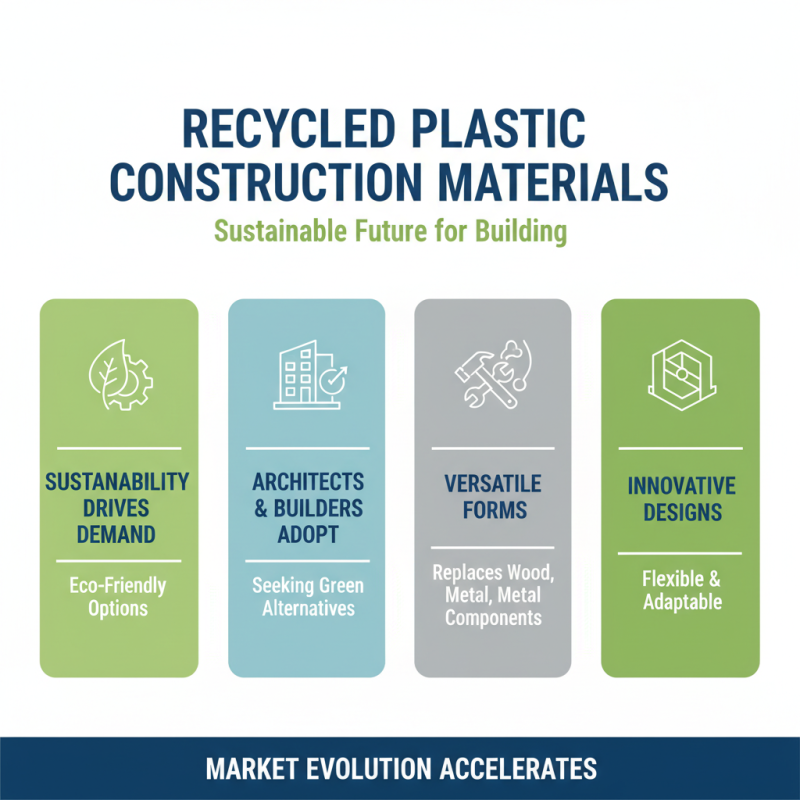
The market for recycled plastic construction materials is evolving rapidly. Interest in sustainability is a driving factor. Many architects and builders are looking for eco-friendly options. Recycled plastics can be molded into various forms. For instance, they can replace traditional wood or even metal components. This flexibility is appealing for innovative designs.
Current trends indicate a shift towards larger projects using recycled materials. Cities are adopting these products for infrastructure. Roads, benches, and even buildings feature recycled plastic. However, integration into mainstream construction presents challenges. Issues like durability and long-term performance need careful evaluation. Some materials may not hold up as expected. That raises questions about their reliability over time.
As technology advances, improved processing methods emerge. New techniques promise better durability and strength. Awareness of environmental issues continues to grow. Yet, skepticism still lingers among some professionals. The journey towards widespread adoption is ongoing. Reflecting on both the potential and limitations is essential for progress. Collaboration between industries could foster innovation in this field.
Case Studies: Successful Implementations of Recycled Plastics in Building Projects
Recycled plastics are making waves in construction. Many projects are utilizing these materials to push sustainability forward. One notable case involved the use of plastic lumber in park benches. This not only reduced waste but also provided a durable and low-maintenance option. Reports show that using recycled plastic can save about 80% of CO2 emissions compared to traditional materials.
In another instance, a community center integrated recycled plastic insulation. This choice decreased energy consumption by a significant margin. The organization reported a 50% reduction in heating costs. However, challenges remain. Some materials may not meet all building codes, raising questions about safety and longevity. It's essential to address these concerns to ensure broader acceptance in the market. As the demand for sustainable solutions grows, so should the efforts to refine these materials.
Related Posts
-
Transforming the Past: The Environmental Impact of Recycled Wood in Sustainable Living
-

2025 Top 5 Innovative Products Made from Environmentally Friendly Materials
-
2025 Guide: Transform Your Space with Sustainable Recycled Plastic Furniture
-
2025 Guide: How to Work with Recycled Wood for Sustainable Projects
-
Top Benefits of Using Recycled Building Materials for Sustainable Construction?
-

2026 Best Environmentally Friendly Materials for Sustainable Living?