
2026 Best Safety Work Gloves for Global Buyers
Choosing the best Safety Work Gloves for global buyers is not a simple product comparison. A glove that performs well in a dry warehouse may fail beside cutting oil, sharp sheet metal, or freezing loading docks. Material, fit, coating, cuff design, and tested protection must match the real task.
Safety engineer Dan Petersen is often associated with this practical reminder: “Safety is a state of mind.” The quote remains useful for glove purchasing. Protection begins before the box is opened. Buyers should review EN 388 or ANSI/ISEA 105 performance data, chemical-resistance evidence, abrasion results, and supplier quality controls. Local requirements still matter. A familiar certificate does not automatically prove suitability in every market.
Small details matter. A nitrile palm can improve grip on a wet carton. A seamless liner may reduce pressure across the knuckles. A longer cuff can protect the wrist during material handling. Yet comfort is easy to underestimate. Workers may remove stiff gloves, even when the specification looks impressive.
That happens.
This guide examines 2026 glove options through a buyer’s practical lens. It considers durability, dexterity, breathability, sizing consistency, packaging, and supply reliability. It also looks at where product claims may need closer checking. No glove is perfect. Some offer excellent cut resistance but reduce fingertip control. Others feel comfortable but wear quickly under repeated abrasion.
The strongest choice is not always the most expensive one. It is the glove that workers can wear correctly, consistently, and confidently during the actual job. Decisions should combine test data with workplace observation. A few minutes watching hands at work can reveal more than a polished catalogue page.
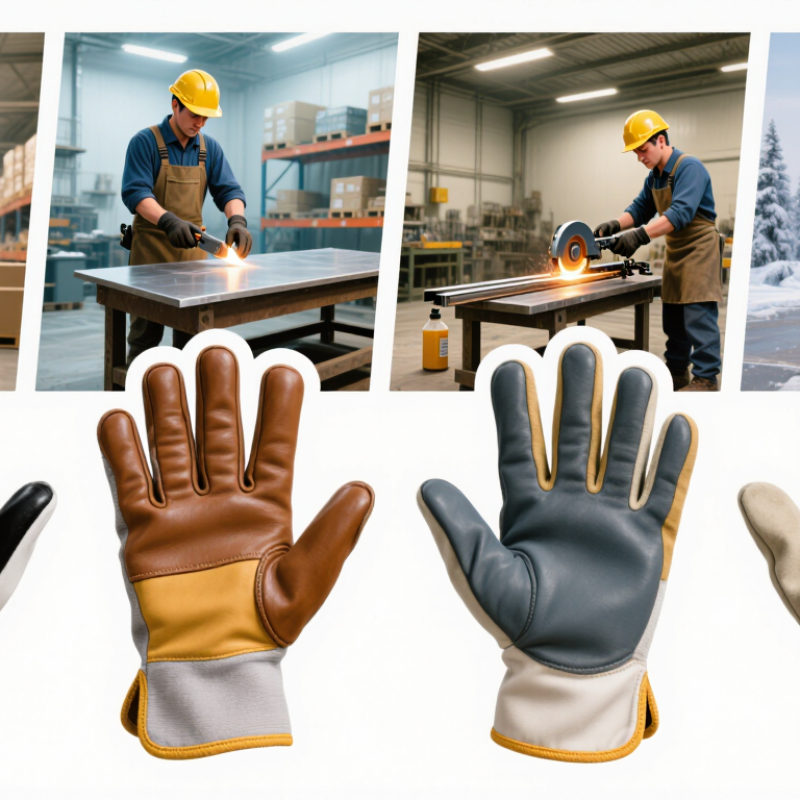
Classify Workplace Risks with ANSI/ISEA 105-2024 Cut Levels A1–A9
When global buyers compare safety work gloves, ANSI/ISEA 105-2024 offers a clearer language for cut resistance. Its A1–A9 levels measure the force needed to cut glove material during a standardized test. A1 begins at 200–499 grams, while A9 represents 6,000 grams or more.
A1 and A2 suit light handling, packaging, and small-part assembly. A3 often fits general warehouse work and moderate sheet-material handling. A4 and A5 support heavier fabrication, glass handling, and sharper components. A6 through A9 address severe cut hazards, including thick metal edges and demanding industrial operations. The correct level depends on the actual task, not the glove’s appearance.
In purchasing reviews, I examine blade exposure, material edges, grip, and repeated hand movement. A high cut rating cannot prevent punctures, crushing injuries, heat exposure, or chemical contact. It may also reduce dexterity. That trade-off matters when workers handle tiny fasteners or wet parts. A glove marked A7 can still be a poor choice for oily machinery if its grip fails.
Ask suppliers for current test documentation, size-specific data, and clear product labeling. Check whether the test result reflects the finished glove, not only its fabric. Recheck the risk assessment after process changes. A glove that worked last year may not match a faster line, a sharper component, or a different handling angle. Mistakes happen. Careful field trials remain necessary.
2026 Best Safety Work Gloves for Global Buyers - Classify Workplace Risks with ANSI/ISEA 105-2024 Cut Levels A1–A9
| ANSI Cut Level | Cut-Resistance Force (grams) | Typical Workplace Risk | Representative Tasks | Suitable Glove Construction | Important Selection Notes |
|---|---|---|---|---|---|
| A1 | 200–499 | Low cut exposure from light handling and occasional contact with smooth edges. | General material handling, packaging, shelving, light assembly, and warehouse picking. | Lightweight knitted or coated gloves using synthetic yarns, nylon, polyester, or blended fibers. | Prioritize dexterity, fit, grip, and breathability. Not intended for frequent contact with sharp metal, glass, or blades. |
| A2 | 500–999 | Moderate exposure to relatively sharp edges during routine handling. | Cardboard handling, appliance assembly, general maintenance, plastic-component handling, and light construction work. | Medium-weight cut-resistant liner with nitrile, polyurethane, or latex coating where appropriate. | Check chemical compatibility and grip performance if oils, coolants, or wet surfaces are present. |
| A3 | 1,000–1,499 | Regular handling of sharp-edged components with a moderate likelihood of contact. | Metal stamping support, automotive parts handling, HVAC installation, glass-edge handling, and fabrication preparation. | Durable knitted liners incorporating high-performance polyethylene, aramid, engineered yarns, or blended fibers. | Select a palm coating that maintains grip without hiding damage or reducing tactile control. |
| A4 | 1,500–2,199 | High exposure to sharp edges in metalworking, construction, and industrial production. | Sheet-metal handling, metal fabrication, glass installation, cable preparation, and heavy equipment assembly. | Robust cut-resistant liner with a durable nitrile or comparable industrial coating. | Consider abrasion, puncture, heat, oil, and impact requirements separately; cut level alone does not address these hazards. |
| A5 | 2,200–2,999 | Frequent contact with sharp sheet materials, stamped parts, or sharp components. | Heavy sheet-metal handling, automotive manufacturing, metal recycling, construction installation, and glass processing. | High-performance cut-resistant liner, often paired with a textured nitrile coating and reinforced high-wear zones. | Use task-specific testing and risk assessment for exposed blades, powered tools, or high-force cutting operations. |
| A6 | 3,000–3,999 | Very high cut exposure involving heavy sharp materials or repeated handling. | Automotive and machinery production, heavy metal fabrication, industrial glass handling, and recycling operations. | Heavy-duty engineered yarn construction with reinforced zones and a coating selected for the work environment. | Evaluate whether impact protection, puncture resistance, heat resistance, or extended cuffs are also required. |
| A7 | 4,000–4,999 | Severe cut hazard from large, sharp, or heavy-edged materials. | Large metal-part handling, heavy fabrication, industrial glass movement, and high-risk material processing. | Highly engineered cut-resistant textile with durable coating, reinforced seams, and task-appropriate cuff coverage. | Confirm that the glove design preserves safe grip and does not create snagging risks around moving machinery. |
| A8 | 5,000–5,999 | Extremely high cut exposure with heavy sharp materials and severe consequences from glove failure. | Heavy industrial fabrication, large glass or metal handling, recycling, and specialized manufacturing operations. | Advanced multi-layer cut-resistant construction with reinforced palm, fingers, and cuff where required. | Require documented product test results and workplace validation; combine with engineering controls and safe-handling procedures. |
| A9 | 6,000 or more | Highest ANSI cut-resistance category for exceptionally severe cut hazards. | Specialized heavy manufacturing, high-risk metal and glass handling, recycling, and other operations with extreme sharp-edge exposure. | Maximum-level engineered liner and reinforced construction selected for the specific material, motion, and exposure pattern. | A9 is not a guarantee against all blades or powered equipment. Use machine guarding, procedures, training, and task-specific PPE assessment. |