China Top A4 Adhesive Labels Manufacturer and Supplier
Demand for A4 Adhesive Labels is growing with office organization, warehouse identification, product marking, and short-run packaging. Buyers now expect clean printing, dependable adhesion, and consistent sheet dimensions. Small details matter.
Smithers’ industry report, The Future of Labels and Release Liners to 2028, forecasts continued global growth in label demand, supported by e-commerce, logistics, and brand customization. Grand View Research also identifies self-adhesive labels as a strong packaging segment, with digital printing improving flexibility for smaller orders. These trends make A4 formats practical for businesses needing professional labels without expensive custom tooling.
China has become an important manufacturing base for A4 Adhesive Labels. Experienced suppliers can support paper, synthetic, removable, permanent, and waterproof materials. They can also provide laser-compatible and inkjet-compatible surfaces, depending on the application. A reliable factory should explain adhesive performance, storage conditions, sheet flatness, and printing limitations clearly. Samples should be tested before bulk production.
Quality is not only about appearance. It includes accurate cutting, smooth feeding, stable adhesion, and controlled packaging. A label that curls inside a printer creates waste and frustration. That issue is easy to underestimate. Suppliers with documented quality procedures, material traceability, and export experience offer stronger purchasing confidence. However, no manufacturer should claim universal compatibility. Humidity, surface texture, printer temperature, and storage time can change results. For this reason, choosing a China A4 Adhesive Labels manufacturer requires practical testing, transparent communication, and evidence-based quality control rather than price alone.
A4 Adhesive Labels Defined: ISO 216 Size of 210 × 297 mm
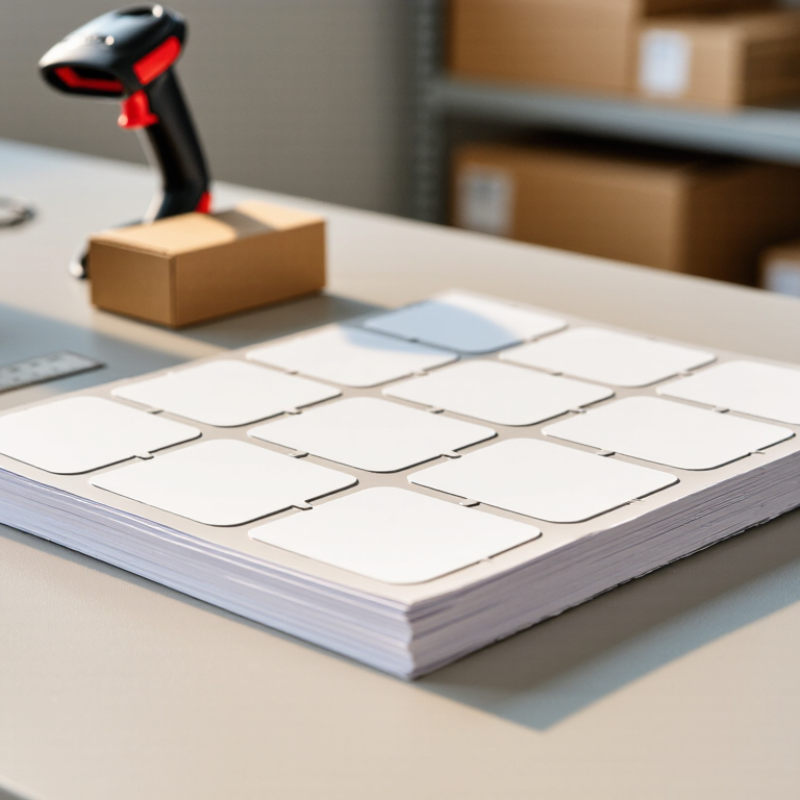
A4 adhesive labels follow the ISO 216 standard, measuring 210 × 297 mm. This familiar size fits common office printers and document workflows. For manufacturers and suppliers, accurate sheet dimensions are only the starting point. Label spacing, corner shape, liner stability, and adhesive performance also require careful control. A small shift can affect every label on the page.
In practical production, we check the finished sheets with calibrated measuring tools. We also test feeding performance through laser and inkjet printers. Paper type matters. Glossy surfaces can improve image sharpness, while matte stock often supports easier writing. Permanent adhesive suits long-term applications, but removable adhesive may protect temporary documents. A perfect screen layout can still fail during printing. I have seen narrow margins cause edge clipping, so safe spacing deserves more attention.
Tips: Keep at least 3 mm of safe space around important text. Confirm the label template before bulk production. Store sheets flat and away from heat or humidity. Test one printed sheet first. It saves time.
Materials and Adhesives: 80–120 g/m² Facestock Options
A4 adhesive labels depend heavily on facestock weight and adhesive selection. In practical production, 80–120 g/m² materials cover most office, warehouse, and light product-labeling needs. The lower 80 g/m² option feels flexible and feeds smoothly through many printers. It also helps control material costs. However, thin paper may curl more easily in humid rooms or during long storage.
A 100 g/m² facestock offers a useful balance between stiffness, print clarity, and handling comfort. It suits address labels, inventory sheets, shipping documents, and file identification. The 120 g/m² grade feels stronger and resists wrinkling during manual application. That extra weight can improve appearance, but it may reduce flexibility on curved surfaces. Heavier is not always better. That assumption sometimes fails.
Adhesive choice should match the application surface, temperature, and expected service period. Permanent adhesive works well on clean cardboard, paper, and smooth plastic. Removable adhesive supports temporary filing and short-term identification, but its performance can change on dusty surfaces. For cold storage or challenging packaging, testing is essential before volume production. We usually check peel strength, edge lifting, printer feeding, and residue after application. Small mistakes appear quickly. A label can look perfect on a sample sheet yet fail after transport. Humidity, storage pressure, and uneven surfaces deserve attention when selecting an 80–120 g/m² facestock.
Chinese Manufacturing Standards: ISO 9001, RoHS, and REACH Compliance
Choosing a China-based A4 adhesive labels manufacturer requires more than comparing prices. Consistent quality begins with a controlled production system. ISO 9001 supports documented procedures, inspection records, and traceable corrective actions. These controls help maintain clean edges, stable adhesive coating, and accurate A4 sheet dimensions.
RoHS compliance helps reduce restricted substances in label materials and manufacturing processes. REACH compliance addresses chemical safety and substance communication across the supply chain. Reliable suppliers should provide current declarations, material data, and test reports when requested. These documents should match the actual paper, adhesive, and ink used. Paperwork alone is not enough.
Tips: Request a recent sample batch. Check sheet alignment, adhesive coverage, and printing performance. Ask how production lots are identified. Confirm whether compliance documents cover the exact product specification. Keep a retained sample for comparison. Small checks prevent larger problems.
Practical experience shows that label performance can change with humidity, storage time, and application temperature. A label may look perfect in a sample room but perform differently on a warehouse floor. ISO 9001 processes can reduce this risk, but they cannot remove every variable. Suppliers should discuss testing conditions honestly and record any limitations. That transparency reflects professional manufacturing. It also gives buyers a clearer basis for long-term cooperation.
Supplier Selection: MOQ, Lead Time, Customization, and Export Capacity
A practical supplier review starts with the MOQ, or minimum order quantity. For A4 adhesive labels, ask whether the MOQ applies per size, material, or complete order. A low MOQ sounds attractive. However, it may increase the unit price or limit available paper choices. Request a written quotation showing label size, adhesive type, sheet count, packing method, and setup charges.
Lead time should be separated into sampling, artwork approval, production, and shipment. This detail prevents optimistic promises from hiding delays. For customized labels, confirm printing colors, corner shape, perforation, surface finish, and adhesive performance. A sample should be tested on the intended packaging, especially under humidity or temperature changes. Proof approval matters. One missed measurement can affect thousands of sheets.
Export capacity requires more than a shipping claim. Check whether the supplier regularly prepares commercial invoices, packing lists, carton marks, and export documents. Ask about monthly capacity and peak-season scheduling. Clear cartons, moisture protection, and pallet stability reduce damage during long transport. Request production photos, inspection records, and references from comparable markets when possible. A reliable manufacturer should explain tolerances and inspection steps without avoiding difficult questions. Do not judge capability from a polished catalog alone. A supplier may have excellent equipment but weak communication. That weakness can become expensive. Terms, timelines, and responsibilities should be recorded before payment.