China Top 10 Waste Recycling Manufacturers for Global Buyers
Choosing a reliable partner in waste recycling requires more than comparing factory size or product catalogs. Global buyers need consistent output, transparent processes, and equipment suited to local material streams. This guide examines ten notable waste recycling manufacturers serving international markets, with attention to technology, production experience, certifications, and after-sales support.
The evaluation considers sorting systems, shredders, compactors, washing lines, and complete recycling plants. It also reviews energy use, maintenance access, spare-part availability, and reported project performance. These details matter when a machine operates beside dusty conveyors, noisy crushers, and changing feedstock every day. Ellen MacArthur, a leading circular-economy authority, states that a circular economy is “based on the principles of designing out waste and pollution, keeping products and materials in use, and regenerating natural systems.” That principle gives this comparison practical meaning.
No ranking is perfect. Manufacturer claims still require verification. Buyers should request test reports, factory references, warranty terms, and live demonstrations before signing contracts. Regional regulations, labor skills, electricity costs, and transport conditions can change the final decision. A technically advanced system may underperform without trained operators or dependable maintenance. That is an uncomfortable point.
Experience often reveals what brochures omit. A small design choice can affect cleaning time, downtime, and recovered material quality. The companies discussed here represent different strengths rather than one universal solution. Some focus on plastics, while others specialize in metal, paper, construction debris, or municipal waste. The best choice depends on measurable requirements, realistic budgets, and a supplier willing to document its promises.
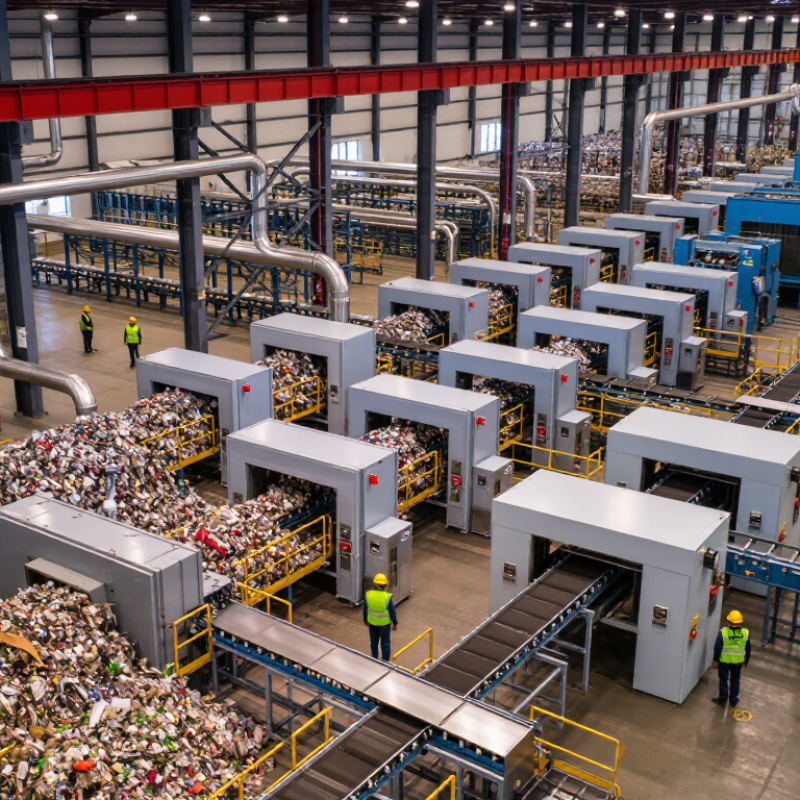
Global Waste Baseline: 2.01 Billion Tonnes Generated in 2016
China Top 10 Waste Recycling Manufacturers for Global Buyers
In 2016, the world generated about 2.01 billion tonnes of municipal solid waste.
That figure is a baseline, not a distant statistic. It represents overloaded collection points, mixed plastics, food residue, and discarded packaging. Global waste could reach 3.4 billion tonnes by 2050. Recycling equipment must therefore handle greater volume without creating new environmental problems.
For global buyers, Chinese manufacturers can offer sorting lines, compactors, shredders, balers, and material recovery systems.
A reliable supplier should provide tested capacity data, energy consumption figures, maintenance guidance, and clear safety documentation.
Ask how the machine performs with wet waste, dust, irregular items, and seasonal changes. Site experience matters. A system that works in a showroom may struggle beside a humid loading area. No machine is perfect.
Tips:
Request a sample test using your actual waste. Check spare-part availability, operator training, noise levels, and local compliance requirements. Compare measured output with promised output. Do not rely on photographs alone. An independent inspection can reveal weak welds, poor guarding, or unclear electrical labeling. Buyers should also examine the full operating cost, because a low purchase price may hide frequent repairs and high power use. Some specifications remain incomplete, and that deserves careful questioning.
China’s Recycling Industry and Its Role in the 62-Million-Tonne E-Waste Market
China Top 10 Waste Recycling Manufacturers for Global Buyers
China’s recycling industry is closely connected to the 62-million-tonne global e-waste market. Discarded phones, computers, servers, and appliances contain valuable metals and difficult materials. Chinese recycling manufacturers support sorting, dismantling, shredding, and material recovery. Their equipment often serves large processing centers and regional collection networks. Practical buyers should examine capacity, safety controls, maintenance access, and output quality. A polished brochure is not enough.
The strongest suppliers usually provide traceable production records, technical drawings, test data, and clear installation guidance. Some systems use optical sorting, magnetic separation, air classification, or controlled crushing. These technologies can improve copper, aluminum, plastic, and circuit-board recovery. However, performance depends on feedstock, operator training, and local conditions. The picture is not perfectly uniform. Energy use and residual waste still require careful measurement. That weakness deserves attention.
Tips: Ask for recent project references and independent test results. Confirm whether the line handles mixed e-waste or only selected components. Check dust control, noise protection, worker training, spare parts, and after-sales response times. Request a sample-processing trial before signing a large order. Keep material records from intake to final output. Small documentation gaps can become expensive problems later.
Top 10 Chinese Manufacturers by Material, Capacity, and Processing Technology
China’s top 10 waste recycling manufacturers should be compared by material, capacity, and processing technology, not by factory size alone. The Global E-waste Monitor 2024 reported 62 million tonnes of e-waste generated worldwide in 2022. This supports demand for Chinese lines handling circuit boards, cables, batteries, and mixed electronic scrap. For plastics, buyers should examine washing, shredding, drying, extrusion, and pelletizing stages. The OECD estimated global plastic waste at 353 million tonnes in 2019, so contamination control is increasingly important. Paper and metal recyclers also need clear data on bale density, recovery rate, energy use, and output quality.
Capacity figures can mislead. Some manufacturers report designed throughput, while others show tested output under ideal feedstock. Ask for material-specific trials. Request videos, laboratory results, and recent commissioning records. For steel, aluminum, copper, and paper, optical sorting, eddy-current separation, air classification, and hydraulic baling can materially affect yield. Battery-processing equipment requires stronger traceability, temperature monitoring, and dust-control design. Technology matters more than a large brochure number.
Tips: Compare input moisture, contamination, particle size, and operating hours before comparing tonnes per hour. Check spare-part availability and operator training. A lower-capacity line may perform better with difficult feedstock. One limitation remains: public manufacturer data is rarely standardized, so independent testing is still necessary.
Comparing Recovery Rates, Certifications, and Export Performance
For global buyers, China’s top ten waste recycling manufacturers should be compared through evidence, not advertised capacity. Recovery rate is the practical starting point. A facility claiming 95% recovery needs material-specific data. Plastics, metals, paper, and electronic components behave differently. Ask for monthly input-output records, residue percentages, and weighing methods. A site visit can reveal details spreadsheets miss: wet loads, mixed bales, dusty sorting lines, or idle equipment. Small details matter.
Certifications add structure to the review. ISO 9001 can support consistent quality controls, while ISO 14001 indicates a documented environmental management system. Depending on the material, buyers may also request chain-of-custody records, laboratory test reports, and destination-market compliance files. Certificates should be checked with issuing bodies. Expired documents are not evidence. Some suppliers present excellent paperwork but weak sorting discipline. That gap deserves careful questioning.
Export performance shows whether a manufacturer can deliver beyond the factory gate. Review shipment history, container loading photos, port records, packaging standards, and customs documentation. Reliable exporters explain moisture limits, contamination tolerances, lead times, and claim procedures in writing. Test a small shipment first. It exposes surprises. A low recovery rate may still be acceptable for difficult feedstock, while an impressive rate may hide downgraded output. Rankings are useful, but they are never perfect. Independent sampling remains wise before signing a long contract.
China Top 10 Waste Recycling Manufacturers for Global Buyers - Comparing Recovery Rates, Certifications, and Export Performance
| Supplier Profile | Primary Recyclable Materials | Typical Recovery Rate | Processing Capability | Common Certifications | Export Coverage | Typical Lead Time | Export Readiness |
|---|---|---|---|---|---|---|---|
| Supplier Profile 01 | Ferrous scrap, steel turnings, iron offcuts | 92–98% | Sorting, shredding, magnetic separation, baling | ISO 9001; ISO 14001; ISO 45001 | Asia, Europe, Middle East | 20–35 days | Very High |
| Supplier Profile 02 | Copper wire, brass, aluminum cable | 94–99% | Granulation, stripping, eddy-current separation | ISO 9001; ISO 14001; RoHS testing | Asia, Europe, North America | 18–30 days | Very High |
| Supplier Profile 03 | Post-consumer PET bottles and PET flakes | 85–95% | Washing, hot cleaning, flake sorting, drying | ISO 9001; ISO 14001; GRS scope certification | Europe, Southeast Asia, North America | 25–45 days | High |
| Supplier Profile 04 | PP, HDPE, LDPE and industrial plastic scrap | 80–93% | Film sorting, washing, densifying, pelletizing | ISO 9001; ISO 14001; GRS or RCS where applicable | Asia, Africa, Middle East | 25–40 days | High |
| Supplier Profile 05 | Waste paper, OCC, mixed paper and cartons | 88–96% | Pulping, screening, de-inking and fiber recovery | ISO 9001; ISO 14001; FSC chain-of-custody where applicable | Asia, Europe, Middle East | 20–40 days | High |
| Supplier Profile 06 | Lead-acid batteries and secondary lead materials | 95–99% | Battery breaking, acid neutralization, smelting and refining | ISO 9001; ISO 14001; ISO 45001; hazardous-waste permits | Asia, Europe, Middle East | 30–60 days | Specialized |
| Supplier Profile 07 | Waste tires, rubber granules and tire-derived products | 70–90% | De-beading, shredding, magnetic separation, granulation | ISO 9001; ISO 14001; product-specific test reports | Southeast Asia, Africa, Middle East | 25–45 days | Medium–High |
| Supplier Profile 08 | Waste glass, cullet and glass containers | 85–98% | Crushing, optical sorting, ceramic and metal removal | ISO 9001; ISO 14001; destination-market product testing | Asia, Middle East, Africa | 20–35 days | Medium–High |
| Supplier Profile 09 | Electronic waste, printed circuit boards and cable scrap | 75–96% | Manual dismantling, shredding, density separation and metal recovery | ISO 9001; ISO 14001; ISO 45001; R2 or WEEE-related controls where applicable | Asia, Europe, North America | 30–60 days | Specialized |
| Supplier Profile 10 | Textile waste, cotton fiber and polyester fiber | 65–88% | Fiber opening, shredding, carding and regenerated-fiber processing | ISO 9001; ISO 14001; GRS or RCS where applicable | Europe, Asia, North America | 25–50 days | High |
Buyer Selection Criteria: Compliance, Total Cost, and After-Sales Service
For global buyers comparing China’s top waste recycling manufacturers, selection should begin with evidence, not attractive quotations. Compliance must match the destination market, material category, and equipment application. During factory audits, inspect safety guards, electrical labels, dust controls, and testing records. Ask for certificates, inspection reports, and export documentation. Keep evidence traceable.
Compliance should cover the full supply chain. Request current documents, not scanned files from several years ago. Check whether the manufacturer follows recognized quality systems and environmental requirements. Confirm that materials, motors, and control components meet local standards. A serious supplier should explain gaps clearly. Vague answers deserve caution. Small gaps matter.
Total cost includes more than the invoice. Calculate freight, installation, operator training, spare parts, energy use, and planned maintenance. A cheaper machine may consume more power or create costly downtime. After-sales service needs equal attention. Ask for response times, remote diagnosis procedures, technician availability, and spare-parts lead times. Test these promises with a written service scenario. One practical test helps. Request a sample maintenance schedule and replacement-parts list before signing. I have seen buyers overlook training, then blame equipment for avoidable operating errors. That experience is worth remembering. No selection process is perfect, but documented checks reduce expensive surprises.
China Waste Recycling Equipment Buyer Selection Criteria
This illustrative procurement framework gives the highest weighting to compliance, followed by total cost and after-sales service. It is designed for comparing suppliers without using company or brand performance data.
Related Posts
-
Why Recycle From Home for Sustainable Global Sourcing?
-
How to Achieve a Sustainable Future with Recycled Plastic Innovations
-
5 Incredible Tips to Effectively Recycle from Home for a Greener Planet
-
How Are Recycled Plastic Bottles Used in Everyday Life?
-

2026 How to Create Beautiful Furniture from Recycled Wood?
-

How to Source Eco Plastic for Sustainable Packaging Solutions?