China Top 10 Recycled Materials Suppliers for Global Buyers
Global buyers need more than a low quotation when sourcing recycled materials from China. They need stable grades, clear documentation, and dependable export experience. This guide introduces ten Chinese suppliers serving international buyers across plastics, metals, paper, textiles, rubber, and other recovered materials. The selection emphasizes practical purchasing concerns, not promotional language.
Each supplier profile considers material quality, processing capacity, packaging, lead times, and communication standards. We examine evidence such as test reports, factory capabilities, certifications, and traceability procedures. A reliable supplier should explain how materials are collected, sorted, cleaned, tested, and prepared for shipment. Small details matter. For example, moisture levels can affect recycled paper, while contamination can reduce the value of recycled plastic pellets.
Supplier information is not always complete. Certificates may expire. Factory photos can mislead. Buyers should verify current documents, request samples, and confirm specifications before placing orders. Independent testing may also be sensible for large contracts. This article reflects that practical caution.
No supplier is perfect. A smaller company may offer faster customization, while a larger producer may provide stronger capacity and wider documentation. Shipping routes, minimum order quantities, currency changes, and regional requirements can also influence the final decision. The “best” choice depends on the buyer’s material standards and risk tolerance.
Use this overview as a starting point. Then ask detailed questions. Compare samples, records, and response times. That step often reveals more than a polished website.

China’s Recycled Materials Industry and Global Market Overview
China Top 10 Recycled Materials Suppliers for Global Buyers
China’s recycled materials industry is expanding through metals, plastics, paper, rubber, and textiles. Ministry of Commerce data reported that China recycled about 385 million tonnes of renewable resources in 2022. The figure covered nine major material categories. Its estimated value exceeded 1.3 trillion yuan. These volumes show strong processing capacity, but not every supplier offers equal traceability.
Global demand is also rising. The Global E-waste Monitor 2024 recorded 62 million tonnes of electronic waste worldwide in 2022. Only 22.3% reached documented collection and recycling systems. The report expects global e-waste to reach 82 million tonnes by 2030. China-based suppliers can support this gap through sorting, granulation, refining, and material testing. Buyers should request batch records, contamination limits, moisture data, and independent laboratory results.
Plastic remains a difficult area. The OECD’s Global Plastics Outlook found 353 million tonnes of plastic waste generated globally in 2019. Only 9% was recycled. China’s recycled plastic producers increasingly use washing lines, optical sorting, and pellet quality controls. Yet quality can vary between shipments. That is the uncomfortable part. A polished factory visit does not prove consistent performance. Global buyers should compare at least three batches, verify origin documents, and check whether claimed recycled content matches test evidence. Trade data is useful, but it is not perfect. Different reports define “recycled material” differently.
How the Top 10 Suppliers Are Selected and Evaluated
Selecting China’s top recycled materials suppliers requires more than checking export volume. The evaluation begins with verified experience in processing, sorting, and international shipment. Supplier records should show stable output, documented equipment, and repeat quality results. Short visits are useful. They reveal dust control, storage conditions, and moisture problems that spreadsheets often miss.
Quality is measured through independent samples, not promises. Tests may cover polymer grade, metal purity, moisture, contamination, and packaging weight. The OECD’s Global Plastics Outlook reports that only about 9% of global plastic waste was recycled in 2019. This makes traceable feedstock especially important. For electronic materials, The Global E-waste Monitor 2024 recorded 62 million tonnes of e-waste in 2022, while only 22.3% was formally collected and recycled. Suppliers with clear intake records deserve stronger scores.
Environmental and commercial reliability complete the review. Auditors should examine wastewater controls, worker safety, permits, energy use, and shipment documentation. Capacity must be checked against actual monthly production, not a large website figure. Buyers should also compare defect rates, lead times, payment terms, and responses to rejected batches. The World Bank projects municipal waste could reach 3.4 billion tonnes annually by 2050, increasing pressure on responsible processors. No ranking is perfect. Factory conditions can change quickly, and public data may be incomplete. A practical top-ten list therefore combines audit evidence, laboratory testing, customer references, and recent shipment performance. Price remains relevant, but it should not outweigh material consistency or lawful operations.
Top 10 Chinese Suppliers by Recycled Material Category
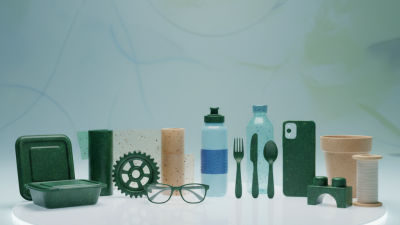
China’s top 10 recycled-material suppliers are best compared by category, not by broad popularity claims. For PET, suppliers commonly offer washed flakes and pellets for textile or packaging use. PE and PP suppliers provide reprocessed granules, while aluminum and steel processors sell sorted scrap and secondary ingots. Other key categories include recovered paper, recycled glass, regenerated textile fibers, and tire-derived rubber. This category view helps buyers match material performance with factory needs.
353 million tonnes
plastic waste reached in 2019
The Global Plastics Outlook reports that plastic waste reached 353 million tonnes in 2019, while only 9% was recycled. The Global E-waste Monitor recorded 62 million tonnes of e-waste in 2022, with just 22.3% formally collected and recycled. These figures show why traceability matters. Ask each shortlisted supplier for input-output records, contamination limits, moisture data, melt-flow results, and recent third-party laboratory tests. A supplier may look strong on price, yet fail during production. That risk deserves attention.
Tips: Request a small sample first. Check batch consistency after washing, grinding, or pelletizing. Review ISO 14021-based recycled-content claims and documented chain-of-custody controls. Verify export documents, facility capacity, and annual audit records. One practical lesson is often missed: recycled materials are not automatically lower-impact when transport, energy use, and rejected batches are ignored.
Product Quality, Certifications, Capacity, and Export Services
China’s top ten recycled materials suppliers are commonly compared by product quality, certifications, capacity, and export support. Quality should be checked through recent batch samples, contamination rates, moisture levels, and color consistency. A reliable supplier can explain testing methods clearly. Independent laboratory reports add confidence.
Certifications matter, but documents need careful review. Check the issuing body, validity period, product scope, and factory address. Environmental claims should match traceable production records. No supplier is perfect. Small quality changes may still appear between batches, especially during seasonal collection periods.
Tips: Request three samples from different production dates. Compare specifications, packaging, and test results. Ask whether the stated monthly capacity is proven output or only equipment potential. Export experience also matters. Suppliers should provide accurate invoices, packing lists, shipping documents, and customs support. Clear communication reduces delays at the port. Some suppliers respond quickly before payment, then become slower later. Discuss response times, inspection procedures, replacement terms, and loading photos in writing. A practical evaluation combines factory evidence, professional testing, realistic capacity, and dependable service.
China Top 10 Recycled Materials Suppliers for Global Buyers
Benchmark view of key purchasing criteria: product quality, certification readiness, production capacity, and export services
The chart uses a 100-point buyer evaluation framework. Product quality reflects consistency and specification control; certifications cover common international schemes such as GRS, RCS, FSC Recycled, ISCC PLUS, and ISO management standards; capacity represents scalable production capability; and export services include documentation, packaging, logistics coordination, and customs support.
How Global Buyers Can Compare and Choose the Right Supplier
Global buyers comparing recycled-material suppliers need more than a low price.
The OECD’s Global Plastics Outlook reports that plastic waste reached 353 million tonnes in 2019, while only 9% was recycled. This gap makes verified supply important. Ask each supplier for material composition, contamination limits, moisture levels, and recent laboratory results. A clear specification prevents unpleasant surprises inside a production line.
Capacity also needs practical checking.
Request monthly output, available grades, packaging details, and shipment history for your destination. The World Bank’s What a Waste 2.0 estimates global waste could reach 3.40 billion tonnes annually by 2050. Demand may rise, but capacity claims are not always transparent. Compare production records with third-party audits, inspection reports, and traceability documents. Certificates help, but they do not replace physical inspection.
Price is only one risk.
Evaluate payment terms, lead times, loading photos, insurance responsibility, and dispute procedures. For metals, test alloy content and radiation controls where relevant. For plastics, check polymer identification and additive restrictions. For paper, verify fiber type, moisture, and bale density. I would score suppliers using weighted criteria, not instinct. Even experienced buyers can overvalue polished documents. Data may be incomplete. A trial shipment, independent pre-shipment inspection, and a written acceptance standard can expose weaknesses before a long-term contract begins.