
How to Choose Embroidery Pattern Fabric for Wholesale?
Choosing Embroidery Pattern Fabric for wholesale is not simply a matter of selecting attractive colors. It is a practical decision involving fiber content, pattern clarity, production consistency, and customer expectations. A fabric may look impressive on a sample roll, yet perform poorly during stitching or washing. Wholesale buyers need to examine both appearance and behavior.
Jane Dunnewold, a respected textile artist and surface-design educator, explains the principle clearly: “The fabric is the foundation of every surface design.” Her observation matters in commercial embroidery. Cotton can provide a stable, familiar base. Linen offers texture and a natural appearance. Polyester blends may improve durability and reduce shrinkage. Each choice changes how the embroidered pattern looks and feels.
A reliable buying process should begin with physical samples. Feel the fabric. Stretch it gently. Check the weave under bright light. Then test a small embroidered motif using the intended thread, needle, and machine settings. Observe puckering, thread tension, color bleeding, and edge stability. These details become expensive problems when multiplied across hundreds of meters.
Wholesale decisions also require honest reflection. A fabric can be technically strong but unsuitable for a specific market. A delicate pattern may disappear on a heavily textured surface. A low price may hide inconsistent dye lots. Even experienced buyers make assumptions that fail during production. That is why supplier records, wash tests, and batch approvals remain valuable. The best Embroidery Pattern Fabric balances visual appeal, stitching performance, repeatable quality, and realistic cost. It should support the design, not compete with it.
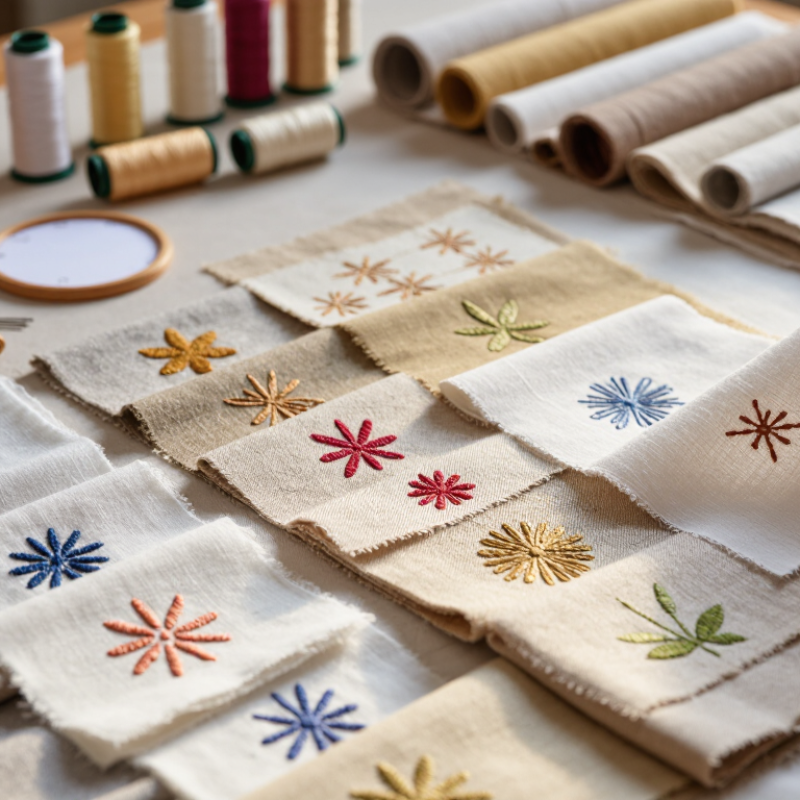
Identify the Main Fabric Types Used for Embroidery Patterns
Choosing the right embroidery pattern fabric for wholesale orders starts with understanding the main fabric types.
Cotton is a reliable option because its smooth weave supports clean stitches and detailed motifs. It works well for hand embroidery, sample pieces, and everyday textile products.
Linen offers a natural texture and breathable feel, but its loose weave may require stabilizer support.
Canvas is stronger and heavier, making it suitable for bags, wall décor, and structured accessories.
Felt has a firm surface and does not fray easily, so it suits decorative patches and simple embroidery patterns.
Denim provides durability and a casual appearance, although thick layers can strain small needles.
Polyester blends are useful for larger production because they resist shrinking and usually maintain color well. However, some synthetic surfaces feel too slippery for precise stitching.
Silk creates an elegant finish, but it demands careful handling and consistent thread tension.
My practical mistake was judging fabric by appearance alone. Weight and weave mattered more.
Tips:
Test every fabric before placing a wholesale order. Stitch a small motif, wash it, and inspect the reverse side.
Check shrinkage, colorfastness, surface stability, and needle performance.
Compare the fabric’s GSM with the pattern density. Dense designs need stronger support.
Keep a few sample swatches for future quality checks.
Small tests prevent expensive surprises.
Match Fabric Weight and Weave to the Embroidery Technique
How to Choose Embroidery Pattern Fabric for Wholesale?
Fabric weight and weave should match the embroidery technique, not only the printed pattern. Lightweight cotton suits delicate hand embroidery, but dense stitches can pull its surface. A medium-weight, tightly woven cotton offers better support for satin stitch and stem stitch. Linen works beautifully for textured designs, though its loose weave needs careful hooping. Counted cross-stitch requires evenweave fabric or Aida cloth, where visible squares keep every X consistent. Machine embroidery often needs a stable woven fabric with suitable backing. Test it before ordering in bulk.
Tips: Request swatches, then stitch the largest planned design. Check puckering, needle marks, thread coverage, and color changes after washing. A small test can prevent a costly shipment.
Wholesale buyers should also compare fabric weight across production lots. Two rolls may share the same listed weight, yet feel noticeably different. This happens when yarn thickness or weave density changes. I once underestimated how much a loose weave could distort a filled motif. The sample looked acceptable, but the finished panel lost its shape. That mistake taught me to inspect the reverse side, not just the front. For heavy embroidery, choose firm canvas, denim, or structured twill. For fine decorative work, choose smoother fabric with fewer surface slubs. Softer fabric may feel attractive, but it can collapse under dense stitching. There is no perfect fabric. The right choice depends on stitch density, washing needs, design scale, and production consistency.
How to Choose Embroidery Pattern Fabric for Wholesale?
Match Fabric Weight and Weave to the Embroidery Technique
Fabric weight is shown in grams per square metre (gsm), using typical commercial ranges. Lightweight lawn and linen are suitable for fine hand embroidery and delicate patterns, while twill and canvas provide the stability required for dense machine embroidery. Wool felt is thick and stable, making it useful for raised, appliqué, and decorative hand embroidery. For wholesale sourcing, always confirm the fabric’s actual weave density, shrinkage, and backing requirements before production.
Evaluate Fabric Quality, Durability, and Wholesale Consistency
How to Choose Embroidery Pattern Fabric for Wholesale?
Fabric quality directly affects stitch definition, production speed, and customer satisfaction. Start by checking the weave under bright, even light. A stable weave keeps embroidered lines sharp and prevents unwanted puckering. Record the fabric weight, fiber content, width, and finishing method. These details make future purchasing decisions more reliable.
Durability requires more than a pleasant hand feel. Rub a fabric sample against a rough surface and inspect loose fibers. Wash it according to its intended care method, then measure shrinkage in both directions. Check whether the color fades or the surface becomes fuzzy. Needle holes should close reasonably after stitching.
I once accepted a soft fabric that looked excellent before washing, but its edges curled afterward. That mistake increased cutting waste. It also taught me to test finished embroidery, not fabric alone.
Wholesale consistency needs documented controls. Request samples from different production lots when possible. Compare shade, weight, width, weave tension, and roll length. Keep an approved reference swatch with dated measurements. A supplier should explain how defects are inspected and how replacement claims are handled. Small variations may be acceptable, but repeated changes can disrupt thread tension and sizing. Ask for inspection records, yet verify key claims through your own testing. Factory documents help, but hands-on checks remain necessary. Even experienced buyers can overlook a weak selvage or uneven coating. Careful records reduce that risk.
Check Supplier Standards, Pricing, and Minimum Order Quantities
How to Choose Embroidery Pattern Fabric for Wholesale?
Wholesale fabric selection starts with supplier standards, not attractive photos. Ask for fiber composition, fabric weight, weave density, shrinkage results, and colorfastness records. For embroidery, a stable plain weave often prevents puckering around dense patterns. Request a 30-by-30-centimeter sample, then wash and stitch it before negotiating volume. The 2024 Textile Exchange Materials Market Report estimates global fiber production reached 124 million tonnes in 2023. This scale makes traceability increasingly important. A reliable supplier should identify the material source, testing method, and production batch clearly.
Tips: Compare landed cost, not only the unit price. Include sampling, freight, inspection, packaging, and possible defects. Ask whether the quoted price applies to one color or a full assortment. Confirm the minimum order quantity for each pattern, color, and fabric width. A low MOQ may cost more per meter. A high MOQ can trap cash in slow-moving designs. I have learned that “cheap” is often incomplete information.
Request a written quotation with payment terms, lead time, replacement rules, and tolerance ranges. The International Trade Centre’s textile and clothing statistics show how widely trade values differ across markets, so local freight and import charges can change the final calculation. Compare at least three suppliers using the same specification sheet. Check whether the first production lot matches the approved sample. Small differences matter: a slightly loose weave can distort satin stitches, while excessive stiffness may damage needles. Recheck the numbers. Supplier claims still need evidence.
Choose Fabric Colors, Finishes, and Sizes for Your Target Market
For wholesale embroidery patterns, fabric choice should begin with customer habits, not only supplier availability. A children’s craft kit may need bright cotton in lemon yellow, coral, and sky blue. Home décor buyers often prefer muted linen tones, such as oat, sage, or charcoal. Color cards can mislead under warehouse lighting. Request physical swatches and compare them near daylight. Small details matter. I have seen warm white look gray after stitching, especially beside dark thread.
Finishes change both appearance and handling. A brushed surface feels soft but may hide fine pattern lines. A smooth weave shows geometry clearly and supports machine or hand embroidery. Pre-washed fabric can reduce later shrinkage, while an untreated roll may feel less reliable during sampling. Ask about colorfastness, fiber content, fabric weight, and edge fraying. Test a stitched sample, then wash it. Do not trust a clean sample alone. Some fabrics behave differently after pressing, folding, or long storage.
Size selection should match the buyer’s project. Small 20-by-20-centimeter pieces suit ornaments, patches, and beginner kits. Larger cuts work better for cushions, wall art, and layered garments. For wholesale orders, keep size variation limited; it simplifies packing and quality checks. Yet one size rarely serves every market. I sometimes choose a popular middle size and regret ignoring regional preferences. Review sales data, ask distributors about display space, and leave enough margin for trimming. Reliable sourcing means recording batch color, finish, dimensions, and inspection results before shipment.