
China Top Tile Cutter Suppliers How to Choose?
Choosing a China Tile Cutter supplier requires more than comparing prices on a product page. A reliable supplier should demonstrate practical experience, stable manufacturing, and clear quality controls. Buyers need to examine cutting accuracy, guide-rail strength, scoring-wheel durability, and replacement-part availability. A Tile Cutter may look strong in photos, yet perform poorly after repeated cuts.
Josep M. Rubi, a long-time tile-cutting equipment specialist, says, “A good tile cutter should make the cut simple, clean, and repeatable.” This principle is useful when evaluating Chinese manufacturers. Ask for cutting tests on porcelain, ceramic, and large-format tiles. Request close images of the scoring wheel, base, measuring scale, and handle assembly. Better still, review sample results from actual projects.
Details matter.
A professional supplier should explain its material selection, production process, inspection standards, and warranty terms. Certifications can support credibility, but they should not replace independent testing or customer references. Check whether the supplier communicates clearly about tolerances, packaging, lead times, and after-sales service. Vague answers may reveal operational weaknesses.
Price remains important, but the lowest quotation can hide fragile components or inconsistent assembly. I have seen buyers focus on the initial order and overlook long-term maintenance. That mistake can increase downtime and replacement costs. A thoughtful comparison should include total ownership value, not just unit price.
This guide explores how to identify dependable China Tile Cutter suppliers, verify their expertise, and choose equipment suited to real working conditions. Some evaluation points are easy to measure. Others require judgment, patience, and a willingness to question attractive claims.
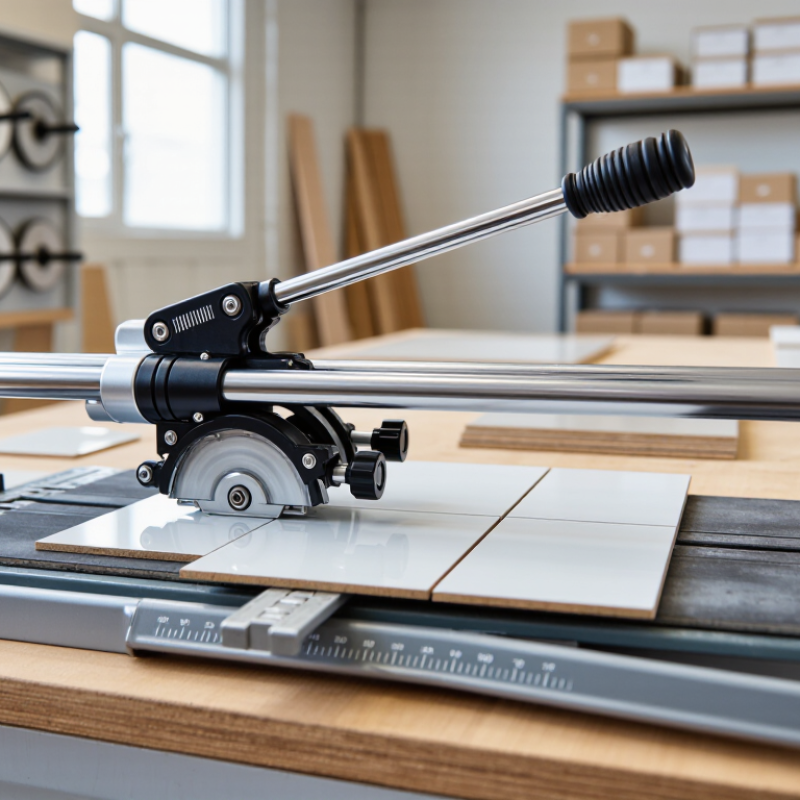
Understanding China’s Tile Cutter Supplier Market
China’s tile cutter supplier market is broad, but it is not uniform. China Building Materials Federation reports that domestic ceramic tile production remains above 7 billion square meters annually. This creates strong demand for manual cutters, wet saws, and bridge-cutting equipment. Supplier clusters often serve different needs. Some focus on compact tools for installers. Others manufacture heavy machines for factories and contractors.
Market data requires careful reading. UN Comtrade groups many cutting machines under HS 846490, rather than isolating tile cutters. Therefore, export values can indicate machinery activity, but they cannot prove product quality. A supplier’s factory audit matters more than a polished catalog. Check cutting accuracy on porcelain slabs, motor heat after continuous use, spare-part availability, and the flatness of guide rails. Ask for inspection records, not only test videos.
The China National Bureau of Statistics reported continued investment in manufacturing equipment during recent years, supporting broader production capacity. However, capacity is not the same as consistency. I would request samples from two production batches and measure edge chipping with the same tile. Small differences can reveal weak process control. Confirm blade compatibility, voltage, packaging protection, and warranty response times in writing. ISO 9001 certification can support credibility, but it does not replace independent inspection. Sometimes, the cheapest quotation is only cheaper before freight, replacement parts, and downtime are counted.
| Supplier Segment | Typical Product Range | Common Cutting Length | Suitable Tile Thickness | Typical Order Quantity | Customization Capability | Indicative Production Lead Time | Key Selection Considerations |
|---|---|---|---|---|---|---|---|
| Manual Handheld Cutters | Compact cutters Replacement scoring wheels | Approximately 300–600 mm | Usually up to about 10–12 mm, depending on the model and tile material | Often suitable for small trial orders and mixed cartons | Limited; packaging, color, handle design, and scoring-wheel options may be available | About 15–30 days for standard products; confirm before ordering | Check scoring-wheel quality, handle strength, guide alignment, and ease of carrying |
| Manual Rail Cutters | Single-rail models Double-rail models Professional models | Approximately 600–1,200 mm; some models are longer | Commonly 6–16 mm, with some heavy-duty models supporting thicker tiles | Commonly 50–300 units, depending on configuration and supplier policy | Moderate; private-label packaging, logo application, color, rail length, and accessories may be possible | About 20–45 days for standard or customized orders | Compare maximum cutting length, diagonal cutting capacity, rail rigidity, base stability, and spare-part availability |
| Heavy-Duty Manual Cutters | Large-format cutters Reinforced frames Adjustable supports | Approximately 1,200–1,800 mm or more | Often designed for larger and thicker porcelain tiles; verify the exact rated capacity | Usually 20–100 units for project or distributor orders | Moderate to high; frame color, scales, accessories, packaging, and branding can often be discussed | About 30–60 days, especially for customized or oversized products | Inspect frame deflection, cutting accuracy over the full rail, support-table design, transport packaging, and replacement parts |
| Wet Tile Saws | Table saws Water-pump systems Diamond blade models | Commonly 600–1,200 mm; capacity varies by table and blade configuration | Depends on blade diameter, motor power, and cutting method; confirm straight and diagonal capacities separately | Often 20–100 units for standard configurations | Moderate; voltage, plug type, motor configuration, table size, packaging, and accessories may be configurable | About 30–60 days for standard orders; electrical customization may require additional time | Verify operating voltage, motor rating, blade size, water management, electrical protection, noise level, and local compliance requirements |
| Bridge Saws | Precision bridge saws Sliding-head machines Large-format systems | Often 1,200–2,000 mm or more | Designed for thicker porcelain, stone, and large-format slabs; capacity is model-specific | Usually 1–10 units for commercial or project purchases | High; cutting length, motor, table size, control system, voltage, and accessories may be specified | Approximately 45–90 days, excluding installation or commissioning time | Evaluate cutting precision, structural rigidity, motor and spindle specifications, safety systems, technical support, and installation capability |
| OEM/ODM-Oriented Suppliers | Private-label products Custom packaging Product development | Depends on the selected cutter platform | Depends on the selected model and intended tile material | Usually higher than stock orders because packaging, tooling, or design approval may be involved | High; possible options include branding, packaging, color, accessories, manuals, and product specifications | Commonly 45–90 days for the first order; repeat orders may be shorter | Request drawings, samples, inspection criteria, intellectual-property terms, packaging approval, and a written change-control process |
| Export-Focused Suppliers | Standard export models Multi-market packaging Documentation support | Varies from compact models to large-format equipment | Must be matched to the target market’s tile types and professional use cases | Often flexible for distributors, but minimum quantities differ by product and packaging requirements | Usually moderate; export cartons, manuals, labels, plugs, and documentation may be adapted | Typically 20–60 days for standard products, plus shipping time | Confirm export experience, carton protection, spare-parts planning, product manuals, inspection records, and delivery terms |
| Quality Verification Criteria | Sample testing Pre-shipment inspection Traceability | Measure actual cutting length and diagonal capacity against the specification | Test the maximum stated thickness using the intended tile material, not only a thinner sample | Use an approved sample and written specification before mass production | Confirm whether inspection, packaging, labeling, and documentation are included in the quotation | Allow time for sample approval, production, inspection, and corrective action | Check straightness, chipping rate, repeatability, guide alignment, blade or wheel wear, safety features, and after-sales support |