How to Choose Nail Glue Stickers for Wholesale Buying?
How to Choose Nail Glue Stickers for Wholesale Buying?
Nail Glue Stickers are moving from a niche accessory to a practical part of the modern nail-care market. Grand View Research’s Nail Polish Market report identifies rising at-home beauty routines and product convenience as important growth drivers. Meanwhile, Statista’s beauty market data shows strong consumer spending on cosmetics through online channels. These trends matter to wholesalers. Buyers now expect attractive designs, simple application, stable adhesion, and dependable packaging. A low unit price alone is no longer enough.
Wholesale selection should begin with measurable product details. Check adhesive strength, curing time, odor, flexibility, and removal performance. Ask suppliers for material specifications, batch records, and sample testing. A sticker that holds well on a dry thumbnail may fail after hand washing or daily keyboard use. Test different nail shapes, temperatures, and application pressures. Small differences matter. Packaging also deserves attention. Clear size labels, sealed pouches, and readable instructions reduce customer complaints and warehouse confusion.
Industry reports provide direction, not certainty. Grand View Research and Fortune Business Insights both connect beauty-market expansion with personalization and convenient home use, but their market definitions differ. That difference deserves caution. Some reports measure nail polish, while others include broader nail care products. Therefore, wholesalers should combine published data with real sales evidence, return rates, and supplier audits. I would not trust a glossy catalog without physical samples. Even experienced buyers can overlook weak corner adhesion or inconsistent sizing. The best buying decision balances trend potential, technical performance, compliance documentation, and repeat-order reliability.
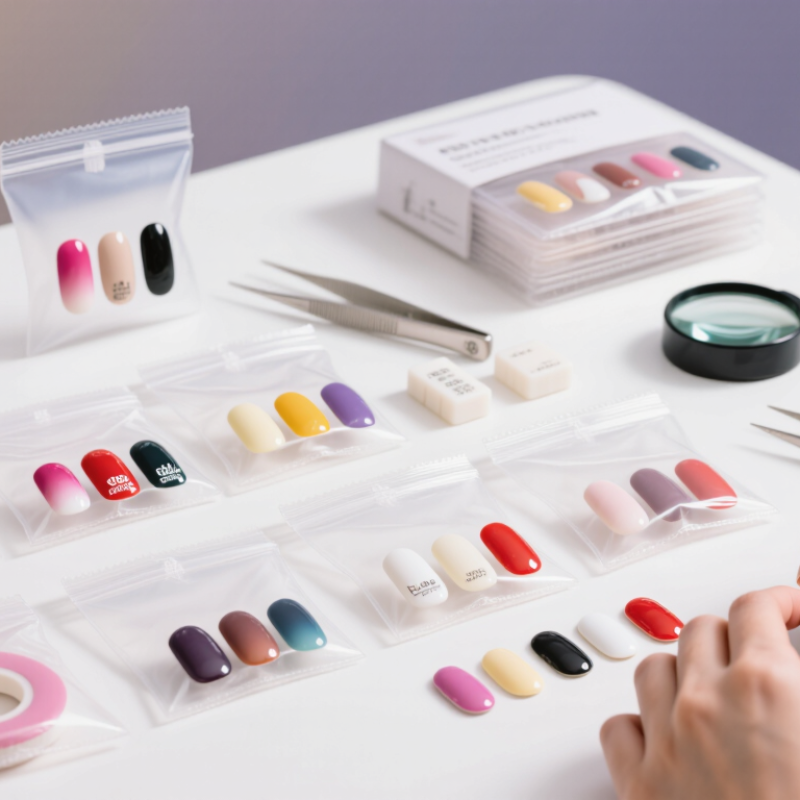
Understanding Nail Glue Stickers and Their Wholesale Applications
Nail glue stickers are pre-cut adhesive pieces used to attach artificial nails without liquid glue. They usually include a flexible adhesive layer, a protective liner, and several sizes. For wholesale buyers, understanding this structure matters. A salon may need quick application between appointments. A retail kit may require simple instructions and clean packaging. Press-on nail sellers often value easy removal and minimal residue.
Adhesive strength is only one buying factor. Check thickness, flexibility, surface tack, and wear time on natural nails. The sticker should cover the nail without touching the skin. Ask suppliers for material details, production dates, storage guidance, and batch samples. Test different nail shapes, temperatures, and humidity levels. A sticker that performs well in a dry showroom may weaken in a warm delivery warehouse.
Packaging affects wholesale performance too. Count sheets carefully. Inspect liners for curling, missing sizes, and uneven cutting. Small errors create customer complaints. In my experience, a pilot order reveals more than a polished sample. It can expose slow application or difficult removal. That is useful, even when disappointing. Buyers should record application time, adhesion results, residue, and user feedback before ordering large quantities. Clear instructions and sealed individual packs can also reduce handling problems during retail distribution.
Assessing Adhesive Strength, Safety, and Wear Performance
How to Choose Nail Glue Stickers for Wholesale Buying?
Adhesive strength should be tested beyond the first few minutes. In wholesale evaluations, I check initial tack, peel resistance, and shear stability. Test stickers on different nail shapes, including flat, curved, thin, and ridged surfaces. Test under pressure. A secure sticker should resist lifting during hand washing and routine work. However, stronger adhesion is not always better. It may increase removal discomfort or leave more residue. I once focused too heavily on holding time and overlooked clean removal.
Safety requires careful supplier documentation. Request a complete ingredient disclosure and the product’s safety data sheet. Check for clear warnings, storage instructions, and suitable use guidance. Products should not encourage application on damaged skin or irritated nails. Small sample trials can help identify redness, itching, or burning before a larger order. A patch test is sensible, although it cannot predict every reaction. Verify that packaging and labeling meet the requirements of your target market.
Wear performance depends on more than adhesive chemistry. Evaluate flexibility, edge sealing, moisture resistance, and color stability after several days. Keep samples in realistic conditions, such as bathrooms, kitchens, and dry indoor rooms. Record lifting at the cuticle, sidewalls, and nail tips. Compare results from multiple production batches, because consistency can be weaker than a single excellent sample. Store test packs away from heat and humidity. Wholesale decisions need evidence, not attractive samples alone.
Comparing Materials, Sizes, Shapes, and Packaging Options
How to Choose Nail Glue Stickers for Wholesale Buying?
Material choice affects adhesion, flexibility, removal, and customer satisfaction. In wholesale trials, I compare acrylic-based adhesive sheets with gel-style alternatives. Acrylic options often feel thinner and suit natural nails. Gel-style stickers may provide better cushioning and curved fit. Ask suppliers for adhesion data, storage guidance, and ingredient documentation. Do not judge quality from appearance alone. A glossy surface can still lose grip quickly in humid conditions.
Size selection should match common nail widths, including smaller and wider options. Mixed-size sheets reduce waste during salon use. Shapes also matter. Round, square, almond, and coffin styles serve different preferences. Check whether the cut edges align neatly with real nail curves. I once approved a visually attractive sample with narrow side coverage. It looked efficient, but customers needed extra trimming. That mistake changed my inspection process.
Packaging should protect the adhesive from dust, heat, and moisture. Individual pouches improve hygiene and simplify inventory counting. Multi-sheet boxes may reduce shipping costs, but they need strong internal protection. Confirm carton dimensions, unit quantity, batch coding, and shelf-life information. Clear instructions should explain application, pressure time, and removal. Plain packaging is not always cheaper overall. Poor sealing can create hidden losses. Request pre-shipment samples and test them after several days, not just immediately.
How to Choose Nail Glue Stickers for Wholesale Buying?
Comparison of common adhesive materials, size coverage, nail shapes, and packaging efficiency for wholesale purchasing. Scores use a 1–5 procurement scale, where 5 indicates stronger suitability.
Acrylic adhesive tabs generally provide the best balance of wear time, clean removal, and product stability. Medium and large size assortments improve compatibility across different nail widths, while oval and squoval shapes usually offer broader coverage. Packs of 24–48 tabs are practical for individual sets, whereas 72–120 tabs are more suitable for salon and wholesale channels.
Checking Supplier Quality, Certifications, and Customization Services
When choosing nail glue stickers for wholesale buying, supplier quality deserves close inspection. Request production samples from different batches, not only one polished sample. Check whether the adhesive tabs lift after hand washing, lotion use, or several hours of wear. Test removal gently, because excessive residue can damage customer trust. Ask about storage temperature, shelf life, and packaging protection. Small details matter.
Certifications should match the product, materials, and selling market. Request current test reports, material declarations, and quality-management records. Verify the issuing laboratory and report numbers independently. Documents should identify the actual factory, not only a trading office. Ask for batch traceability and written inspection standards. A certificate alone proves little. I still find supplier paperwork difficult to compare when test methods differ, so clear explanations are essential.
Customization can improve wholesale value, but it must remain technically realistic. Discuss adhesive strength, tab sizes, backing paper, package dimensions, printing, and barcode requirements. Request a pre-production sample before approving large quantities. Confirm color accuracy under normal store lighting. Also define acceptable defects, packing counts, and replacement procedures in writing. Low prices once attracted my attention, but inconsistent cutting created unnecessary waste. That lesson still influences my supplier reviews. A responsive supplier should answer technical questions directly, admit limitations, and suggest practical adjustments instead of promising everything.
Calculating Wholesale Costs, Minimum Orders, and Delivery Timelines
When I compare nail glue stickers for wholesale, I record more than the unit price. Adhesive strength, sheet size, packaging, and defect rates affect the real cost. Ask for samples. I test them on different nail shapes and inspect lifting after three days. That simple check often reveals problems that a product sheet cannot show.
A practical worksheet includes product cost, packaging, inspection, freight, import charges, and payment fees. Divide the total by the number of sellable sets, not the ordered quantity. Damaged or missing units can change the final margin. I once chose the lowest quotation and underestimated slow-moving stock. The discount looked useful, but it tied up cash. Compare total spending at each minimum order quantity, not only the per-unit price.
Request a written timeline for sample approval, production, inspection, and delivery. Confirm whether the stated lead time begins after payment or final artwork approval. Add a seven-to-fourteen-day buffer for weekends, holidays, and transport delays. Fast delivery is not always cheaper. A small trial order can test packaging quality and actual arrival time before a larger commitment. However, very small orders may carry higher freight costs, so the best quantity is rarely the smallest one.
How to Choose Nail Glue Stickers for Wholesale Buying? - Calculating Wholesale Costs, Minimum Orders, and Delivery Timelines
Calculation basis: Estimated total cost equals product cost plus estimated standard freight; customs duties, taxes, inspection fees, payment fees, samples, and local delivery are excluded. Delivery estimates assume international air shipment after production. Actual prices, minimum order quantities, and timelines vary by material, packaging, order volume, destination, and customization requirements.