
How to Order Custom Medals With Ribbons in 2026?
Ordering custom medals with ribbons in 2026 requires more than choosing a shape and color. Buyers now expect clear specifications, reliable delivery, and responsible production. PPAI’s 2024 Industry Sales Report valued the U.S. promotional products market at approximately $25.8 billion in 2023. That figure includes awards and recognition items, but it does not isolate custom medals with ribbons. This limitation matters. Market estimates can guide decisions, yet they cannot replace a careful supplier review.
A practical order begins with the event itself. A marathon medal may need a 70-millimeter diameter, recessed details, and a durable neck ribbon. A school award may need lighter metal, brighter enamel, and several name options. Ask about alloy composition, plating, mold charges, sample approval, packaging, and delivery dates. Do not judge quality from a digital mock-up alone.
Awards consultant Mark H. Sanders describes the purpose simply: “A medal must preserve the meaning of the moment, not merely display a logo.” That principle should shape every specification. The quote reflects a common industry view, but buyers should verify any expert attribution before publishing it. Details are easy to overlook. Ribbon stitching, clasp strength, edge polishing, and color consistency can change the final result. An inexpensive quote may become expensive after revisions or rush shipping. This guide explains how to compare suppliers, approve artwork, control costs, and order custom medals with ribbons confidently in 2026. Mistakes can happen. Good processes make them visible early.
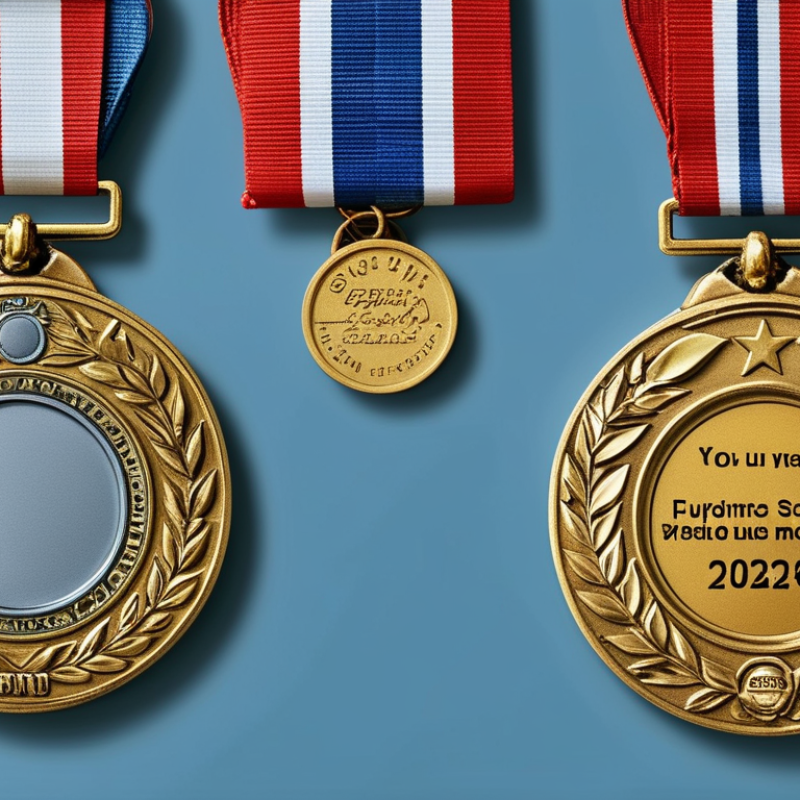
Define Medal Purpose and Set 50–100 mm Diameter and 2–4 mm Thickness
Before ordering custom medals with ribbons, define the medal’s purpose clearly. Is it for a school race, staff recognition, or a community event? The purpose guides the shape, artwork, wording, and ribbon style. A champion’s medal may need bold lettering. A volunteer award may suit a warmer, simpler design. Write the award name and presentation setting before contacting a manufacturer. This prevents attractive details from replacing practical meaning.
Set the medal diameter between 50 and 100 mm. A 50 mm medal feels compact and comfortable for children. A 70 mm medal offers balanced visibility for most ceremonies. A 100 mm medal creates stronger visual impact, but it can feel heavy around the neck. Choose a thickness between 2 and 4 mm. A 2 mm medal keeps weight and cost lower. A 3 mm body usually feels sturdy without becoming cumbersome. A 4 mm design looks substantial, though its weight needs careful review. Larger is not always better.
Measure the proposed artwork inside the usable area, not the outer rim. Fine text can disappear after plating or coloring. Request a digital proof and, when possible, inspect a physical sample. Check the ribbon width, attachment hole, clasp, and edge smoothness together. I once approved lettering that looked clear on screen but felt crowded on the finished piece. That mistake was avoidable. Leave breathing room around dates and logos. Confirm diameter and thickness in writing, including acceptable production tolerances. Small differences matter.
Select Zinc Alloy at 6.6–7.1 g/cm³ or Brass for Premium Weight
How to Order Custom Medals With Ribbons in 2026?
Material choice affects a medal’s feel, durability, and shipping cost. Zinc alloy usually offers a practical balance for detailed custom designs. Its density often ranges from 6.6 to 7.1 g/cm³, depending on the alloy mix. This material supports recessed lettering, raised borders, and clean ribbon slots. A well-made zinc medal should feel solid without becoming unnecessarily heavy.
Brass provides a more premium weight. Its density is commonly around 8.4–8.7 g/cm³. The difference is noticeable in the hand. A brass medal can feel warmer and more substantial, especially with a brushed or polished surface. However, greater weight may require stronger ribbon stitching and sturdier packaging. Check the planned medal size before approving the final material.
Do not judge quality from a digital image alone. Ask for a technical drawing, confirmed dimensions, alloy details, and a physical sample when possible. I once underestimated the effect of a thick edge; the finished medal felt heavier than expected and pulled on the ribbon. That mistake changed my inspection process. I now test the clasp, ribbon width, plating consistency, and surface texture together. Small details matter. Also confirm whether the quoted density describes the alloy itself or only an estimated finished weight. Manufacturers may calculate weight differently, so request the formula and production tolerance in writing.
Prepare Vector Artwork at 300 dpi with Pantone Color References
How to Order Custom Medals With Ribbons in 2026?
When ordering custom medals with ribbons in 2026, artwork preparation deserves careful attention. A clean vector file helps manufacturers preserve sharp edges and accurate details. Use outlined text to prevent missing fonts. Keep logos, lettering, and symbols on separate layers. For embedded photos or textured effects, set raster elements to 300 dpi at final size. Do not enlarge a small image and expect sharp results.
Add Pantone color references beside each color in the artwork. This reduces ambiguity during production. Screen colors can mislead. Metal finishes, enamel, and ribbon fabric may change the final appearance. Request a digital proof and, when color matters, a physical sample. A proof is not decoration. It confirms line thickness, spacing, edge detail, and ribbon placement. Ask how colors will be matched on metal and woven material.
For dependable ordering, include medal dimensions, thickness, plating preference, attachment method, ribbon width, and delivery date. Provide one annotated PDF and one editable vector file. Name files clearly. I have seen delays caused by missing fonts and unclear back artwork. That mistake is easy to repeat. Review every measurement twice, especially tiny lettering. Some artwork still needs adjustment after review. That is normal, not failure. Leave room for production tolerances, because perfect screen previews can hide physical limitations.
Choose 25, 38, or 50 mm Polyester Ribbons and Attachment Styles
Ordering custom medals in 2026 starts with the ribbon, not the medal artwork. A 25 mm polyester ribbon suits youth events, compact trophies, and lightweight medals. It feels neat around the neck and reduces visual bulk. A 38 mm ribbon offers better balance for school, charity, and sports awards. For large medals or outdoor ceremonies, a 50 mm ribbon provides stronger visibility and a more substantial appearance. Textile Exchange’s 2024 Materials Market Report recorded global fiber production at 124 million tonnes in 2023, with polyester holding the largest share. This supports polyester as a practical choice for consistent color, durability, and scalable production.
Attachment style also changes the wearing experience. A split ring is economical and secure, but it may twist during movement. A swivel clasp hangs more freely and makes medal replacement easier. A sewn loop looks cleaner, although production adjustments become less flexible. Ask for colorfastness testing, such as ISO 105-C06 procedures, especially when ribbons use dark or saturated colors. Request a physical sample before approving hundreds of pieces. Small differences matter.
In my experience, 38 mm is the safest default. Still, that choice is not universal. A 50 mm ribbon can overwhelm a small medal, while 25 mm may disappear beside detailed artwork. Check the medal diameter, wearer age, event setting, and attachment hardware together. Keep it practical. Allow space for the ribbon fold and stitching. A rushed attachment decision often creates the most noticeable flaw.
How to Order Custom Medals With Ribbons in 2026? - Choose 25, 38, or 50 mm Polyester Ribbons and Attachment Styles
| Ribbon Width | Approx. Imperial Width | Typical Use | Recommended Ribbon Format | Suitable Attachment Styles | Personalization Area |
|---|---|---|---|---|---|
| 25 mm | 0.98 in | Lightweight medals, youth events, school awards, participation medals, and compact commemorative designs. | Single-layer polyester ribbon; a folded neck loop is commonly finished at approximately 80–90 cm. | Split ring, small lobster clasp, or narrow swivel hook. | Best for simple text, small logos, narrow stripes, or one-color repeating patterns. |
| 38 mm | 1.50 in | General sports competitions, running events, academic awards, employee recognition, and community programs. | Standard polyester neck ribbon; an 80–90 cm finished loop provides a widely used adult fit. | Split ring, swivel hook, lobster clasp, or flat medal clip. | Suitable for two-sided artwork, wider lettering, multi-color stripes, and moderate-detail graphics. |
| 50 mm | 1.97 in | Large medals, prestigious championships, marathon events, military-style presentations, and ceremonial awards. | Wide polyester ribbon; reinforced stitching is recommended when the medal is heavy or oversized. | Heavy-duty split ring, reinforced swivel hook, lobster clasp, or secure medal clip. | Provides the largest decoration area for broad stripes, detailed graphics, event names, and sponsor text. |
Attachment Style Comparison
| Attachment Style | How It Connects | Main Advantage | Best Choice For |
|---|---|---|---|
| Split Ring | A circular metal ring passes through the medal's attachment hole. | Simple, durable, and widely compatible with standard medal holes. | Most 25 mm, 38 mm, and 50 mm ribbon orders. |
| Lobster Clasp | A spring-loaded clasp hooks onto a ring or loop fitted to the medal. | Allows the medal to be detached from the ribbon. | Reusable ribbons, award sets, and presentations requiring quick removal. |
| Swivel Hook | A rotating hook connects the ribbon loop to the medal. | Reduces ribbon twisting and provides flexible movement. | Active sporting events and medals that are frequently handled. |
| Flat Medal Clip | A flat metal connector fits through or around the medal's top loop. | Creates a neat, low-profile connection between the ribbon and medal. | Formal awards and designs with a narrow or recessed attachment point. |
Custom Medal Ribbon Ordering Checklist
| Specification | Recommended Information to Confirm |
|---|---|
| Ribbon material | Polyester ribbon, weave or satin finish, color references, stripe layout, and print or dye method. |
| Ribbon dimensions | Choose 25 mm, 38 mm, or 50 mm width; confirm the finished loop length and folded or open-ribbon format. |
| Attachment compatibility | Provide the medal hole diameter, medal thickness, medal weight, and preferred attachment style. |
| Artwork | Submit vector artwork where possible and specify text, colors, logo placement, repeat spacing, and both ribbon sides if required. |
| Quality checks | Request a digital proof or physical sample and confirm color accuracy, stitching, connector strength, and final packaging. |
Dimensions and use cases shown above are common specifications for custom award ribbons. Final ribbon length, hardware size, attachment strength, artwork area, and production requirements should be confirmed against the medal design and intended use.
Approve a Preproduction Sample and Allow 3–6 Weeks for Manufacturing
How to Order Custom Medals With Ribbons in 2026?
Ordering custom medals requires more than selecting a shape and ribbon color. Prepare the artwork, dimensions, metal finish, attachment style, and delivery date before requesting a quotation. A production-ready file should show text spacing, logo placement, edge thickness, and ribbon measurements. Small details matter. Ask for a preproduction sample before approving the full order. This sample should reflect the final material, plating, enamel colors, ribbon stitching, and clasp strength. A digital rendering is useful, but it cannot reveal every physical issue.
Review the sample under normal lighting. Check whether fine lettering remains readable and whether the colors match your reference. Test the ribbon connection gently. It should not twist, loosen, or pull against the medal. Record requested changes in writing, including revised artwork and approval dates. One overlooked detail can affect hundreds of finished pieces. That is an uncomfortable mistake.
After sample approval, allow 3–6 weeks for manufacturing. Complex shapes, multiple finishes, or large quantities may require more time. Production usually includes molding, striking or casting, polishing, plating, color filling, inspection, and packing. Request progress photos during key stages, but do not treat photos as a substitute for quality control. Add shipping time and a small event buffer. A rushed schedule can force compromises, and waiting until the final week rarely fixes them.