What Is a Metal Cutting Board and Is It Worth Buying?

A Metal Cutting Board looks almost indestructible. Its smooth steel or aluminum surface resists deep scratches, stains, and lingering food odors. That promise sounds appealing in busy kitchens. Yet durability is only one part of the decision.

Professional knife educator and author Chad Ward offers a useful warning: “A cutting board should protect the knife, not fight it.” His point matters here. Metal surfaces can feel clean and stable, but they may dull a sharp blade faster than quality wood or plastic. They can also create a harsh ringing sound during chopping. Some models slide on wet counters. That detail is easy to overlook.

Hygiene remains a genuine advantage. Nonporous metal does not absorb meat juices or onion smells. It can be washed quickly and dried without much effort. However, cleanliness still depends on proper handling. A neglected board can spread contamination across a countertop, regardless of its material.

The real question is not whether metal is “better.” It is whether its strengths match your routine. A Metal Cutting Board may suit pastry work, heavy preparation, or kitchens needing rapid sanitation. It may disappoint cooks who value knife sharpness and quieter chopping.

There is no perfect answer. Metal feels modern, but modern does not always mean practical. Before buying, consider your knives, counter space, noise tolerance, and cleaning habits. The most impressive surface may still be the wrong one for daily use.
What Is a Metal Cutting Board and Is It Worth Buying?

What Is a Metal Cutting Board?

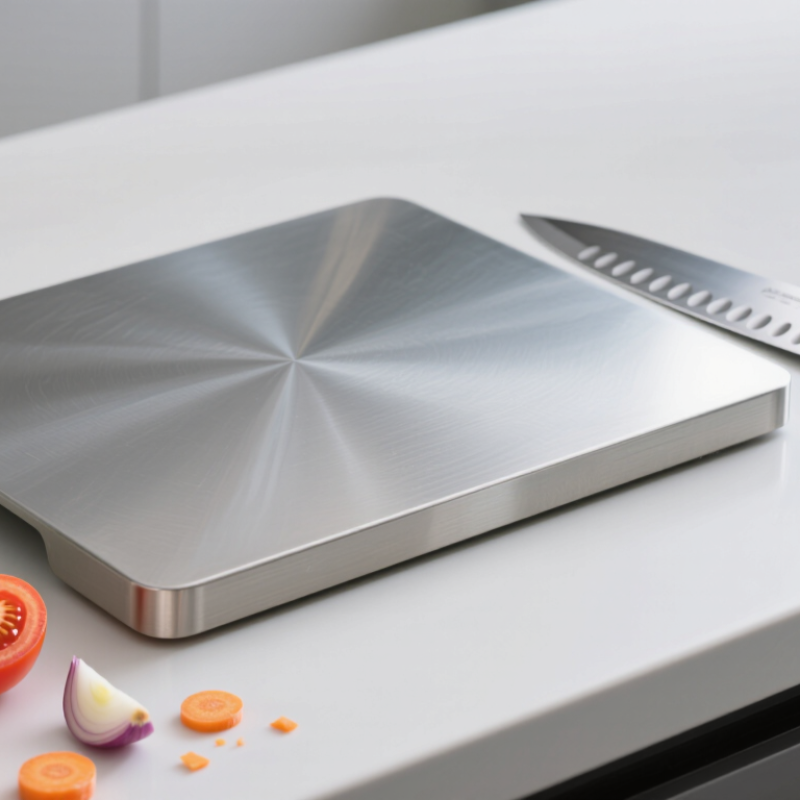
A metal cutting board is a rigid food-preparation surface made from stainless steel, aluminum, or another food-contact metal. It usually has a flat, nonporous face and rounded edges. Unlike wood, it does not absorb meat juices, onion water, or cooking oils. A properly finished surface can be washed, sanitized, and dried quickly.

The FDA Food Code 2022 describes food-contact surfaces as smooth, durable, corrosion-resistant, and easy to clean. Metal can meet these requirements when its finish remains intact. That detail matters. Scratches, dents, and rough welds can trap residue and make cleaning less reliable. I have found that a cold metal surface also makes wet dough and butter feel firmer during preparation.

Hygiene is the stronger argument. A 2011 study in Emerging Infectious Diseases estimated 47.8 million foodborne illnesses annually in the United States, with 127,839 hospitalizations. A metal board cannot prevent contamination by itself. Handwashing, separation of raw foods, and proper cooking still control the main risks. It can, however, reduce absorption between uses. That is useful.

There are trade-offs. Metal can dull knife edges faster than softer materials. It may also slide unless rubber feet or a damp towel hold it steady. I would not treat every shiny board as professional equipment. Surface quality varies, and that deserves closer inspection.

How Metal Cutting Boards Are Made and Classified

A metal cutting board is usually made from stainless steel, aluminum, or a layered metal core. Stainless steel is the dominant choice because it resists corrosion and absorbs little moisture. Manufacturers typically begin with food-contact sheet metal, then cut, press, weld, and polish it. Edges may be folded, rounded, or sealed to reduce trapped residue. The FDA Food Code 2022 requires food-contact surfaces to be smooth, durable, and corrosion-resistant. That standard explains the practical design.

Classification depends on more than metal type. Boards may be grouped by alloy, thickness, surface finish, construction, and sanitation rating. Common stainless grades include 304 and 316, while brushed, polished, and textured finishes change cleaning behavior. A 2023 report from the International Stainless Steel Forum noted that stainless steel remains highly recoverable at end of life, with roughly 85% entering recycling systems globally. That figure supports durability, but it does not prove every board is sustainable.

In real kitchens, metal boards are cool, rigid, and easy to sanitize. They do not absorb meat juices like unfinished wood. However, they can dull knives faster and create sharp impact noise. Thin boards may flex.

Certification still matters. NSF/ANSI 51 evaluates materials and finishes used in commercial food equipment. Yet certification is not a substitute for inspection. Look for smooth welds, stable feet, and no peeling layers. A polished surface may look cleaner, but visible scratches can still hold residue.

What Is a Metal Cutting Board?

Metal cutting boards are usually formed from corrosion-resistant sheet metal, then cut, pressed or machined, finished, and cleaned for food-contact use. Common classifications include stainless steel, aluminum, and titanium, each with different density and heat-conduction properties.

The chart uses representative published material properties: density is measured in grams per cubic centimeter, while thermal conductivity is measured in watts per meter-kelvin. Actual values vary by alloy, temper, temperature, and manufacturing process. Metal boards are durable and non-porous, but their hardness can accelerate knife-edge wear compared with softer cutting surfaces.

Key Benefits of Using a Metal Cutting Board

What Is a Metal Cutting Board and Is It Worth Buying?

A metal cutting board is usually made from food-contact stainless steel. Its main advantage is a nonporous surface that does not absorb meat juices, onion odors, or colored vegetable stains. The FDA Food Code 2022 requires food-contact surfaces to be smooth, durable, corrosion-resistant, and easy to clean. Stainless steel fits these requirements well when manufactured correctly.

Key Benefits of Using a Metal Cutting Board

Hygiene is the strongest benefit. The USDA Food Safety and Inspection Service advises washing cutting boards with hot, soapy water after food preparation. A metal surface makes this routine easier because it has no deep knife grooves for residue to collect. It also dries quickly. Less moisture matters.

Very durable.

Metal boards resist warping, cracking, and swelling. They can suit busy kitchens where plastic boards wear out quickly. However, metal is not automatically safer. A damaged surface can still collect debris, and poor cleaning remains a real problem. The USDA also recommends using separate boards for raw meat and ready-to-eat foods.

There is a trade-off. Stainless steel can make knives dull faster, create sharp chopping noise, and feel slippery under wet ingredients. I noticed that delicate herbs can slide across the surface. A silicone mat may improve stability, but it adds another item to wash. For many cooks, the board works best for pastry, seafood preparation, or tasks requiring fast sanitation—not every cutting job.

Limitations and Food Safety Considerations

What Is a Metal Cutting Board and Is It Worth Buying?

A metal cutting board is usually a rigid stainless-steel or aluminum slab for food preparation. Its nonporous surface does not absorb meat juices, onion oils, or vegetable stains. That sounds ideal, but it is not automatically safer. In practice, safety depends on the alloy, surface condition, and cleaning routine. Aluminum may react with acidic foods, so material-specific guidance matters. A food-contact-rated board offers more confidence than an unnamed metal sheet.

The hardest limitation is knife wear. Metal is unforgiving. Repeated chopping can dull an edge quickly, especially on a thin, hard surface. I once used one for herbs and noticed more slipping as my knife lost bite. The board can also slide, amplify chopping noise, and feel cold during long preparation. Deep scratches and dents create small areas where residue may remain after wiping. An imperfect surface is not merely cosmetic.

For food safety, wash the board with hot water and dish detergent after each use. Use a suitable sanitizer for raw poultry, meat, or seafood, following its label directions. Do not rely on a quick rinse. Dry the board fully before storage, and inspect edges for corrosion or exposed coatings. Keep ready-to-eat foods away from raw ingredients until the board is cleaned. I would not use the same metal board for heavy cleaver work and delicate knife tasks. Cleanliness matters, but it cannot fix every design weakness.

What Is a Metal Cutting Board and Is It Worth Buying? - Limitations and Food Safety Considerations
Evaluation Dimension Stainless Steel Aluminum Copper Practical Food-Safety and Buying Takeaway
Surface Porosity Very low
A smooth, intact surface does not absorb food liquids.
Very low
The metal itself is nonporous, although scratches and dents can collect residue.
Very low
The surface does not absorb liquids, but it can react with certain foods.
Nonporous metal is easy to clean, but it is not automatically hygienic. Food debris must still be removed from scratches, seams, and damaged areas.
Knife Edge Wear High risk
A hard metal surface can dull knife edges faster than wood or resilient plastic.
Moderate to high
Softer than stainless steel, but still rigid and unforgiving to a sharp edge.
Moderate
Softer than stainless steel, but cutting directly on it can still damage or dull knives.
Metal boards are generally poor choices for preserving expensive or finely sharpened knives. A softer cutting surface is usually better for routine food preparation.
Resistance to Cuts and Gouges High
Resists deep knife marks, though visible scratches can develop over time.
Moderate
More likely to dent, scratch, or deform under heavy chopping.
Low to moderate
Relatively soft and susceptible to scratches and dents.
A board that develops deep grooves may become harder to clean effectively, regardless of the metal type.
Corrosion and Staining Good
Corrosion resistance is generally strong when the surface is properly maintained.
Food- and cleaner-dependent
Can discolor or corrode when exposed to harsh chemicals or unsuitable foods.
Reactive
Can tarnish or react with acidic foods, salts, and some cleaning products.
Rinse away salt, acids, and aggressive cleaners promptly. Follow the care instructions for the specific metal and finish.
Suitability for Raw Meat and Seafood Suitable when cleaned correctly
Smooth stainless steel can be washed and sanitized after use.
Use with care
Residue in dents or scratches can complicate cleaning.
Limited
The material may react with food residues and cleaning chemicals.
Prevent cross-contamination by washing with hot, soapy water after raw animal foods and using a food-safe sanitizer when appropriate. Keep raw-food preparation separate from ready-to-eat foods.
Suitability for Acidic Foods Generally good
A sound stainless surface is usually compatible with common acidic ingredients.
Limited contact recommended
Acidic ingredients may contribute to discoloration or surface reactions.
Not ideal for direct cutting
Acidic foods can react with exposed copper and affect flavor or appearance.
For tomatoes, citrus, vinegar-based foods, and other acidic ingredients, a suitable stainless surface is generally the safer metal option.
Cleaning and Sanitizing Easy if smooth
Wash with detergent, rinse, and dry thoroughly.
Requires material-appropriate care
Abrasive pads and harsh chemicals may damage the finish.
Requires careful care
Tarnish and chemical reactions can occur with unsuitable cleaners.
Cleaning removes soil; sanitizing reduces microorganisms after cleaning. Neither process can reliably compensate for deep grooves, cracks, or difficult-to-clean joints.
Noise and Cutting Comfort Very loud and rigid
Chopping can create a sharp impact sound and uncomfortable vibration.
Loud and rigid
The board provides little cushioning during cutting.
Loud and rigid
It offers little shock absorption compared with wood or flexible plastic.
Metal boards can be unpleasant for extended preparation and may increase hand fatigue, especially during repetitive chopping.
Stability and Slip Risk Depends on design
Smooth metal can slide on a wet or polished countertop.
Depends on design
Lightweight boards may move unless they have nonslip feet or a damp towel underneath.
Depends on design
A smooth underside can shift during cutting.
Choose a board with a stable base, textured underside, or nonslip support. Never cut on a board that moves under pressure.
Heat Conductivity High
Quickly transfers heat and cold.
Very high
Can become hot or cold quickly during contact with cookware or chilled foods.
Very high
Rapidly transfers temperature.
Metal surfaces may create uncomfortable temperature changes and should not be used as a substitute for a heat-resistant trivet.
Durability and Lifespan High
A quality, well-maintained surface can remain usable for many years.
Moderate
Dents and deformation are more likely with heavy use.
Moderate
Softer construction can show wear more quickly.
Durability alone does not make a board a good everyday choice. Knife wear, noise, stability, and cleaning requirements should be considered together.
Best Use Case Occasional or specialized use
Useful where a rigid, nonabsorbent, easy-to-wipe surface is important.
Light-duty use
Better suited to gentle preparation than forceful chopping.
Decorative or specialty use
Requires more attention to food compatibility and maintenance.
For most home cooks, metal is not the best all-purpose cutting surface. It may be worthwhile for specific tasks, but wood or suitable plastic is usually more comfortable for daily cutting.
Overall Value for Everyday Cooking Niche value
Strong sanitation potential but notable knife and comfort drawbacks.
Usually limited
Lower rigidity-related advantages do not eliminate cleaning and knife concerns.
Usually poor
Reactivity and maintenance needs reduce its practicality.
Buy a metal cutting board only for a clearly defined need. For routine chopping, select a stable, smooth, easy-to-clean board that is gentler on knives and more comfortable to use.

How to Choose and Maintain the Right Metal Cutting Board

A metal cutting board is usually made from stainless steel or another corrosion-resistant alloy. It resists stains, absorbs no juice, and does not hold odors like a deeply scored plastic board can. However, metal is hard on knife edges and can create sharp noise in a busy kitchen. The board is also unforgiving when food slips. That trade-off matters.

Choose a board with a smooth, non-porous surface, rounded edges, and stable rubber feet. Look for food-contact materials that support cleanability and corrosion resistance, principles addressed by NSF/ANSI 2 for commercial food equipment. Avoid rough welds, peeling coatings, and deep scratches. A large board is useful, but it needs clearance around the sink for safe washing. I prefer moderate thickness, because very thin metal can flex and sound harsh.

Maintenance is simple, but not effortless. Wash the board with hot water and detergent after each use, then dry it completely. USDA FSIS recommends washing hands for at least 20 seconds and keeping raw meat separate from ready-to-eat foods. Use that same separation rule with boards, even when metal looks clean. If raw meat sits above 40°F (4°C), USDA advises discarding it after two hours. Sanitize according to the product label, and inspect the surface weekly. Metal can appear hygienic while scratches hide residue. I sometimes overestimate its cleanliness. That is the weakness. A metal board is worth buying when durability and easy washing matter more than quiet cutting or maximum knife protection.