
What Is Recycled Plastic Furniture?
Recycled plastic furniture is made partly or entirely from plastic waste that has been collected and processed into usable material. Common sources include milk jugs, detergent bottles, and other household containers. After sorting and cleaning, the plastic is usually shredded, melted, and shaped into boards or molded parts. The exact process varies by manufacturer.
The finished pieces can include patio chairs, picnic tables, benches, and storage units. Many have solid, slightly textured surfaces and do not need paint or sealing. Some manufacturers use high-density polyethylene, often called HDPE, while others blend different plastics. That difference matters: recycled content, construction, and care instructions can vary from one product to another. It is not a guarantee of equal performance.
The phrase furniture recycled plastic may appear in product searches, but shoppers should look beyond the label. Check how much recycled material the item contains, whether its frame and fasteners suit your intended use, and how the maker recommends cleaning it. Outdoor furniture may resist moisture, yet prolonged sun exposure can still affect color or strength over time. Ask about repair options, too. Small details count. A recycled claim is useful, but it does not tell the whole story. Comparing specifications and considering how long a piece is likely to serve you gives a more grounded picture of its value.
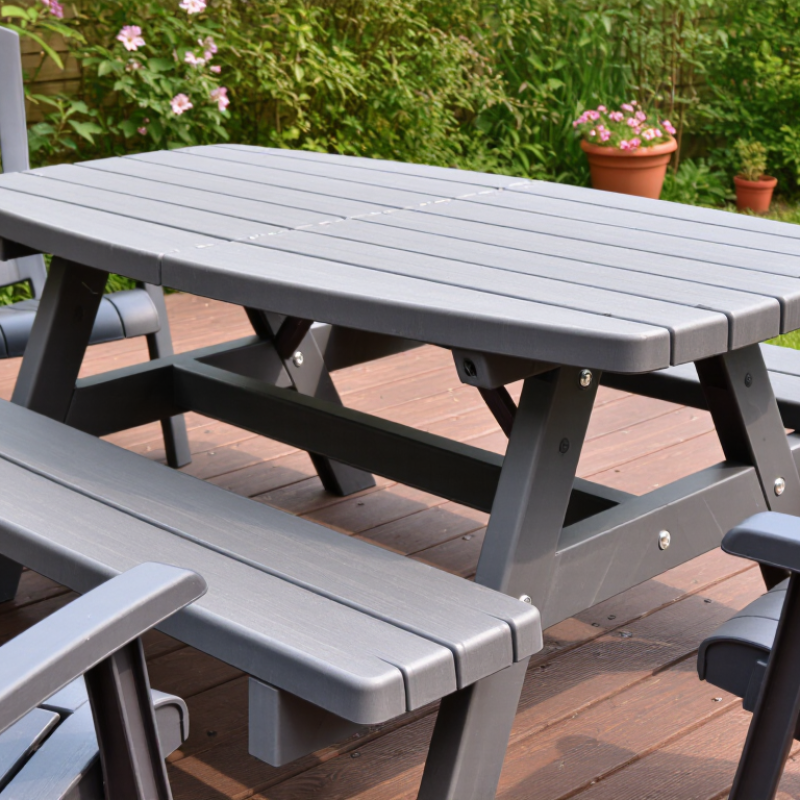
Definition and Core Characteristics of Recycled Plastic Furniture
Recycled plastic furniture is made partly or entirely from plastic recovered after use or manufacturing. Common feedstocks include packaging and containers; high-density polyethylene and polypropylene can be processed into molded seats, outdoor tables, or board-like slats. The material is usually sorted, washed, shredded, and remelted before shaping. Not every piece follows the same route. The OECD’s Global Plastics Outlook reports that just 9% of plastic waste was recycled worldwide in 2019. That figure makes feedstock quality and clear sourcing important, not merely the recycled-content claim.
Core characteristics include resistance to moisture, rot, and splintering, which can suit benches exposed to rain. Surface details may vary: some pieces show flecks, uneven color, or a slightly textured finish. That is not automatically a flaw. However, recycled content alone does not prove long service life. Polymer type, UV protection, construction, and maintenance all matter; heat can also soften some plastics. PlasticsEurope’s Plastics – the Fast Facts 2023 estimates that recycled plastics made up 8.9% of global plastics production in 2022. A buyer should check whether the stated percentage refers to the whole product or only selected parts. A label alone tells little. Recycled furniture can reduce demand for virgin material, but its real performance depends on design, documented material content, and how long it remains in use.
What Is Recycled Plastic Furniture? — Definition and Core Characteristics
Recycled plastic furniture is made partly or entirely from recovered plastic. Density varies by polymer: these representative values show why different plastics can affect a product’s weight. Actual recycled-material density may vary with grade, additives, and processing.
Plastic Types and Sources Used in Furniture Production
Recycled plastic furniture is made from plastic waste that has been collected, sorted, and processed into usable material. Common feedstocks include high-density polyethylene (HDPE) from detergent bottles and milk jugs, and polypropylene (PP) from tubs, crates, and packaging. Some makers also use recycled polyethylene terephthalate (PET), often recovered from drink bottles. Each plastic behaves differently when heated and shaped, so the type affects the finished piece’s stiffness, texture, and resistance to moisture.
The source matters, too. Post-consumer plastics come from household or commercial waste, while post-industrial plastics are clean offcuts left over from manufacturing. Recovered fishing nets and other durable plastic goods can also supply material, though they need careful sorting and cleaning. After processing, the plastic may be shredded into flakes or pellets, then molded or extruded into furniture parts. You might see tiny flecks or slight color shifts in a surface. That variation is normal.
A recycled-content label does not tell the whole story. The material may be made from one plastic type or a blend, and blends can be harder to process consistently. Contamination, sunlight exposure, and repeated heating can affect strength and appearance. In practical terms, a chair leg should feel firm, not brittle, and edges should look evenly finished. Still, recycled plastic is not automatically better in every use; durability depends on the feedstock, design, and quality checks. The details are easy to overlook.
How Recycled Plastic Furniture Is Made
Recycled plastic furniture begins with discarded plastic that can be recovered and processed, often including high-density polyethylene or polypropylene. It starts with sorting. Workers separate suitable material by type and remove labels, dirt, and unsuitable pieces. The plastic is washed, dried, and shredded into small flakes.
Small pieces matter.
Mixed plastics can melt differently, which may weaken a finished board or make its surface uneven. The flakes are heated and filtered, then formed into pellets or pressed into thick boards. These are cooled, cut, drilled, and assembled into chairs, benches, or tables. Some manufacturers add colorants or stabilizers to help control appearance and outdoor performance. Quality checks may include measuring parts and testing joints under load.
The process is not perfectly uniform. Recycled feedstock can vary in color and texture, so a slight speckle or shade difference may remain. That variation is worth acknowledging: a recycled label alone does not tell you how durable a piece will be. Construction, material consistency, and careful assembly matter too.
Common Designs and Applications
Recycled plastic furniture is commonly shaped into park benches, patio chairs, picnic tables, loungers, and storage boxes. Many designs use thick boards with visible grain-like textures, while others have smooth, molded surfaces. Colors often run through the material, so small scratches may be less noticeable. It can feel heavier than wood. That weight can help outdoor furniture stay put, but moving a table alone may be awkward.
These pieces suit gardens, balconies, poolside areas, schoolyards, and public seating spaces. A bench beside a gravel path can handle damp mornings without needing the same routine sealing as untreated timber. Dining sets work well on patios, though sturdy feet matter on uneven paving. Some recycled plastic boards expand or contract with temperature changes, so installers should leave the clearances specified by the maker. Quality varies, and not every item feels as rigid as it looks.
Tips: Check the stated weight capacity and care instructions before buying. Measure doorways and storage space, too. A quick rinse usually removes dust, but textured grooves may need a soft brush. For exposed sites, consider wind and drainage; even weather-resistant furniture benefits from sensible placement. Don’t assume “recycled” means indestructible.
What Is Recycled Plastic Furniture? - Common Designs and Applications
| Furniture Design | Common Recycled Material | Typical Features | Common Applications | Practical Considerations |
|---|---|---|---|---|
| Outdoor dining chairs | Recycled high-density polyethylene (rHDPE), sometimes molded with other recycled plastics | Often molded as a single seat-and-back shell or assembled from plastic lumber components; available with or without armrests. | Patios, gardens, outdoor cafés, and picnic areas | Check the product’s stated load capacity and whether it is designed for outdoor exposure. Clean with mild soap and water. |
| Park and picnic tables | Recycled plastic lumber, commonly made from mixed post-consumer plastics | Bench and tabletop boards are supported by a frame; designs may include attached seating or wheelchair-accessible spaces. | Parks, school grounds, playgrounds, and public picnic areas | Installation, anchoring, and accessible layout depend on the site. Plastic lumber can expand and contract with temperature changes. |
| Benches | Recycled plastic lumber or molded rHDPE | Available in backless or backed designs, with straight or contoured seating surfaces. | Walkways, gardens, transit stops, campuses, and recreation areas | For public settings, consider secure fixing, drainage, and the required seating capacity. Color and surface texture vary by product. |
| Adirondack-style chairs | Recycled plastic lumber or molded recycled polyethylene | Typically feature a reclined back, broad armrests, and a low seat; some designs are assembled from boards. | Decks, gardens, waterfront areas, and outdoor seating zones | The low seat may not suit every user. Review dimensions and weight before choosing a model for a specific setting. |
| Outdoor loungers | Recycled polyethylene or recycled plastic lumber, sometimes combined with metal hardware | Designed for reclining; some models have adjustable backrests or wheels. | Poolside areas, terraces, beaches, and outdoor hospitality spaces | Confirm that hardware is suitable for the intended environment and follow care instructions, especially around chlorinated or salty water. |
| Planters and planter benches | Recycled plastic lumber or molded recycled plastic | May combine a planting container with a seat or be built as a standalone planter. | Courtyards, balconies, gardens, and streetscape projects | Planters need drainage. Check the design’s capacity and placement requirements before filling with soil. |
| Indoor or multipurpose chairs | Recycled polypropylene or other recycled thermoplastics, depending on the product | Lightweight molded forms are common; designs may be stackable for storage. | Classrooms, meeting areas, dining spaces, and community facilities | Recycled content and performance vary by product. Verify indoor-use suitability, cleaning guidance, and applicable safety requirements. |
| Recycled plastic furniture: material and sourcing | May include recycled HDPE, polypropylene, or mixed recycled plastic; exact composition varies | Furniture can be molded or made from plastic lumber. Recycled content may come from post-consumer or post-industrial material. | Indoor and outdoor settings, depending on the design and material specification | Look for clear information about recycled-content percentage, material type, durability testing, and end-of-life options. “Recycled plastic” does not describe one uniform material. |
Durability, Environmental Benefits, and Care Considerations
Recycled plastic furniture is often made from recovered polymers such as high-density polyethylene. Its durability depends on the material blend, construction, and exposure to sun and heat. Many pieces resist moisture, splintering, and rot, making them practical for patios and damp areas. But “durable” does not mean indestructible. Dark surfaces can become hot, and prolonged sunlight may fade some finishes or weaken lower-quality components.
The OECD’s 2022 Global Plastics Outlook estimates that only 9% of plastic waste worldwide was ultimately recycled in 2019. This is a broad plastics figure, not a furniture-specific measurement. Still, it shows why using recycled feedstock can matter: it gives some discarded plastic another use and may reduce demand for virgin material. The full benefit depends on manufacturing energy, transport, product lifespan, and what happens when the furniture is discarded. Recycled content alone is not a complete environmental score.
Care is straightforward. Wipe surfaces with mild soap, water, and a soft cloth; rinse away grit before it scratches. Avoid abrasive pads and harsh solvents unless the maker’s care guidance permits them. Store cushions separately, and use shade or a cover during long periods of intense sun. Check joints and fasteners each season, especially after freeze-thaw weather. Small details matter. One honest caveat: recycled materials can vary in color and texture, so a sample may not match every finished piece exactly.
Related Posts
-
How to Choose Recycled Plastic Furniture for Global Sourcing
-

2026 Top Recycled Plastic Furniture Suppliers for Buyers?
-
How to Source Recycled Plastic Furniture in 2026
-

How to Choose Recycled Plastic Furniture for Your Business?
-
10 Best Recycled Plastic Furniture Suppliers Worldwide
-

What Are the 2026 Top Recycled Materials for Global Buyers?