
Top 10 Student Leather Shoes for Global Buyers
For global buyers, student footwear is not a minor uniform purchase. It combines durability, comfort, appearance, and predictable supply. Student Leather Shoes must withstand crowded corridors, wet pavements, daily commuting, and repeated polishing. The World Footwear Yearbook 2024 reports a global footwear industry exceeding 20 billion pairs annually. That scale shows strong demand, but it also reveals wide differences in materials, factories, and quality. Volume does not guarantee value.
This guide, “Top 10 Student Leather Shoes for Global Buyers,” evaluates practical choices for schools, distributors, retailers, and families. Industry analyses from Grand View Research and Fortune Business Insights identify durability, design, price, and material quality as important footwear purchasing factors. We apply those principles to leather uppers, stitching, lining, insoles, outsole grip, and size consistency. Comfort matters. A stiff collar can turn a short walk into a painful routine. A smooth outsole may look elegant but perform poorly on wet floors.
Purchasing teams should also review supplier experience, production capacity, testing records, and responsible sourcing policies. Leather quality should be supported by clear specifications, not attractive product photography alone. Buyers need flexing, abrasion, colorfastness, and chemical-compliance information. Regional school rules and climate conditions deserve equal attention. A black Oxford may suit a formal uniform, while a breathable Derby may work better in warmer regions. No ranking is perfect. Foot shape, maintenance habits, and local preferences can change the result. That is why this selection balances measurable performance with real-world use, while acknowledging that even well-tested shoes may disappoint some students.
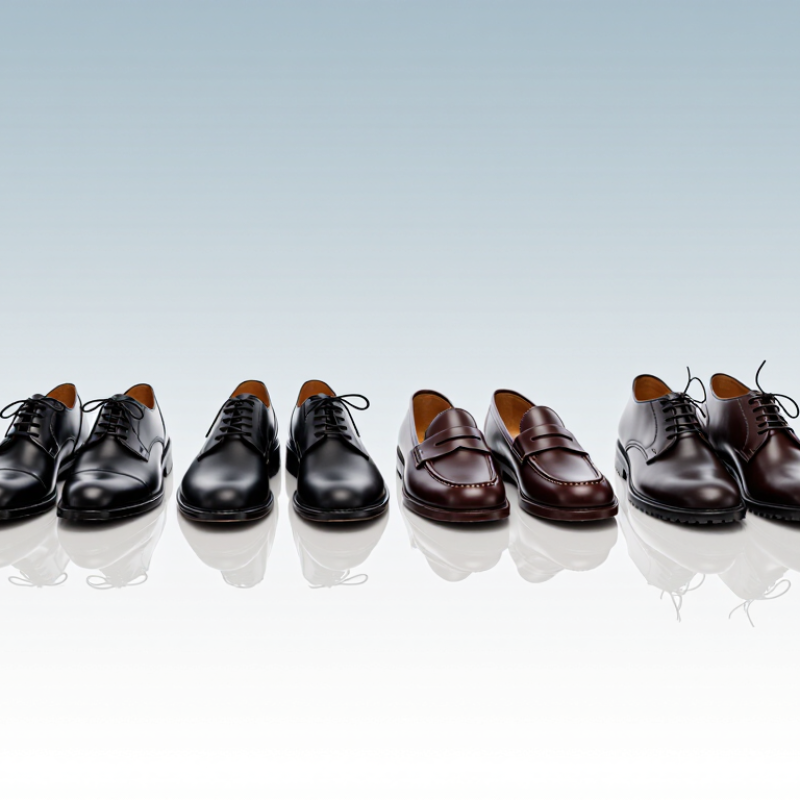
What Defines a Quality Student Leather Shoe for Global Buyers
A quality student leather shoe should handle crowded corridors, wet pavement, and long school days without feeling stiff by lunchtime. Fit comes first. Check that toes can move freely and the heel stays secure when walking. Sizing varies between suppliers and markets, so provide foot-length measurements alongside standard size labels. A chart helps, but it cannot replace a sample fitting.
Look closely at the leather surface, seams, and lining. Even color and clean stitching are useful signs, but appearance alone does not prove durability. Gently flex the shoe near the ball of the foot; it should bend there without collapsing. The sole should grip smooth floors and attach evenly to the upper. A breathable lining can reduce clamminess during warm days, while a padded collar helps limit rubbing. Small details matter.
For global buyers, compare samples under ordinary use, not just showroom lighting. Walk on tile, pavement, and stairs, then inspect the seams and sole edges. Ask suppliers how materials and sizing are checked across production batches. Leather may show small natural marks, and rejecting every variation can raise costs without improving wear. Still, inconsistent stitching or a poor fit deserves attention. One sample can look excellent; repeated pairs may tell a less comfortable story.
Top 10 Student Leather Shoes for Global Buyers
What defines a quality student leather shoe? Compare key evaluation criteria on a buyer-priority scale from 1 (lower priority) to 5 (higher priority). Scores are an indicative framework, not results from a market survey.
Durability, fit, and comfort are central considerations for shoes intended for frequent school-day wear. Buyers should also verify material specifications, construction quality, and applicable safety or labeling requirements in each destination market.
Key Factors for Comparing Student Leather Shoes
When comparing student leather shoes, start with fit, construction, and repairability—not appearance alone. A school shoe should hold the heel without rubbing and leave room for toes to spread. Check both shoes near the end of the day, when feet may be slightly larger. Leather should bend across the forefoot, not collapse at the sides. Look closely at stitching around the toe and sole; loose threads can signal weak assembly. Small detail. Ask whether the insole can be replaced, too.
Sole grip and wear matter on wet walkways and polished corridors. Buyers can request test results for slip resistance, flexing, and sole attachment, rather than relying on claims such as “durable.” ISO 13287 describes a method for testing footwear slip resistance, though results depend on the test surface and conditions. That limitation matters. APICCAPS’ World Footwear Yearbook 2024 estimated global footwear production at about 22.4 billion pairs in 2023, a figure that shows the scale of sourcing but does not measure school-shoe quality. Compare sample pairs under the same conditions, and record weights, outsole thickness, and wear after repeated bending. Leather grades and finishes can vary; even careful checks cannot predict every child’s comfort. A practical choice may still need a second fitting.
Top 10 Student Leather Shoe Styles by Use and Design
For global buyers, “student leather shoes” covers different needs, not one universal uniform. The World Footwear Yearbook 2024 reports that global footwear production reached about 22.4 billion pairs in 2023, with Asia accounting for roughly 87% of output. That scale makes consistent sizing and construction worth checking across suppliers. Still, a production figure cannot tell buyers whether a shoe suits a long school day.
Ten useful styles stand out by use and design: Oxford for formal uniforms; Derby for a roomier lace-up fit; penny loafer for quick changes; monk strap for a buckle closure; Mary Jane for a secure strap; T-bar for added hold; brogue for decorative perforations; moc-toe for a softer-looking front; plain-toe lace-up for easy cleaning; and ankle boot for colder weather. Small details matter. A stiff heel counter can rub, while a flexible forepart helps students climb stairs and walk between classes. Leather also needs care; polished uppers may show scratches quickly. Buyers should request size charts, lining details, and wear-test feedback, then compare samples under real school conditions. I would not assume a neat appearance means lasting comfort. That part is easy to get wrong.
Top 10 Student Leather Shoes for Global Buyers - Top 10 Student Leather Shoe Styles by Use and Design
| No. | Shoe Style | Typical Student Use | Design Characteristics | Common Leather | Sole and Traction | Closure | Best Climate | Care Level | Typical Weight per Pair |
|---|---|---|---|---|---|---|---|---|---|
| 1 | Classic Leather Oxford | School uniforms, presentations, formal events | Closed-lacing design, clean quarters, structured toe, traditional formal appearance | Smooth full-grain or corrected-grain cow leather | Rubber or leather-rubber sole; moderate grip | Laces | Dry and temperate | Medium | 0.80–1.20 kg |
| 2 | Leather Derby | Daily campus wear, uniforms, commuting | Open lacing provides a wider opening and generally easier fitting than an Oxford | Full-grain or top-grain cow leather | Flexible rubber outsole; good everyday traction | Laces | Most climates | Medium | 0.85–1.30 kg |
| 3 | Leather Penny Loafer | Classroom wear, smart-casual outfits, indoor activities | Slip-on vamp with a saddle strap and distinctive penny slot detail | Smooth or lightly textured cow leather | Molded rubber or leather-rubber sole; moderate grip | Slip-on | Warm and temperate | Medium | 0.75–1.10 kg |
| 4 | Leather Monk Strap | Formal campus occasions, ceremonies, interviews | Decorative side buckle, adjustable strap, and streamlined dress-shoe profile | Full-grain or top-grain cow leather | Rubber or leather-rubber sole; moderate traction | Single or double buckle | Dry and temperate | Medium | 0.85–1.25 kg |
| 5 | Leather Moccasin | Long classroom days, driving, relaxed campus wear | Soft upper, low profile, flexible construction, and often visible apron stitching | Soft suede, nubuck, or supple full-grain leather | Flexible rubber sole; good ground feel and moderate grip | Slip-on | Warm and dry | Medium to high | 0.65–1.00 kg |
| 6 | Leather Chukka Boot | Cool-weather commuting, outdoor study, casual uniforms | Ankle-height upper, open lacing, and usually two or three pairs of eyelets | Full-grain cow leather or suede | Rubber lug or crepe-style sole; good walking traction | Laces | Cool and temperate | Medium | 1.00–1.45 kg |
| 7 | Leather Chelsea Boot | Winter campus wear, smart-casual outfits, quick changes | Ankle-height slip-on boot with elastic side panels and pull tabs | Smooth full-grain or top-grain cow leather | Rubber outsole; dependable traction on ordinary wet pavement | Elastic side panels | Cool and temperate | Medium | 1.05–1.50 kg |
| 8 | Leather Apron-Toe Shoe | Everyday study, practical uniforms, campus walking | Raised seam around the toe creates a visible apron and adds casual character | Oiled full-grain or pebbled cow leather | Textured rubber sole; good everyday grip | Laces or slip-on construction | Most climates | Low to medium | 0.90–1.35 kg |
| 9 | Leather Trainer | Daily commuting, light walking, casual student activities | Sport-inspired shape with leather panels, padded collar, and cushioned footbed | Smooth leather, suede, or leather-textile combination | EVA midsole with rubber outsole; good cushioning and traction | Laces | Most climates | Medium | 0.70–1.10 kg |
| 10 | Leather School Mary Jane | Primary and secondary school uniforms, everyday classroom wear | Low-cut upper with a strap across the instep; easy to put on and remove | Smooth or coated cow leather | Slip-resistant rubber sole; stable walking support | Hook-and-loop strap or buckle | Most climates | Low to medium | 0.65–1.00 kg |
Note: Weight ranges are typical estimates for an adult pair and vary according to size, leather thickness, construction, lining, and outsole material.
Sizing, Comfort, Durability, and School Dress Requirements
Top 10 Student Leather Shoes for Global Buyers
Sizing, comfort, durability, and school rules should guide every student leather shoe shortlist. The ISO 19407:2023 standard offers conversion guidance between international footwear sizing systems, but measurements still vary by manufacturer. Buyers should measure both feet late in the day, when swelling is more likely. Leave about 10–12 millimeters of toe space. Too tight feels smart in the showroom and painful by Friday.
The APMA’s 2014 Foot Health Survey reported that 77% of adults had experienced foot pain. Students need more than polished leather. Look for a supportive insole, flexible forefoot, stable heel counter, and breathable lining. Ten strong options should cover plain black oxfords, loafers, lace-ups, wide-fit styles, and weather-resistant designs. Check whether the school requires closed toes, dark colors, low heels, or non-marking soles. Local rules differ. Durability deserves evidence, not confident adjectives. Ask for flexing, abrasion, and water-resistance test results, preferably linked to recognized laboratory methods. The World Footwear Yearbook 2023 recorded 23.9 billion pairs produced globally in 2022, showing the scale of the supply chain. Yet high volume does not guarantee lasting comfort. A stitched outsole may support repair, while bonded soles can separate after repeated wet commutes. Sometimes, the “best” shoe is simply the one a student will actually wear. That judgment is imperfect.
How Global Buyers Can Select and Source the Right Shoes
Top 10 Student Leather Shoes for Global Buyers
Selecting student leather shoes for international markets requires more than checking appearance. Buyers should compare leather quality, sole construction, stitching, comfort, and sizing consistency. A polished sample can still hide weak bonding or uncomfortable pressure points. Request material specifications, test reports, and production photos before placing a large order. Check whether the factory can maintain the same finish across different batches. This is where sourcing judgment matters.
Consider the student’s daily routine. A durable rubber sole suits long walks and wet campuses. Breathable lining helps during warm seasons. Cushioned insoles may reduce fatigue, but they should not make the shoe feel unstable. Ask suppliers for size charts based on actual foot measurements, not only regional labels. Confirm carton strength, moisture protection, labeling, and delivery terms. Import requirements vary, so buyers should verify applicable product and chemical standards with qualified local authorities.
Tips: Order samples in several sizes. Test them for a full school day. Inspect heel wear, creasing, odor, and sole grip. Compare at least three suppliers using the same checklist. Keep written records of approved materials and tolerances. Do not trust low prices alone. A cheaper pair may create higher return costs. Some decisions will need revision after user feedback, and that is normal. Real sourcing improves through careful testing, not confident assumptions.