
Top Tempura Powder Suppliers for Global Buyers?
Global buyers need more than a bright package and a low quotation when selecting a Tempura Powder supplier. They need consistent performance, clear documentation, and dependable delivery across changing markets. A powder that creates crisp shrimp in Osaka may behave differently in humid Singapore or cold Rotterdam. Water quality, mixing time, frying temperature, and oil conditions can change the final texture.
Japanese culinary authority Shizuo Tsuji wrote, “The batter should be mixed as little as possible.” That principle still matters when evaluating commercial formulations. A reliable supplier should explain how its Tempura Powder supports light coating, stable adhesion, and controlled oil absorption. Buyers should also review ingredient declarations, allergen statements, batch testing, shelf-life data, and packaging protection. These details are not exciting. They prevent expensive surprises.
This guide examines leading Tempura Powder suppliers for international purchasing teams. It considers manufacturing experience, production capacity, private-label options, minimum order quantities, certifications, and export support. Some suppliers may offer excellent texture but limited documentation. Others may provide strong compliance systems but less flexibility for custom recipes. No supplier is perfect. That is worth remembering.
A good comparison also requires practical testing. Ask for samples, fry identical vegetables, and measure crispness after ten minutes. Check whether the coating remains pale, clean, and evenly attached. Confirm shipment conditions before signing a contract. Supplier claims deserve verification, not automatic trust. This overview helps global buyers make a more informed decision, while recognizing that local kitchens and real-world trials remain essential.
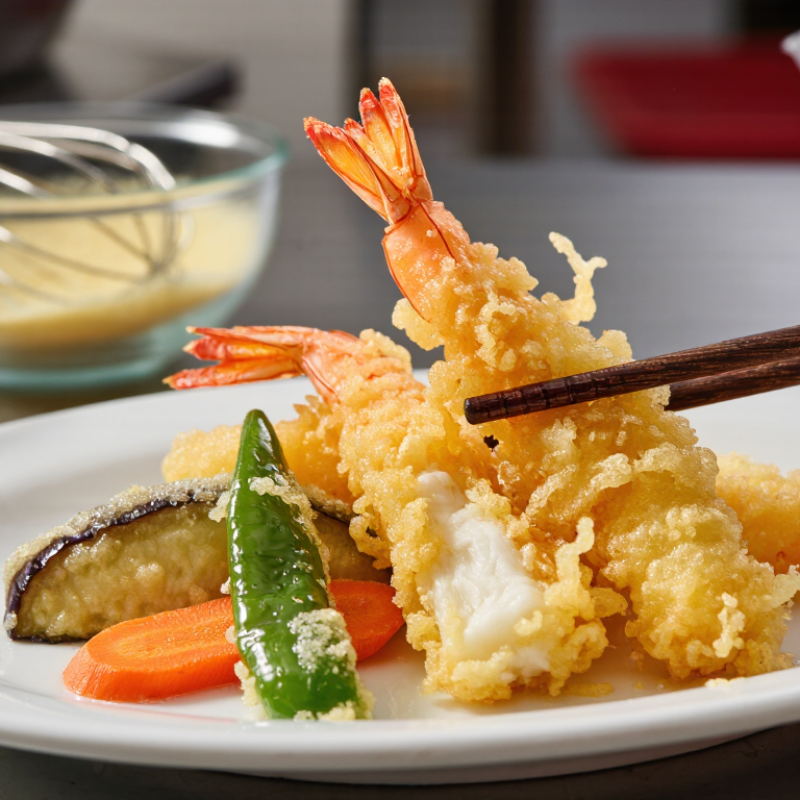
What Tempura Powder Is and How It Shapes Batter Quality
Tempura powder is a pre-mixed dry blend designed to create a light, crisp coating. It commonly contains wheat flour, starch, leavening agents, and salt. Some formulas also include rice flour for a cleaner, less oily bite. The balance matters more than any single ingredient.
In commercial kitchen trials, water temperature strongly affects batter quality. Cold water slows gluten development and helps preserve a delicate texture. Overmixing creates toughness, even when the powder is well formulated. Small details matter. A few visible lumps can be useful, while a perfectly smooth batter may fry too heavily. Batter thickness also changes with humidity, storage time, and ingredient temperature.
Global buyers should ask suppliers for ingredient specifications, allergen information, moisture limits, and batch testing records. Reliable suppliers should explain recommended mixing ratios instead of offering vague claims about crispness. Packaging must protect the powder from heat and humidity during transport. Texture changes fast. A powder that performs well in one kitchen may need adjustment elsewhere. Local water hardness, fryer temperature, and seafood moisture can all influence results. This is where product testing becomes essential. A sample may look promising, yet fail after thirty minutes of service. That tradeoff matters. Buyers should compare several samples under the same frying conditions before selecting a long-term supplier.
| Evaluation Dimension | Typical Technical Benchmark | What Global Buyers Should Check | How It Shapes Batter Quality |
|---|---|---|---|
| Product Format | Dry premix powder Ready to blend with water before frying | Confirm whether the product is a complete premix or requires separate flour, starch, salt, or leavening agents. | A complete premix improves batch-to-batch consistency and reduces weighing errors in foodservice and industrial kitchens. |
| Core Ingredient Structure | Usually based on wheat flour and/or starch, with salt and optional leavening or emulsifying ingredients | Request the full ingredient declaration, function of each ingredient, and permitted additive status for the destination market. | Flour provides structure, while starch generally supports a lighter, crisper coating. Leavening can increase porosity and apparent lightness. |
| Water-to-Powder Ratio | Common working range: approximately 1.3–1.8 parts water by weight to 1 part powder; the product label remains the controlling specification | Ask for the recommended ratio, mixing method, target viscosity, and tolerance for overmixing. | Too little water produces a thick, heavy coating; too much water can reduce adhesion and create weak, uneven coverage. |
| Batter Temperature | Typically prepared with cold water, often around 0–10°C | Check whether chilled or iced water is required and whether the supplier specifies a maximum batter temperature. | Cold batter helps limit gluten development and supports a lighter, more delicate crust when combined with brief mixing. |
| Mixing Requirement | Short, gentle mixing; small lumps may be acceptable in traditional tempura-style batter | Evaluate recommended mixing time, equipment compatibility, and holding stability after mixing. | Overmixing can develop gluten in wheat-based formulas, making the coating tougher and less crisp. |
| Batter Viscosity | Should be fluid enough to coat the ingredient while remaining attached during transfer to the fryer | Request a standardized viscosity test method rather than relying only on visual descriptions such as “light” or “thick.” | Stable viscosity improves coating weight, surface coverage, appearance, and frying consistency across different operators. |
| Frying Temperature | Common operating range: approximately 170–180°C, depending on the food being fried | Confirm the supplier’s recommended oil temperature, frying time, and product-to-oil loading ratio. | Insufficient heat can increase oil uptake and produce a soft crust; excessive heat can brown the coating before the center is cooked. |
| Crispness Retention | Must be assessed under a defined holding period and serving condition; no universal value applies to every formula | Request test data for immediate service, short hot holding, delivery, and reheating where relevant. | Starch selection, particle size, leavening, moisture migration, and frying conditions all influence how long the crust stays crisp. |
| Powder Moisture | Many dry batter mixes are controlled at roughly 10–12% moisture or below, subject to the product specification | Review the declared moisture specification, water activity data when available, and packaging moisture barrier. | Excess moisture can cause caking, shorten shelf life, and reduce powder flowability and mixing performance. |
| Particle Size and Flowability | Uniform, free-flowing powder with limited visible agglomeration | Ask for sieve or particle-size data, anti-caking controls, and performance after international transportation. | Consistent particle size supports even hydration and reduces dry pockets, lumps, and variation in batter viscosity. |
| Allergen and Dietary Status | Wheat and gluten are common considerations; egg, milk, soy, or shared-line allergens may also apply | Verify allergen declarations, cross-contact controls, vegan suitability, halal or kosher status, and destination-country labeling rules. | Clear allergen control protects consumers and prevents import, labeling, and foodservice compliance problems. |
| Food-Safety Documentation | Lot-level certificate of analysis, traceability, HACCP-based controls, and an applicable third-party food-safety certification | Check microbiological specifications, contaminant controls, recall procedures, audit status, and certificate validity. | Verified controls reduce the risk of contamination, inconsistent batches, customs delays, and rejected shipments. |
| Shelf Life and Packaging | Common unopened shelf-life range: approximately 12–24 months when stored in a cool, dry place; exact life is product-specific | Confirm manufacture date, minimum remaining shelf life at shipment, packaging format, seal integrity, and storage conditions. | Moisture and oxygen protection help preserve powder flow, leavening activity, flavor, and frying performance during global distribution. |
| Export Readiness | Documentation should match the importing country and shipment method | Request commercial invoice data, packing list, certificate of origin when required, HS-code guidance, pallet details, and multilingual labels. | Complete export documentation supports smoother customs clearance and reduces the risk of relabeling or shipment delays. |
| Customization Capability | Possible adjustments may include gluten-free starch systems, reduced sodium, egg-free formulas, or different crispness targets | Evaluate minimum order quantity, pilot-batch support, formulation ownership, validation testing, and change-control procedures. | A customized formula can improve performance for specific ingredients, frying equipment, holding times, and regulatory requirements. |