
What Are the Top Recycled Building Materials in 2026?
The search for better construction materials is becoming more practical in 2026. Recycled building materials now appear in homes, offices, roads, and public infrastructure. They can reduce landfill waste while preserving valuable resources.
This guide examines recycled steel, reclaimed timber, recycled concrete aggregate, glass, plastics, and gypsum products. Each material offers different benefits. Steel can be repeatedly recycled without losing significant strength. Reclaimed wood adds visible character, such as nail marks, uneven grain, and warm aging. Crushed concrete can support new foundations, pathways, and drainage layers when it is properly processed and tested.
Performance still matters more than attractive environmental claims. A reliable comparison should consider recycled content, structural strength, moisture resistance, fire safety, transport distance, maintenance, and end-of-life recovery. Certification and supplier documentation also deserve close attention. A low-impact material can become less sustainable when transported across long distances or replaced too soon.
There is no universal winner.
Some claims remain difficult to verify. Manufacturers may report recycled content differently, and local recycling systems vary widely. That uncertainty should not be ignored. It should guide better questions. This overview uses practical building considerations and established material knowledge to identify promising choices for 2026. It also recognizes an uncomfortable truth: recycled materials are not automatically superior. Their real value depends on responsible sourcing, careful testing, skilled installation, and honest measurement.
Definition and Role of Recycled Building Materials in 2026
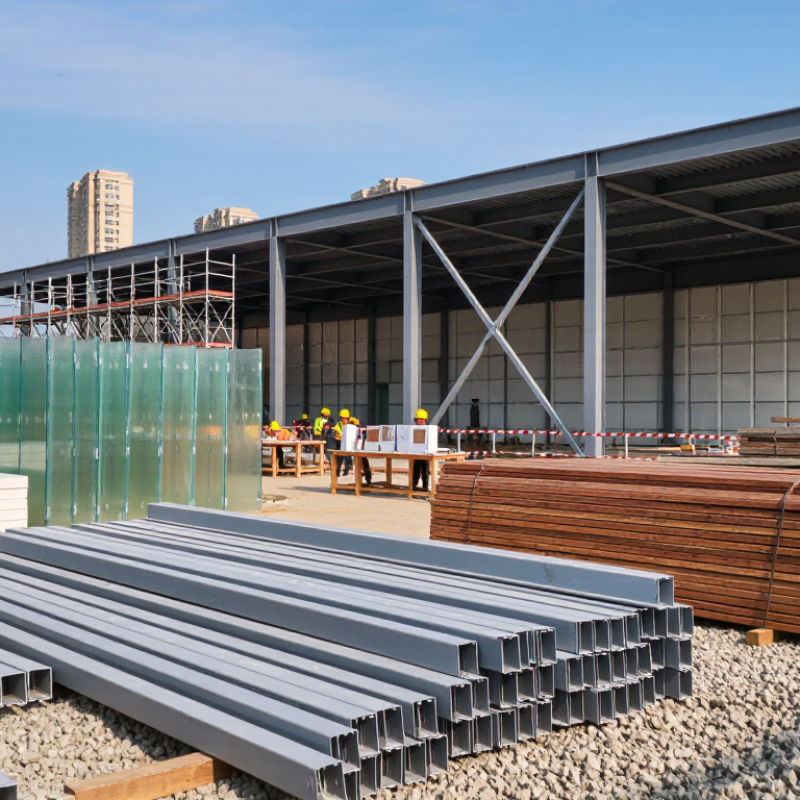
In 2026, recycled building materials are products made partly or wholly from recovered construction, industrial, or post-consumer waste. Their role extends beyond waste reduction. They conserve raw materials, reduce landfill pressure, and can lower embodied carbon when processing remains efficient. UNEP’s 2024 Global Status Report for Buildings and Construction states that buildings consumed 32% of global energy and produced 34% of global carbon emissions in 2023. The US Environmental Protection Agency estimates that American construction and demolition activities generated about 600 million tons of debris in 2018. The scale is difficult to ignore.
The leading materials include recycled steel, concrete aggregate, glass, asphalt, gypsum, and reclaimed timber. Steel remains highly valuable because it can be repeatedly recycled without losing its basic performance. Recycled aggregate can replace part of virgin stone in foundations and non-structural concrete. Reclaimed wood adds visible character, but moisture, treatment history, and structural grading require careful inspection. Recycled glass can appear in tiles, insulation, or decorative surfaces. It looks simple. It is not.
Material passports and documented chain-of-custody records are becoming more important in 2026. They help project teams verify recycled content, origin, testing, and future recovery options. However, recycled content alone does not guarantee sustainability. Contamination, long-distance transport, weak durability, and downcycling can reduce the benefit. The Circularity Gap Reporting Initiative has repeatedly shown that global material circularity remains very low. That uncomfortable gap deserves attention. Better design, reliable data, and practical site testing matter as much as the material label.
| Material | Typical Recycled or Reclaimed Content in 2026 | Main Recycled Feedstock | Common Building Applications | Primary Role in Sustainable Construction | Important Performance or Design Considerations |
|---|---|---|---|---|---|
| Recycled Steel | Approximately 60–90% | End-of-life vehicles, structural sections, reinforcement bars, steel fabrication scrap and demolition waste | Structural frames, reinforcing bars, roof systems, façades, stairs and modular components | Provides high-strength structural performance while reducing the need for virgin iron ore and supporting repeated material recycling | Actual recycled content depends on the production route, product type, electricity mix and regional scrap supply; structural certification remains essential |
| Recycled Aluminium | Approximately 25–80% | Window frames, curtain-wall components, beverage containers, transport parts and fabrication offcuts | Windows, doors, façades, roofing, interior partitions and lightweight structural components | Maintains useful material properties through repeated recycling and generally requires far less energy than primary aluminium production | Coatings, alloys and mixed scrap can affect sorting quality; thermal bridging and fire performance must be addressed in the building design |
| Recycled Concrete Aggregate | Approximately 10–30% in common concrete mixes; higher levels are possible in suitable applications | Crushed concrete from demolished buildings, roads, bridges and infrastructure | Sub-base, road foundations, drainage layers, pavements, precast products and selected structural or non-structural concrete | Diverts mineral demolition waste from disposal and reduces demand for newly quarried aggregate | Absorption, contamination, grading, strength, shrinkage and durability must be tested; higher replacement ratios require project-specific mix design |
| Reclaimed Asphalt Pavement | Approximately 20–40% in many asphalt mixtures; higher proportions may be technically feasible | Milled road surfaces, removed asphalt pavement and asphalt-processing waste | Road surfaces, parking areas, driveways, pathways and pavement base layers | Reduces the use of virgin aggregates and bituminous binder while preserving material value within pavement systems | Binder aging, mixture temperature, cracking resistance and local pavement specifications control the acceptable replacement level |
| Recycled Glass | Approximately 20–90%, depending on the product and application | Post-consumer glass containers, flat-glass offcuts and construction-site glazing waste | Glass insulation, terrazzo, countertops, glass aggregate, tiles, blocks and selected new glass products | Reduces the extraction of mineral raw materials and can lower furnace energy demand when suitable cullet is available | Color separation, ceramic contamination, coatings and particle size affect quality; safe handling is required for crushed glass aggregate |
| Recycled Gypsum | Approximately 5–20% in many gypsum products; higher content depends on purity and processing | Clean plasterboard offcuts, unused board and gypsum recovered from selective demolition | Plasterboard, gypsum panels, interior linings, plaster and selected cement applications | Reduces landfill disposal and decreases demand for newly quarried gypsum while supporting closed-loop interior construction | Paper, insulation, paint, screws and other contaminants must be removed; moisture control and hydrogen-sulfide prevention are important |
| Reclaimed and Recycled Timber | Approximately 5–30% recycled content in composite products; reclaimed products can be nearly 100% recovered wood | Demolished floors, beams, doors, pallets, manufacturing offcuts and clean wood waste | Flooring, roof members, wall framing, furniture, cabinetry, acoustic panels and wood-based boards | Extends the service life of stored biogenic carbon and reduces demand for virgin timber when reuse is technically appropriate | Moisture, insects, hidden fasteners, preservatives, adhesives, structural grading and fire performance must be evaluated before reuse |
| Recycled Plastic | Approximately 10–50%, depending on polymer type and product | Post-consumer packaging, construction plastics, industrial scrap and recovered polymer waste | Insulation components, drainage products, piping, decking, flooring, panels, membranes and composite products | Converts difficult-to-manage polymer waste into durable construction products and can reduce demand for virgin polymers | Polymer compatibility, ultraviolet exposure, fire behavior, chemical additives, microplastic risk and end-of-life recyclability require assessment |
| Reclaimed Bricks and Masonry Units | Up to 100% reclaimed units when suitable materials are carefully recovered and reused | Whole bricks, blocks and masonry units recovered from building renovation or selective demolition | Load-bearing and non-load-bearing walls, façades, paving, landscape structures and interior finishes | Prioritizes direct reuse, preserves the embodied energy of fired products and reduces demand for newly manufactured masonry | Mortar removal, dimensional variation, frost resistance, compressive strength, water absorption and structural certification must be checked |
| Data note: The percentages are indicative planning ranges for 2026, not universal product specifications. Actual recycled content varies by product type, jurisdiction, feedstock quality, manufacturing process, certification method and project requirements. Reuse of whole components is counted separately from recycling because direct reuse generally preserves more material value. | |||||
Related Posts
-
Top Benefits of Using Recycled Building Materials for Sustainable Construction?
-
Top Tips for Using Recycled Building Materials Effectively?
-

Top 10 Eco Friendly Plastic Solutions for Global Buyers?
-
Top 10 Uses of Recycled Plastic Materials in Everyday Life?
-
Top 10 Ways to Recycle from Home Effectively?
-
Why Are Recycled Plastic Bottles Important for a Sustainable Future?