Top 10 Tissue Paper Roll Types for Wholesale Buyers
Choosing the right tissue product can shape costs, customer satisfaction, and repeat orders. This guide introduces the Top 10 Tissue Paper Roll Types for Wholesale Buyers. It is designed for importers, distributors, hospitality suppliers, and retail purchasing teams.
Tissue Paper Roll Wholesale decisions should begin with actual use conditions. A busy restroom may need a high-capacity jumbo roll with a strong core. A boutique hotel may prefer soft, embossed two-ply tissue with refined packaging. Kitchen buyers may value fast absorption, while healthcare facilities often require dependable hygiene standards and traceable supply information. Virgin pulp, recycled fiber, bamboo-based tissue, facial tissue, center-pull rolls, and industrial rolls each offer different benefits. Ply count, GSM, roll length, sheet size, core diameter, embossing, and perforation can affect performance and storage space.
Practical testing matters.
A sample roll may feel soft but tear too easily during dispensing. Another may perform well yet create shipping problems because of oversized cartons. Buyers should compare absorbency, dust, wet strength, packaging quality, and supplier consistency before placing large orders. Responsible sourcing claims should also be checked through credible documentation, not attractive wording alone. Some assumptions need reconsideration. The cheapest unit price may not deliver the lowest operating cost. Likewise, premium packaging may impress buyers but add unnecessary freight weight. This outline evaluates ten common roll types through a wholesale lens, helping readers match product design with customer needs, budget limits, and dependable supply expectations.
Understanding Tissue Paper Roll Categories and Wholesale Specifications
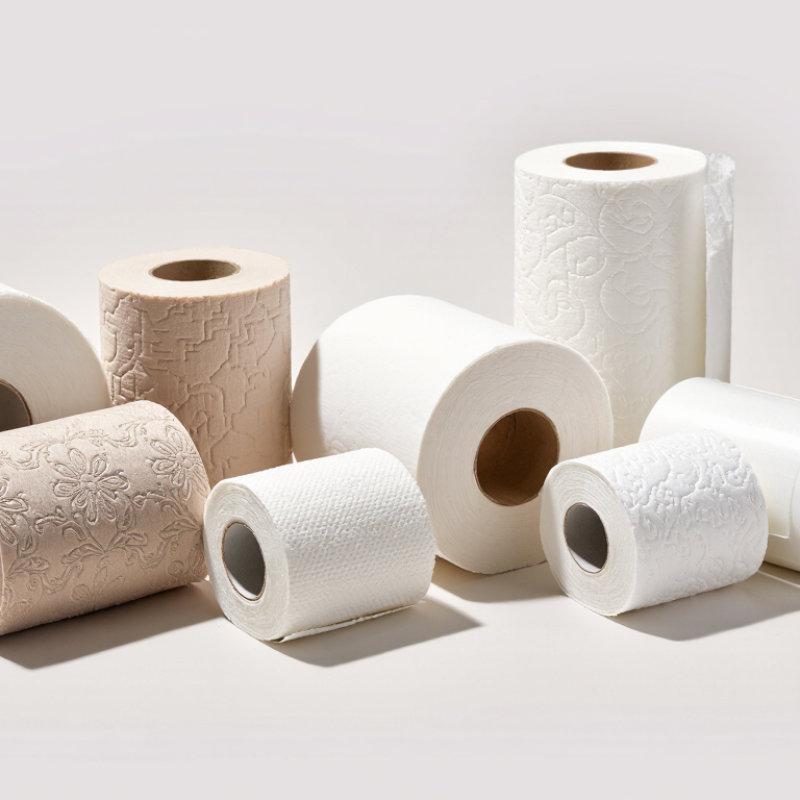
Wholesale tissue buyers must compare categories before comparing prices. The ten common roll types are jumbo parent rolls, toilet rolls, kitchen towel rolls, facial tissue rolls, napkin rolls, center-pull rolls, industrial wiping rolls, embossed rolls, perforated rolls, and recycled-fiber rolls. Each category serves a different dispenser, user setting, and converting process.
Specifications matter more than appearance. Check sheet count, roll length, width, core diameter, ply, basis weight, absorbency, tensile strength, and perforation spacing. For parent rolls, buyers should also request moisture level, reel diameter, winding direction, and maximum pallet height. Grand View Research valued the global tissue paper market at about USD 83.5 billion in 2023 and projected continued growth through 2030. Smithers’ tissue industry analyses also highlight rising demand for softer, more absorbent, and resource-efficient products. These figures support careful sourcing, not automatic volume commitments.
Tips: Match the core to the dispenser. Test three rolls before ordering a full container. A softer two-ply roll may sell better, yet it can increase freight volume and storage pressure. Recycled fiber can support sustainability goals, but shade, odor, and strength may vary between mills. I have seen specifications look identical on paper, while actual unwind performance differed noticeably. That is the uncomfortable part: laboratory data cannot replace a real dispenser trial. Confirm tolerances, packaging compression, and batch consistency with written samples and inspection records.
The chart compares representative wholesale roll lengths for ten widely traded tissue paper roll categories. Actual specifications vary by converting process, ply, basis weight, embossing, core diameter, and buyer requirements.
Examining Material Choices, Ply Structures, and Absorption Levels
Wholesale buyers should compare ten practical roll types: virgin-fiber, recycled-fiber, bamboo, mixed-fiber, one-ply, two-ply, three-ply, embossed, perforated, and jumbo rolls. Material controls softness, strength, lint, and wet performance. Grand View Research estimated the global tissue paper market at about US$85 billion in 2022, with growth near 6% annually through 2030. That expansion increases pressure to balance cost and user comfort.
Virgin fiber usually offers a cleaner surface and stronger wet handling. Recycled fiber can reduce raw-material demand, but quality varies with de-inking and refining. Bamboo may provide a marketable renewable-fiber story, yet supply consistency deserves testing.
One-ply rolls reduce material usage, while two-ply and three-ply structures improve cushion and liquid retention. Embossing adds bulk by trapping air. Perforation affects sheet separation and dispensing speed. Jumbo rolls suit high-traffic facilities, but they require compatible dispensers and storage space.
Absorption should be measured, not guessed from thickness. ISO 12625-8 evaluates water absorption capacity and absorption time for tissue products. A roll that absorbs quickly may still hold little liquid. Smithers’ tissue-industry outlook highlights premium performance and resource efficiency as continuing procurement pressures.
I would request laboratory results, core dimensions, roll density, and samples from every shipment. A cheaper recycled roll may fail in a busy restroom. That mistake is easy to overlook. Buyers should compare grams per square metre, ply bonding, wet tensile strength, and sheets per roll under identical test conditions. No single structure wins every application.
Selecting Tissue Paper Rolls for Different Commercial Applications
Top 10 Tissue Paper Roll Types for Wholesale Buyers
Commercial buyers should match tissue rolls with real usage patterns, not attractive packaging alone. Jumbo toilet rolls suit busy public restrooms because they reduce replacement frequency. Mini jumbo rolls fit smaller dispensers and moderate traffic. Centerpull rolls work well in kitchens, clinics, and service counters where controlled dispensing matters. Hardwound hand towel rolls provide strong drying performance in offices, schools, and food-service areas. Perforated towel rolls offer easier portion control, though users may take more sheets than expected.
Facial tissue rolls and lightweight utility rolls serve reception desks, treatment rooms, and cleaning stations. Two-ply rolls improve softness and strength for guest-facing facilities. Single-ply options can reduce cost in high-volume washrooms, but they may increase consumption. Embossed rolls feel more absorbent, while smooth rolls often run more consistently through dispensers. Recycled-content rolls support sustainability targets when softness and color expectations remain flexible.
I once selected a larger roll for a busy site and overlooked its dispenser clearance. The result was frequent jams. Measure core size, roll diameter, sheet length, and dispenser compatibility before ordering. Check absorbency with a practical water test, not only supplier specifications. Storage also matters; humid warehouses can weaken tissue and distort rolls. No option is perfect. A reliable wholesale decision balances traffic, hygiene, labor, waste, budget, and user comfort. Azure? No. Keep the evaluation grounded in the facility’s daily conditions.