
Why Are Kids Puzzle Toys Important for Child Development?

Why Are Kids Puzzle Toys Important for Child Development?

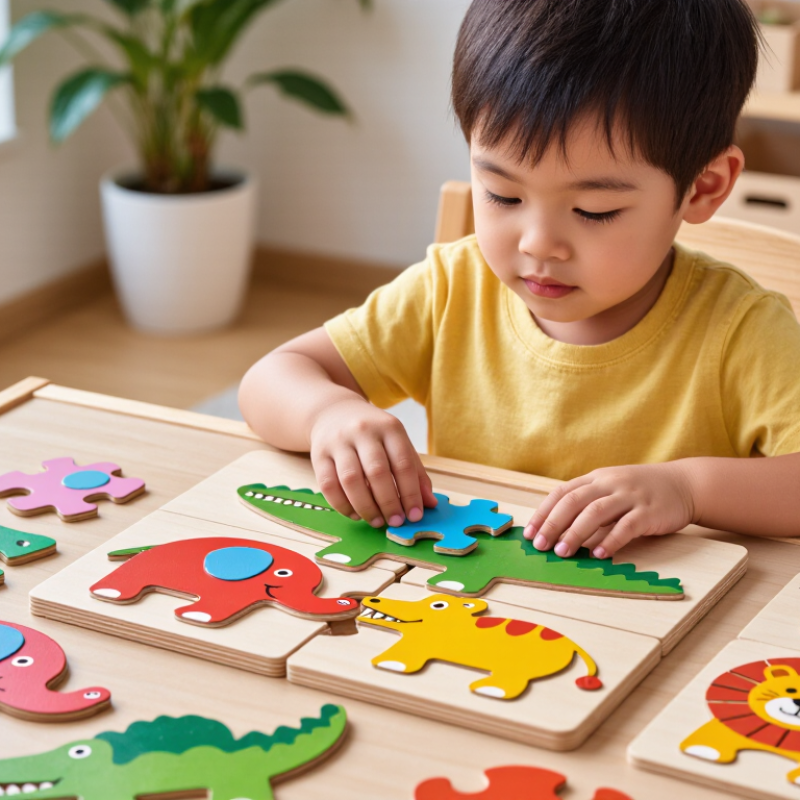
Kids Puzzle Toys turn quiet play into a small learning laboratory. A child rotates a wooden piece, checks the picture, and tries again. Each attempt strengthens visual-spatial reasoning, hand-eye coordination, and early problem-solving skills. The process also introduces patience, planning, and flexible thinking. These abilities support later tasks, from reading maps to organizing schoolwork.

Dr. Amanda Gummer, a child development psychologist and founder of the Good Play Guide, often highlights the value of purposeful play. Her practical message can be expressed clearly: “The best toys invite children to think, explore, and play actively.” That principle fits well with thoughtfully designed Kids Puzzle Toys. A simple animal puzzle may build vocabulary when adults name each piece. A pattern puzzle may encourage children to notice color, shape, and sequence.

The benefits are not automatic. A puzzle that is too difficult may cause frustration. One that is too easy may lose its challenge. Age guidance, durable materials, smooth edges, and clear instructions matter. Adults should also allow children to struggle briefly, rather than solving every problem immediately. That pause can feel uncomfortable.

Development is rarely perfectly linear. A child may finish a puzzle quickly today and need help tomorrow. That is normal. The strongest choice is usually a safe, age-appropriate puzzle that matches the child’s interests and leaves room for curiosity.
Why Are Kids Puzzle Toys Important for Child Development?

What Are Kids’ Puzzle Toys and How Do They Work?

Kids’ puzzle toys are hands-on games with pieces children match, rotate, sort, or fit together. They may use wooden shapes, picture boards, interlocking pieces, or simple three-dimensional forms. Each toy presents a small problem with visible feedback. A piece fits, or it does not.

This process supports spatial reasoning, memory, hand-eye coordination, and early problem-solving. Children also practice patience when a corner refuses to match. In play observations, adults often see children test one idea, notice an error, and try again. That quiet cycle matters. A puzzle is not automatically educational, though. If it is too difficult, a child may only experience frustration. If it is too easy, attention can quickly disappear. I sometimes underestimate how much encouragement changes the learning experience.

Tips: Choose puzzles with large, durable pieces and a clear challenge. Begin with a few pieces, then add more gradually. Let the child struggle briefly before offering help. Ask, “What could you turn?” instead of giving the answer. Stay nearby, especially with toddlers, and check that pieces are age-appropriate and too large to swallow. Celebrate careful attempts, not only completed pictures. Mistakes are useful here. They show children how ideas change through action.

How Puzzle Toys Support Cognitive Development

Why Are Kids Puzzle Toys Important for Child Development?

Puzzle toys turn cognitive development into a hands-on task. A child studies shapes, rotates a piece, and tests a small decision. This sequence strengthens visual-spatial reasoning, memory, attention, and early problem-solving. The American Academy of Pediatrics explains that play supports executive function, language, and social development in its 2018 clinical report. Puzzle play also encourages persistence.

“Try again” becomes a practical experience, not an instruction.

The evidence needs careful reading. Puzzle toys alone cannot guarantee stronger thinking skills. The 2016 Lancet Series on early childhood development estimated that over 250 million children in low- and middle-income countries risked missing their developmental potential because of poverty and limited stimulation. The World Bank’s 2018 learning report also found that 53% of children in those countries could not read a simple story by age ten. These figures do not prove that puzzles solve learning gaps. They show why rich, responsive play matters.

An adult can ask, “What might fit here?” and wait. That pause supports language and reasoning. Children may also become frustrated. That is normal. However, a puzzle that is too difficult can reduce confidence. Adults should adjust the number of pieces, offer gentle clues, and allow independent attempts.

The best results often come from interaction, not the toy alone.

How Puzzles Strengthen Motor Skills and Hand-Eye Coordination

Why Are Kids Puzzle Toys Important for Child Development?

Kids’ puzzle toys strengthen the small muscles needed for daily tasks. Each piece requires grasping, rotating, lifting, and controlled placement. Small hands learn. These movements build fine motor control and improve hand-eye coordination. A child watches the empty space, adjusts the piece, and tries again. This process links visual judgment with precise finger movement. The American Academy of Pediatrics identified hands-on play as valuable for cognitive and physical development in its 2018 clinical report, The Power of Play.

Puzzle play also supports active, screen-free routines. The World Health Organization’s 2019 guidelines recommend at least 180 minutes of daily physical activity for children aged three to four. They also recommend no more than one hour of sedentary screen time. A floor puzzle does not replace outdoor movement, but it offers focused manipulation between active periods. Adults can choose thick, easy-grip pieces first, then introduce smaller and more complex designs.

Progress is often uneven. A child may finish a picture but still struggle to rotate one piece. That is normal. In practice, rushing or correcting every mistake can reduce persistence. Offer a quiet table, name the colors, and let the child test different angles. Praise the effort, not only the completed image. Puzzle time should remain brief when frustration rises. A perfect fit is useful, but the learning happens during the searching.

How Puzzle Play Builds Language, Focus, and Problem-Solving Skills

During play, a child studies shapes, colors, and spaces with surprising attention. In my experience, a simple puzzle often invites more conversation than a noisy toy. A child may say, “This piece fits here,” then explain why. These short comments build vocabulary, listening, and clear sentence patterns. Small words matter. As children name animals, vehicles, or emotions, they connect language with visible objects. Adults can repeat new words naturally without turning play into a lesson.

Puzzle play also strengthens focus and problem-solving. A child tests one piece, notices the mismatch, and tries another. This process teaches patience, visual comparison, and flexible thinking. Early-childhood educators commonly use puzzles to support these skills because the activity offers immediate, understandable feedback. The child sees the result. “Try again” feels meaningful. A calm adult can ask, “What do you notice?” instead of giving the answer too quickly.

Still, puzzles are not magic tools. Some children become frustrated after several failed attempts, especially when the puzzle is too difficult. I have sometimes assumed persistence would appear automatically; it did not. The better choice was reducing the number of pieces and allowing brief breaks. A suitable puzzle should challenge a child without creating repeated defeat. Caregivers should also accept unfinished work. That messy, hesitant play can reveal how a child thinks, communicates, and learns at that moment.

Why Are Kids' Puzzle Toys Important for Child Development?

How puzzle play builds language, focus, and problem-solving skills

As children grow, they typically move from simple inset puzzles to puzzles with more pieces and greater visual complexity. This progression gives children repeated practice with vocabulary, sustained attention, spatial reasoning, planning, and flexible problem-solving. Piece-count ranges are broad developmental examples rather than clinical milestones.

How to Choose Age-Appropriate Puzzle Toys for Children

Why Are Kids Puzzle Toys Important for Child Development?

Choosing an age-appropriate puzzle toy begins with observing the child, not trusting the package alone. Age labels offer useful guidance, but children develop at different speeds. A two-year-old may enjoy a simple wooden puzzle with large knobs and three pieces. An older preschooler might manage twelve interlocking pieces, matching colors, shapes, or familiar animals. The puzzle should feel challenging, not discouraging. Small progress matters.

Safety deserves careful attention. For children under three, choose oversized pieces that cannot fit completely inside a child’s mouth. Avoid sharp edges, loose magnets, peeling paint, and fragile parts. Check the toy regularly. A cracked piece can become a hazard. Pediatric occupational therapists often recommend puzzles that support hand strength, visual matching, and problem-solving without overwhelming the child. Clear pictures and sturdy materials also help children stay engaged.

Watch how the child responds during play. If they turn pieces repeatedly but remain curious, offer a gentle hint instead of solving it. If frustration rises quickly, use fewer pieces or complete part of the picture together. Quiet encouragement works better than constant correction. Parents and educators should remember that “age appropriate” is not a fixed rule. Some children need more repetition, while others need a bigger challenge sooner. I may even choose a puzzle that seems slightly easy at first; confidence can create the patience needed for harder tasks later.

Why Are Kids Puzzle Toys Important for Child Development? - How to Choose Age-Appropriate Puzzle Toys for Children

A practical guide to matching puzzle features with children’s developmental abilities and learning needs.

Recommended Age Typical Puzzle Type Suggested Complexity Primary Developmental Benefits Skills Practiced What to Look For Adult Support
12–18 months Large-piece knob puzzles, simple inset puzzles, object-and-picture matching boards Very easy; 2–4 large pieces Early problem-solving, visual recognition, persistence, and hand–eye coordination Grasping, lifting, placing, matching, and basic cause-and-effect learning Oversized pieces, sturdy construction, simple familiar images, and easy-to-grip knobs Model how to turn and place a piece; offer brief encouragement without completing the puzzle for the child
18–24 months Basic shape, color, animal, or everyday-object puzzles Easy; 3–6 chunky pieces Shape discrimination, vocabulary development, concentration, and independent exploration Rotating pieces, comparing outlines, naming objects, and following simple directions Clear silhouettes, high-contrast illustrations, smooth edges, and pieces that are easy to remove Use simple prompts such as “Where does the circle go?” and allow the child time to try
2–3 years Chunky interlocking puzzles, sequencing puzzles, and familiar-scene puzzles Easy to moderate; about 4–12 pieces Logical thinking, memory, language, visual-spatial awareness, and task completion Part-to-whole reasoning, ordering, matching details, and communicating choices Large interlocking pieces, recognizable scenes, limited visual clutter, and durable materials Ask open-ended questions and help the child notice colors, edges, and picture details
3–4 years Simple jigsaw puzzles, pattern puzzles, and picture-sequencing activities Moderate; about 12–24 pieces Planning, attention control, visual analysis, early reasoning, and confidence building Finding border pieces, recognizing patterns, comparing shapes, and correcting mistakes Clearly defined images, manageable piece sizes, and themes connected to the child’s interests Encourage strategies, such as completing the border first, while letting the child lead
4–5 years Detailed jigsaw puzzles, matching games, mazes, and beginner logic puzzles Moderate; about 24–48 pieces Working memory, flexible thinking, visual-spatial reasoning, and sustained attention Sorting, planning several steps, recognizing incomplete patterns, and explaining solutions Age-appropriate detail, clear challenge progression, and pieces that connect securely Provide hints rather than answers and praise effort, strategy, and persistence
5–6 years Jigsaw puzzles, tangrams, construction puzzles, and beginner number or word puzzles Moderate to challenging; about 48–100 pieces Early academic readiness, problem-solving, spatial reasoning, and self-regulation Counting, categorizing, mental rotation, spelling practice, and multi-step planning Gradually increasing complexity, meaningful themes, and instructions the child can understand Invite the child to describe the strategy being used and take breaks when frustration increases
6–8 years More complex jigsaws, 3D construction puzzles, logic grids, and word or number challenges Challenging; approximately 100–300 pieces, depending on design Advanced reasoning, concentration, planning, spatial visualization, and independent learning Hypothesis testing, sequencing, pattern recognition, error checking, and strategy selection Clear instructions, progressively harder levels, and a challenge that is achievable but not overwhelming Discuss alternative strategies and encourage reflection on what worked and what did not
8 years and older Complex jigsaw puzzles, mechanical puzzles, 3D models, strategy puzzles, and advanced logic games Moderate to highly challenging; select according to experience Critical thinking, perseverance, spatial reasoning, creativity, and complex problem-solving Long-term planning, deductive reasoning, troubleshooting, collaboration, and self-monitoring Accurate age guidance, clear objectives, appropriate difficulty, and opportunities for independent work Respect the child’s preferred challenge level and support discussion without taking control
Age ranges are general guidelines. Children develop at different rates, so the best puzzle is one that is challenging enough to encourage learning while still allowing a reasonable chance of success.
Safety reminder: Always follow the manufacturer’s age guidance and inspect puzzles regularly for loose, broken, or splintered parts. Avoid small pieces for children who still mouth objects, and supervise play when a puzzle contains detachable components.