Why Do Buyers Choose Recycled Wood?
Buyers choose recycled wood for more than its weathered appearance. Boards salvaged from barns, factories, and old homes can bring distinctive grain, nail marks, and color variations into a new space. For homeowners and designers, these details offer a character that freshly milled lumber may not provide. The appeal is practical, too: reusing sound wood can extend the life of an existing material and reduce demand for newly harvested timber. The benefits depend on the wood’s condition and the way it is sourced, processed, and transported. Appearance alone is not enough.
Quality matters. Recycled wood can contain hidden fasteners, cracks, old finishes, or moisture damage, so careful inspection and preparation are essential. Buyers should ask where the material came from, how it was treated, and whether it suits the intended use. A decorative wall board and a structural beam do not have the same requirements. This choice may involve extra labor, limited supply, or inconsistent dimensions. Not every project will find that worthwhile. Still, when its history, durability, and look fit the design, recycled wood can offer value beyond price. This guide explores the main reasons buyers choose it, the trade-offs to consider, and the questions that help make a confident, informed purchase.
What Recycled Wood Is and Where It Comes From
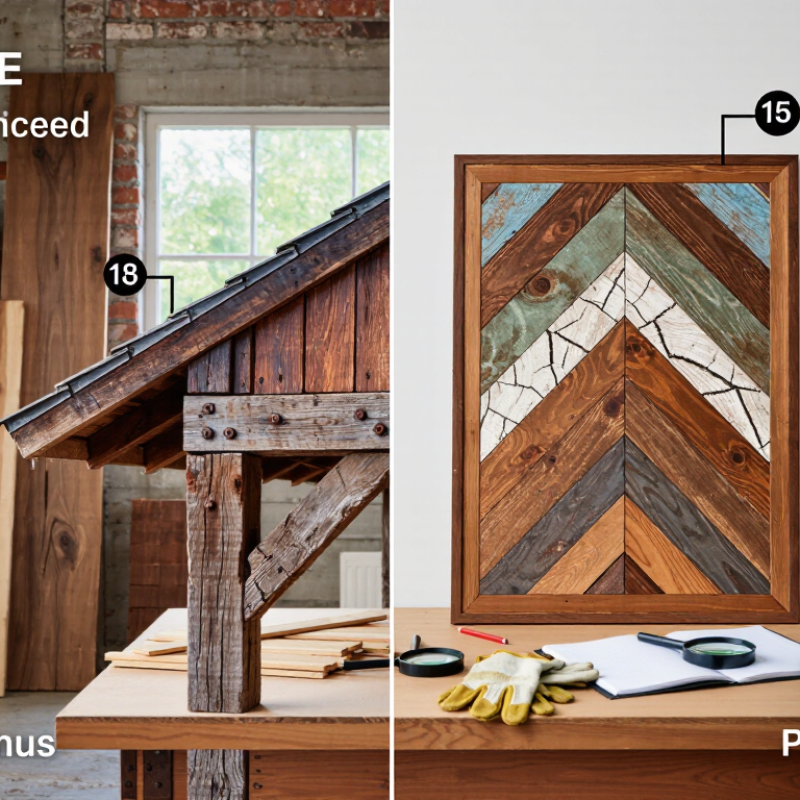
Recycled wood is timber given another use after its first purpose ends. It may come from dismantled barns, warehouses, homes, factory floors, or old fencing. Some comes from shipping pallets, construction offcuts, and trees removed from streets or parks. The wood is cleaned, sorted, and sometimes cut into new boards or panels. Its earlier life can leave nail holes, saw marks, faded paint, or a darker edge where a beam once sat.
The source affects both appearance and performance. An old beam may be dense and stable, but age alone does not guarantee quality. Boards can hide nails, moisture damage, insect activity, or coatings that need careful assessment. Ask where the wood came from and how it was prepared. For structural use, suitability should be checked by a qualified professional. A handsome board is not automatically a safe one. That distinction is easy to overlook.
Tips: Check each piece for cracks, loose fasteners, and uneven moisture. Ask whether coatings or treatments have been identified. Match the wood to the job: a marked plank may suit shelving, while structural work needs verified strength. Reclaimed timber can be imperfect, and that is part of its character—but not every flaw is charming.
How Reclaimed Material Is Processed for Reuse
Reclaimed timber does not go straight from an old building into a new floor. It arrives with a history—and often with nails, paint, dust, or uneven moisture. Careful processors document its source and inspect each piece for rot, insect damage, splits, and embedded metal. A metal detector helps locate hidden fasteners before sawing. They may also assess old coatings when the wood’s intended use calls for it. Crews remove hardware, clean surfaces, and sort boards by species, thickness, and condition. This matters: a weathered beam and a thin interior board need different handling. Not every board qualifies.
After cleaning, wood may be kiln-dried or air-dried to stabilize its moisture, depending on its condition and intended use. Drying too quickly can cause checks or warping, so workers take measurements at several points instead of relying on touch. No shortcut works. Boards are then trimmed, planed, or re-milled into flooring, paneling, or furniture stock. Some nail holes and saw marks remain; others are cut away to meet a buyer’s dimensions. The process is not foolproof. Reclaimed wood can still vary in color, width, and strength, so clear grading and realistic samples help buyers judge what they are getting.
Environmental Benefits That Influence Buyer Choices
Recycled wood attracts buyers seeking a lower-impact material with visible character. A reclaimed beam may carry nail holes, saw marks, and a warm, uneven grain. Those signs of prior use can make a room feel grounded rather than factory-new. Reuse also extends the service life of wood already harvested. Its carbon benefit still depends on sourcing, drying, transport, and finishing. Small details matter.
The environmental case has broader context. FAO’s Global Forest Resources Assessment 2020 estimated that deforestation averaged 10 million hectares annually from 2015 to 2020. Reusing timber can help reduce demand for newly milled boards, though it does not translate directly into a measurable reduction in forest loss. UNEP’s 2022 Global Status Report for Buildings and Construction attributed 37% of global energy- and process-related carbon dioxide emissions to the sector. That figure is not a recycled-wood savings estimate. Buyers should also check a board’s condition, past coatings, and suitability for its intended use. A beautiful salvaged plank is not automatically the right choice for every project. When the timber is nearby and usable with little processing, its environmental appeal is easier to support.
Why Do Buyers Choose Recycled Wood? Environmental Benefits That Influence Buyer Choices
Sustainability can influence purchasing decisions: in a global survey, many respondents said they were willing to pay more for sustainable products. Recycled wood can appeal to buyers seeking to reuse materials and reduce demand for newly harvested timber. These figures describe attitudes toward sustainable products generally, not recycled wood specifically.
Source: Nielsen, 2015 Global Sustainability Report. Percentages are survey respondents who said they were willing to pay more for sustainable products.
Cost, Quality, and Durability Considerations
Recycled wood can reduce material costs, but the purchase price rarely tells the whole story. A stack of boards may include different widths, small cracks, or old nail holes. That matters. A contractor may spend extra hours sorting pieces, removing nails, and trimming damaged ends. Ask whether the quoted price includes cleaning, grading, and preparation. The finish can also change the budget: reclaimed boards may need careful sanding, while aggressive sanding can erase their worn surface. I would not call every weathered board a bargain; that judgment can be wrong before the work begins.
Quality and durability depend on the wood species, its previous use, and how it will be installed. Check for soft spots, deep splits, insect damage, and signs of moisture. A moisture meter is useful, especially before indoor installation. For flooring, boards need suitable thickness and stable dimensions; a beautiful loose plank is not automatically floor-ready. Exterior projects need wood and finishes suited to repeated wetting and drying. Even careful inspection misses things. Hidden metal can damage tools, and old repairs may appear only after cutting. Ask the seller about the wood’s history and inspect several boards, not just the best-looking sample. Some variation is part of the material, but uneven quality can make installation slower and less predictable.
Common Uses and Factors in Selecting Recycled Wood
Why Do Buyers Choose Recycled Wood?
Common Uses and Factors in Selecting Recycled Wood
Recycled wood suits projects where texture matters as much as function. It often appears in dining tables, open shelves, cabinet fronts, flooring, and feature walls. A beam with old nail holes can add character to a room, while cleaner boards may work better for a tabletop. Each piece varies. That is part of the appeal, and part of the difficulty.
When choosing material, check its intended use, moisture level, stability, and available dimensions. Boards for flooring or furniture should be sound and properly prepared; loose knots or hidden fasteners can cause problems during cutting. Ask where the wood came from and how it was processed. A weathered surface may look ready to use, but appearance alone tells little about its condition. I would not choose a board just because its marks look convincing. Sometimes the less dramatic piece is the more practical one.
Tips: View the boards in person when possible. Check for warping, cracks, and metal remnants, and confirm that the supplier can provide consistent sizes. For food-contact surfaces, use a suitable finish and verify the wood’s history.
Why Do Buyers Choose Recycled Wood? — Common Uses and Factors in Selecting Recycled Wood
| Common Use | Why Buyers Choose Recycled Wood | Key Selection Factors | Practical Considerations |
|---|---|---|---|
| Furniture and shelving | Distinctive grain, weathering, nail holes, and other signs of previous use can give each piece a unique appearance. | Board dimensions, species, stability, surface condition, and the amount of repair or finishing required. | Check for loose fasteners, splits, insect damage, and coatings that may need removal before sanding or refinishing. |
| Interior wall cladding and decorative panels | Reclaimed boards can add texture and a sense of history to interior spaces. | Consistent thickness, suitable moisture content, visual variation, and compatibility with the intended installation. | Confirm the material is appropriate for indoor use and has been cleaned and prepared for the chosen finish. |
| Flooring | Some buyers value the character of aged boards and the possibility of reusing long, serviceable timber. | Species, board thickness, wear layer, grading, moisture condition, and the intended traffic level. | Not all reclaimed boards are suitable for flooring. A qualified installer can assess stability, subfloor needs, and applicable requirements. |
| Doors, trim, and architectural details | Salvaged components may preserve traditional profiles or match the character of an existing building. | Exact measurements, condition, species, joinery, and whether matching pieces are available. | Measure carefully and inspect for warping, damaged joints, and paint or coatings that may require testing or safe removal. |
| Cabinetry and built-ins | Reused timber can provide a distinctive appearance for custom projects and may make use of boards that are no longer available as new stock. | Available quantities, board width, moisture stability, workability, and the consistency needed across visible surfaces. | Plan around irregular dimensions and defects; additional sorting, milling, and material allowance may be needed. |
| Structural repairs and construction | Suitable reclaimed lumber can be reused where its condition and properties meet the project requirements. | Species identification, grade, dimensions, load requirements, condition, and local building-code acceptance. | Structural use requires appropriate assessment and documentation. Appearance alone does not establish strength or code compliance. |
| Outdoor projects, such as garden features | Reuse can suit projects where a weathered appearance is desired and the material is appropriate for the exposure. | Durability for the intended conditions, prior treatment, moisture exposure, and contact with soil or people. | Identify any previous preservatives or coatings. Choose material and finishes suitable for the specific outdoor application. |
| Material reuse and waste reduction | Buyers may prefer reclaimed material to extend the useful life of existing timber and reduce demand for newly harvested wood. | Verified source, usable yield, transport distance, processing needs, and project-specific performance. | Environmental benefits depend on sourcing, processing, transport, and the alternative material; compare the full project requirements. |
Related Posts
-
Top 10 Creative Uses for Recycled Wood in Home Decor?
-
The Hidden Benefits of Choosing Recycled Wood for Sustainable Living
-
2025 Guide: How to Work with Recycled Wood for Sustainable Projects
-

2026 How to Utilize Gerecycled Plastic for Sustainable Living?
-
How to Source Sustainable Recycled Plastic for Your Business?
-
Innovative Waste Recycling Techniques That Help Save Our Planet