What Is the Best Way to Recycle from Home?
Recycling at home looks simple until a greasy pizza box, a plastic tub, or a tangled cord reaches the bin. The best routine is not to recycle everything with a familiar symbol. It is to follow the rules of your local collection program and keep accepted materials clean, dry, and loose. Those details matter. A small mistake can contaminate an otherwise useful batch.
Annie Leonard, an environmental advocate and creator of The Story of Stuff, has said, “There is no such thing as away. When we throw anything away it must go somewhere.” Her point is useful at home: waste does not disappear when the truck leaves. A thoughtful recycle from home routine starts with buying less packaging, reusing sturdy containers, and sorting paper, metal, glass, and plastics only when local services accept them. Check your city’s current guide; recycling rules can differ between neighboring communities.
A simple setup helps. Place a labeled bin near the kitchen, flatten cardboard, and rinse containers when needed. Keep plastic bags and batteries out of curbside bins unless your program specifically accepts them. Not every item has an easy route. That can be frustrating. It is also a reason to pause before buying, rather than treating recycling as a perfect fix. The guide ahead focuses on practical steps, common sorting mistakes, and ways to make a home system easier to maintain.
Understand Which Materials Your Local Program Accepts
What Is the Best Way to Recycle from Home?
Understand Which Materials Your Local Program Accepts
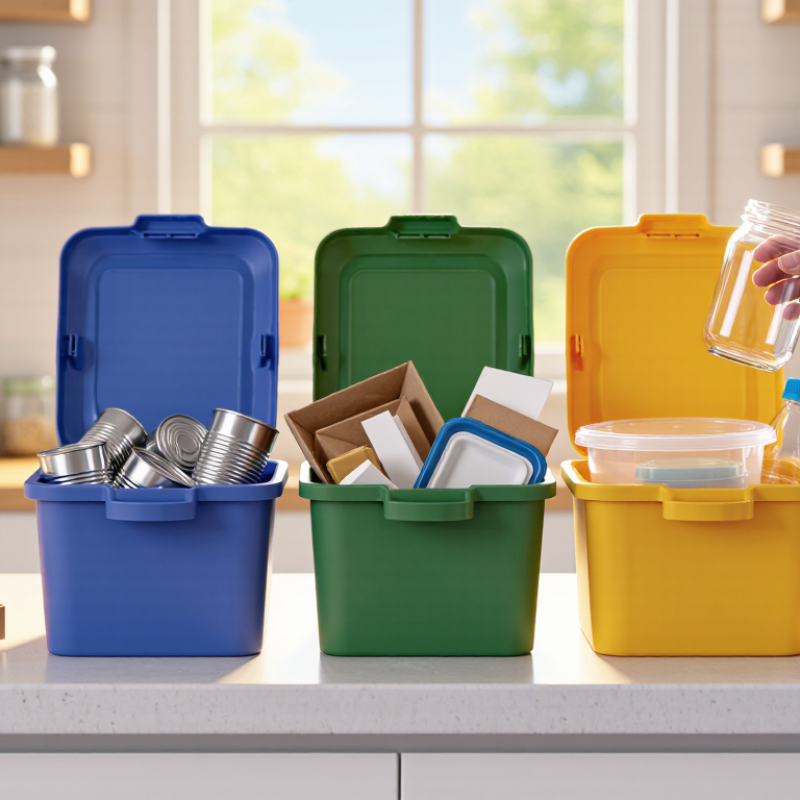
Recycling well begins with local rules, not a universal symbol. A bottle marked recyclable may still be excluded from curbside collection. Check your city or hauler’s accepted-material list, then compare each item’s material, shape, and size. The U.S. EPA’s 2018 Advancing Sustainable Materials Management report says Americans generated 292.4 million tons of municipal solid waste. About 69 million tons were recycled. That national total shows the scale, but it cannot tell you whether a black plastic tub belongs in your cart. Local sorting equipment and service contracts differ.
Keep a short list near the bin. Programs often specify which paper, metal cans, glass, and plastic containers they accept. Some take cartons; others do not. Empty containers and follow local instructions about rinsing or leaving caps attached. A jar with leftover sauce can soil paper, but spotless containers are not always required. I still find these instructions easy to misread. When uncertain, check your municipality’s website or call the service provider instead of guessing; unwanted items can contaminate a load and slow sorting.
Tips: Flatten cardboard only if requested. Keep plastic bags out of curbside bins unless your program accepts them. Take batteries and electronics to designated collection points. Check your local list periodically, since accepted materials can change.
What Is the Best Way to Recycle from Home? — Understand Which Materials Your Local Program Accepts
Acceptance rules differ by location. Use this guide as a starting point, then check your local recycling program’s current instructions before putting an item in the recycling bin.
| Material | Commonly Accepted at Home | How to Prepare It | Check Locally / Keep Out |
|---|---|---|---|
| Paper and newspapers | Often accepted | Keep paper clean and dry. Place loose paper in the bin or follow local instructions for paper bundles. | Keep out paper soaked with grease or food, tissues, and heavily soiled paper. |
| Cardboard and paperboard | Often accepted | Flatten boxes and remove packing materials. Keep cardboard dry. | Remove excess food and grease. Pizza boxes may be accepted only when clean or when greasy sections are removed. |
| Plastic bottles and jugs | Commonly accepted | Empty, rinse if needed, and replace caps only if your local program requests it. | Do not rely on a plastic number alone; accepted shapes and resin types vary. Keep plastic bags and film out of curbside bins. |
| Plastic tubs, cups, and trays | Varies by program | Empty and scrape away leftover food. Follow local guidance on lids. | Some programs accept only bottles and jugs. Foam packaging is not accepted in many curbside programs. |
| Glass bottles and jars | Often accepted, but not everywhere | Empty and rinse. Keep glass separate if your program provides a separate container. | Do not include drinking glasses, ceramics, mirrors, or window glass; these have different compositions and may disrupt processing. |
| Aluminum and steel cans | Often accepted | Empty and rinse if needed. Leave cans loose unless your program gives different instructions. | Keep out scrap metal, propane cylinders, and aerosol cans unless specifically listed as accepted. |
| Beverage cartons | Varies by program | Empty and follow local directions for straws, caps, and flattening. | Cartons are not accepted everywhere, even when they appear to be paper-based. |
| Food scraps and yard waste | Accepted only where collection or composting is offered | Use the designated organics container or approved home-composting method. | Do not place food waste in a recycling bin. Meat, dairy, and compostable packaging may have separate rules. |
| Batteries and small electronics | Usually not accepted in curbside recycling | Use a designated household hazardous-waste or electronics collection point. | Keep batteries out of trash and recycling bins when a separate safe-disposal option is available; damaged batteries may need special handling. |
| Plastic bags and stretchy film | Usually not accepted in curbside bins | Use a dedicated collection point if one is available locally. | Loose bags and film can tangle sorting equipment. Do not bag recyclables unless your program specifically instructs you to. |
Related Posts
-

10 Best Environmentally Friendly Materials for Sustainable Living
-
Top 10 Benefits of Using Recycled Plastic Bags for Sustainable Living
-
10 Best Eco Plastic Products for Global Buyers
-
2026 Best Furniture Waste Collection Services?
-

How to Source Recycled Plastic Bags in 2026
-
Exploring the Future of Recycled Materials at the 138th Canton Fair 2025