How to Choose Recycled Plastic Bags for Your Business?
Choosing recycled plastic bags for your business involves more than selecting an attractive green label. The right option must protect products, support daily operations, and match your sustainability goals. Bag failure can mean damaged goods, customer complaints, and unnecessary replacement costs. Small details matter.
Practical purchasing experience shows that material quality should come before appearance. Review the percentage of post-consumer recycled content, bag thickness, seal strength, handle design, and expected load. A grocery bag carrying glass jars needs different performance from a lightweight apparel bag. Ask suppliers for test data, product samples, and clear documentation. Independent certifications can support environmental claims, but they should not replace careful supplier evaluation. Inspect production consistency, printing quality, minimum order quantities, and delivery reliability. A low unit price may look attractive. It may hide higher waste.
Your decision should also consider storage, reuse, and disposal conditions. Recycled plastic bags may reduce reliance on virgin plastic, yet they still require responsible management after use. Check whether local recycling facilities accept the material and bag format. Requirements can vary between regions and change over time. Do not assume every recycled claim means the same thing. Request specific percentages and verification records.
Cost matters. So does customer trust. A useful comparison includes purchase price, failure rates, transport, and replacement expenses. No option is perfect. Some bags may contain more recycled content but offer less strength. Others may perform better while requiring a higher budget. This guide helps you compare those compromises clearly and choose recycled plastic bags with evidence, practicality, and long-term value in mind.
Understanding Recycled Plastic Bag Types and Materials
How to Choose Recycled Plastic Bags for Your Business?
Understanding Recycled Plastic Bag Types and Materials
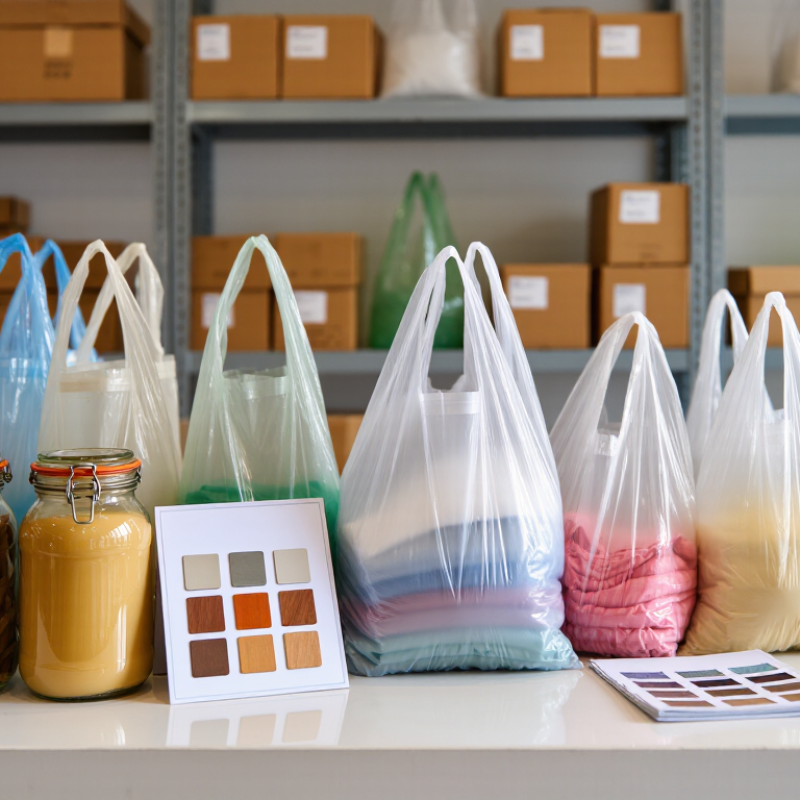
Recycled plastic bags are not one uniform product. Their performance depends on the source, polymer, and recycling process. Post-consumer recycled content comes from used packaging collected from households or businesses. Post-industrial material usually comes from factory scrap. It is often cleaner and more consistent. Both options can reduce the need for virgin plastic, but they need different quality checks.
Common bag materials include recycled polyethylene, such as LDPE and HDPE. LDPE feels softer and bends easily around clothing or irregular products. HDPE is stiffer, lighter, and often suitable for heavier retail items. Ask for the exact recycled-content percentage, thickness, seal strength, and color tolerance. A gray or slightly uneven appearance may be normal. It can also reveal inconsistent feedstock.
Request test data for tensile strength, tear resistance, and load capacity. Check whether the material suits direct food contact, if relevant, under applicable local rules. A small packing trial is more useful than a glossy specification sheet. Fill sample bags with your heaviest typical products, then inspect handles and seams after storage. Do not assume thicker means better. Not always. It may add cost without improving use. The first specification is rarely perfect. Review damaged samples, customer handling, and disposal options before ordering. Start small. Supplier traceability matters. Look for batch records and clear recycled-content documentation.
How to Choose Recycled Plastic Bags for Your Business? - Understanding Recycled Plastic Bag Types and Materials
| Recycled Material Type | Typical Recycled Feedstock | Common Bag Formats | Key Performance Characteristics | Appearance | Typical PCR Content | Best-Suited Business Uses | Important Considerations |
|---|---|---|---|---|---|---|---|
| PCR LDPE | Used polyethylene film, flexible packaging, and post-consumer plastic bags. | Mailing bags, produce bags, garment bags, flat bags, and flexible liners. | Flexible, moisture-resistant, lightweight, and suitable for heat sealing. Offers good elongation but lower stiffness than HDPE. | Often translucent, grayish, or slightly variable in color; clarity is usually lower than virgin LDPE. | Commonly available from approximately 30% to 100%, depending on performance and appearance requirements. | E-commerce shipping, apparel packaging, household products, and general retail packaging. | Color and odor can vary between production batches. Verify seal strength and puncture resistance for heavy or sharp products. |
| PCR LLDPE | Recovered flexible polyethylene films and mixed post-consumer film waste. | Stretch-style bags, heavy-duty liners, refuse bags, and flexible shipping bags. | High toughness, strong puncture resistance, and good flexibility. Often performs well where bags experience stretching or impact. | Usually translucent or opaque with a less uniform finish than virgin resin. | Often produced in blends or grades ranging from approximately 30% to 100% recycled content. | Industrial liners, logistics packaging, waste bags, and applications requiring flexible strength. | Material consistency should be tested when precise dimensions, high load capacity, or demanding sealing conditions are required. |
| PCR HDPE | Used household containers, rigid polyethylene packaging, and recovered HDPE products. | T-shirt bags, shopping bags, merchandise bags, and thin-gauge carry bags. | Higher stiffness and tensile strength than LDPE, with good moisture resistance and efficient material usage at thin gauges. | Typically opaque or semi-opaque with a matte or slightly cloudy appearance. | Commonly available from approximately 30% to 100%, subject to color and strength requirements. | Retail carry bags, grocery packaging, takeaway packaging, and light-to-medium duty distribution. | Very high recycled content may reduce clarity, affect odor, or require darker colors to achieve consistent visual quality. |
| PCR PP | Recovered polypropylene packaging, woven products, and post-consumer rigid PP items. | Woven shopping bags, reusable retail bags, agricultural sacks, and laminated polypropylene bags. | Good stiffness, fatigue resistance, and heat resistance compared with polyethylene. Suitable for reusable and woven constructions. | Usually opaque or semi-opaque; recycled grades may show small color or texture variations. | Often supplied in blends or grades containing approximately 20% to 100% recycled PP. | Reusable shopping bags, promotional totes, agricultural packaging, and durable logistics bags. | Confirm handle strength, seam construction, and resistance to repeated loading when the bag is intended for reuse. |
| Recycled PET | Recycled polyethylene terephthalate bottles and other PET packaging. | Woven or nonwoven tote bags, drawstring bags, and fabric-style shopping bags. | Strong and dimensionally stable, with a textile-like feel when converted into fibers or woven fabric. | Available in many colors; fabric surfaces can support printing and a premium textile appearance. | Commonly marketed with approximately 50% to 100% recycled PET, depending on the product specification. | Reusable totes, event bags, retail merchandise bags, and promotional packaging. | It is a textile-style option rather than a conventional polyethylene film bag. Check washing, coating, and end-of-life requirements. |
| Post-Industrial Recycled PE | Clean production scrap, edge trim, and unused processing material recovered before consumer use. | Film bags, liners, shipping bags, and custom packaging made from polyethylene. | Usually offers more consistent composition and appearance than mixed post-consumer material. | Often more uniform and cleaner-looking than PCR material, although the exact appearance depends on the recovered scrap. | May range from approximately 10% to 100%, depending on the manufacturing process and product specification. | Packaging requiring reliable processing, consistent color, and controlled mechanical performance. | Post-industrial content is not the same as post-consumer content. Request separate disclosure when consumer-waste recovery is important. |
| Recycled Polyethylene Blend | A controlled combination of recycled LDPE, LLDPE, HDPE, and sometimes virgin polyethylene. | General-purpose shopping bags, courier bags, liners, and custom flexible packaging. | Balances flexibility, stiffness, puncture resistance, sealing performance, and cost according to the formulation. | Usually opaque or translucent, with appearance determined by the recycled resin mix and color additives. | Commonly specified at approximately 30% to 80% recycled content, although other levels are possible. | Businesses needing a practical balance between sustainability targets, durability, and visual consistency. | Ask for the exact polymer composition because mixed-polymer content can affect recycling compatibility and product performance. |
Related Posts
-

How to Source Recycled Plastic Bags in 2026
-
Top Recycled Plastic Bag Suppliers for Global Buyers
-

2026 Best Recycled Material Furniture Options for Sustainable Living?
-

Top 10 Reasons to Choose Recycled Material Furniture for Your Home?
-
Top 10 Ways to Recycle from Home Effectively?
-
10 Essential Tips for Choosing Recycled Furniture for Your Home?