What Are Recycled Plastic Materials and How Are They Used?
Recycled plastic materials are made by collecting discarded plastic, sorting it by type, and processing it into usable feedstock. They are not one uniform substance. A clear bottle, a detergent container, and a mixed-plastic panel may have different polymers, additives, and performance limits. Sustainable-design expert William McDonough’s often-cited principle, “Waste is food,” offers a useful lens: discarded material can become a resource when products and systems are designed thoughtfully.
The route from waste to material matters. Mechanical recycling typically cleans, shreds, and remelts plastic; chemical recycling uses different processes to break polymers into building blocks. Each method has constraints, and recycled content does not automatically guarantee equal quality or lower impact. That distinction matters.
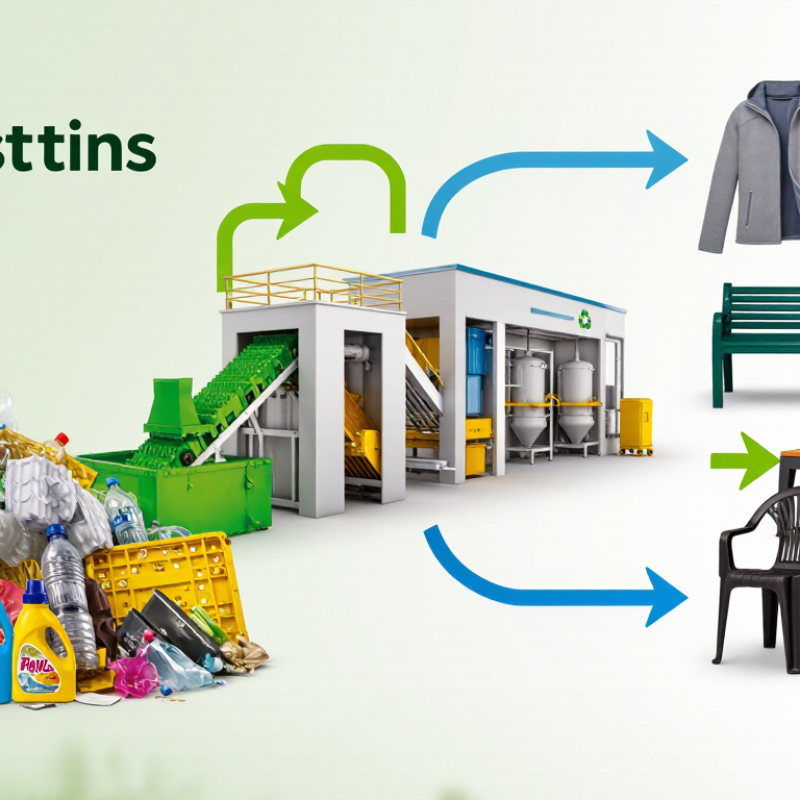
Manufacturers use recycled plastic materials in packaging, textiles, construction products, furniture, and vehicle components. A fleece jacket may contain recycled polyester; a park bench may use recycled plastic lumber. Yet color variation, contamination, and changing feedstock quality can affect appearance and performance. Some products also combine materials in ways that make future recycling difficult. This deserves a closer look.
This guide explains what recycled plastics are, how they are processed, and where they are used. It also considers their benefits and limitations, helping readers assess claims with care. The goal is not to treat recycling as a perfect solution, but to understand when recycled materials are a practical choice—and what questions remain.
What Recycled Plastic Materials Are
Recycled plastic materials are polymers recovered from used products or manufacturing leftovers and prepared for another use. Post-consumer sources include drink bottles, food containers, and packaging; post-industrial sources include clean offcuts from production. The plastic is sorted, washed, shredded, and often melted into pellets. Small flakes first. These pellets can become part of new products, though the exact process depends on the plastic type and its condition.
Common materials include recycled PET, often made from clear beverage bottles, and recycled HDPE, found in many detergent containers. Recycled polypropylene may come from tubs or caps, while other plastics are harder to collect and process consistently. A material’s appearance can offer clues: recycled pellets may vary in shade, and a finished part may show tiny specks. That variation is not automatically a defect, but it can affect color and performance. Recycled plastic is not one uniform substance. Heat, sunlight, contamination, and repeated processing can change its strength, so manufacturers need to test each intended application. A recycling symbol alone does not guarantee that an item contains recycled material. It is worth asking what type of plastic was recovered and how its quality was checked.
How Plastic Waste Is Collected and Reprocessed
Plastic waste enters recycling through curbside bins, drop-off points, and commercial collection. Workers or sorting equipment separate plastics by type, using labels, shape, and optical scanners. A bottle may be recyclable locally, while a food-stained tray made from mixed materials may not be. Collection rules vary, so a recycling symbol alone does not guarantee acceptance.
At a processing facility, sorted plastics are washed to remove food, labels, and grit. They are then shredded into flakes, dried, and melted into pellets or formed into other feedstock. Manufacturers can use these materials in items such as packaging, fibers, or outdoor products. Each step affects quality: leftover residue or mixed resins can weaken a batch. The process helps conserve raw materials, but it is not flawless; some collected plastic still cannot be recycled efficiently.
Tips: Empty containers and keep them dry. Follow local sorting instructions, and avoid placing loose bags in bins unless accepted. Small mistakes matter. When unsure, check the collection guide rather than guessing.
Common Types of Recycled Plastics
Common recycled plastics are identified by resin type, but their properties vary with sorting and processing. PET, often used in drink bottles, can become fiber for clothing, carpet, or new packaging. The 2022 NAPCOR PET Recycling Report put the U.S. PET bottle recycling rate at 29.1 percent. HDPE, found in detergent containers and milk jugs, is commonly remade into pipes, bins, and outdoor furniture. It is relatively durable. PP from food tubs and caps can become storage products or automotive components, though collection access differs by region.
LDPE film, such as shopping bags and wrapping, is harder to collect because it tangles in sorting equipment. Clean, separated film may be made into boards or new film. Mixed plastics are less predictable. The OECD’s Global Plastics Outlook (2022) estimated that only 9 percent of plastic waste worldwide was ultimately recycled in 2019. That gap matters. Recycled feedstock can contain color, odor, or inconsistent melt behavior, so manufacturers test batches before use. A bottle-to-bottle pathway may require tighter controls than a park bench. Recycling helps, but it does not make every plastic item equally recyclable. Sorting is still imperfect.
Key Properties and Limitations of Recycled Plastics
Recycled plastics keep many traits of their original polymers, but their performance can vary from batch to batch. A recycled polyethylene may remain flexible and moisture-resistant, while recycled polypropylene can suit rigid parts or containers. Yet heat, sunlight, and repeated processing can weaken some plastics. Feedstock matters. Mixed colors may produce gray or uneven surfaces, and traces of labels or other polymers can affect appearance and consistency.
These materials can work well in items such as storage bins, garden edging, pallets, and non-structural panels, provided their properties match the job. Check strength, impact resistance, heat tolerance, and dimensional stability against the product’s actual conditions. A sample that bends easily in a workshop may become brittle outdoors. That detail is easy to overlook. Recycled content alone does not guarantee equal performance, and adding virgin resin may improve consistency but change cost and environmental impact. Testing representative batches is more reliable than relying on a supplier’s general description. Some claims should be questioned, too: “recyclable” does not mean a material will be collected or processed in every location.
What Are Recycled Plastic Materials and How Are They Used? — Key Properties and Limitations of Recycled Plastics
| Recycled plastic | Typical source material | Key properties | Common uses | Important limitations |
|---|---|---|---|---|
| Recycled PET (rPET) | Collected beverage bottles, food containers, and other PET packaging. | Lightweight, transparent in suitable grades, and useful as a fiber or packaging material. Properties depend on sorting, processing, and the number of recycling cycles. | Textile fibers, carpet, strapping, containers, and some new bottles or food packaging where the material and process meet applicable requirements. | Color, odor, contamination, and reduced material quality can restrict applications. Food-contact use requires appropriate collection, processing, and regulatory compliance; not all rPET is suitable. |
| Recycled HDPE (rHDPE) | Bottles, household-product containers, crates, and other rigid HDPE items. | Tough, relatively stiff, and resistant to moisture and many everyday chemicals. Recycled grades may vary in color and mechanical performance. | Drainage pipe, bins, crates, pallets, outdoor products, and non-food packaging. | Mixed colors can produce dark or inconsistent products. Contamination and changes in material properties may limit high-specification or food-contact applications. |
| Recycled PP (rPP) | Rigid packaging, household goods, caps, containers, and some automotive components. | Lightweight, fatigue-resistant, and generally resistant to moisture and many chemicals. It can be molded into many shapes. | Storage bins, plant pots, pallets, automotive parts, household products, and non-food packaging. | Collection and sorting are not equally available everywhere. Heat history, contamination, and mixed polymer types can affect strength, impact performance, and consistency. |
| Recycled LDPE and LLDPE | Plastic films, bags, liners, and stretch wrap collected through suitable recycling programs. | Flexible, lightweight, and moisture-resistant. Recycled film grades can retain useful flexibility when feedstock is sufficiently clean and well sorted. | Trash bags, construction film, shipping mailers, agricultural film, and composite products. | Thin films are difficult to collect and sort when dirty or mixed with other materials. Printing, food residue, and varied film layers can reduce quality and limit end uses. |
| Recycled PS (rPS) | Rigid polystyrene packaging and selected post-industrial or post-consumer PS waste. | Can be rigid and moldable; foamed PS is lightweight and insulating. Recycled quality depends strongly on the source and separation process. | Hangers, rulers, trays, insulation-related products, and selected molded items where suitable grades are available. | Recovery is limited in many areas, and lightweight or food-soiled foam is challenging to collect economically. Contamination and brittle performance can restrict applications. |
| Recycled PVC (rPVC) | Selected pipes, profiles, flooring, cable-related products, and manufacturing scrap. | Can be formulated as rigid or flexible material and can be durable in established product systems. | Pipes, profiles, flooring layers, mats, and other products made with compatible recycled grades. | Different additives and formulations complicate sorting and reuse. Processing must be controlled, and recycled PVC is generally directed to applications compatible with its composition and applicable regulations. |
Note: Recycled plastics are materials recovered from post-consumer products or manufacturing waste and processed for use in new products. Their performance varies with polymer type, sorting, contamination, additives, and processing history. Local collection systems and regulations determine which materials can be recovered and where they can be used.
Where Recycled Plastic Materials Are Used
Recycled plastic materials appear in everyday products, but their uses depend on the plastic type and how well it was sorted and processed. Recycled PET can become fleece fabric, carpet fibers, or new containers. Recycled HDPE is often used for bins, pipes, outdoor furniture, and storage products. Look closely at a park bench: its textured boards may contain recycled plastic and resist moisture better than untreated wood. Still, recycled content alone does not guarantee a durable product.
In construction, recycled plastics can be made into decking, panels, and drainage components. Manufacturers also use them in vehicle parts, household goods, and some packaging. Each application needs material suited to its demands, such as impact resistance or exposure to sunlight. For food-contact uses, suitable processing and regulatory requirements matter; not every recycled plastic is appropriate. I would avoid assuming that recycled automatically means environmentally preferable. Collection, cleaning, and transport all affect the outcome, and those details are easy to miss.
Related Posts
-
2025 Top 5 Recycled Plastic Products Transforming Sustainable Living
-

Top Innovative Products Made from Recycled Plastic You Need to Know About
-

2026 Best Recycled Plastic Products You Need to Know About?
-
What is Recycled Plastic Products and Why Are They Important?
-
What is Recycled Plastic Products and How to Choose Them?
-
What is Recycled Plastic and Why is it Important?