Top 10 Plastic Waste Recycling Companies for Global Buyers?
Plastic waste recycling is now a sourcing decision, not just an environmental pledge. For global buyers, the real test is whether a supplier can deliver consistent recycled resin, documented feedstock, and dependable volumes. The scale of the challenge is clear. The OECD’s Global Plastics Outlook reports that the world generated 353 million tonnes of plastic waste in 2019; only 9% was ultimately recycled. That gap matters. It helps explain why buyers need to examine more than a company’s name or stated capacity. A promising brochure cannot replace evidence from a plant, a clear material specification, and reliable quality records.
The Association of Plastic Recyclers’ president and CEO, Steve Alexander, has described recycling as “a manufacturing process, not a waste management process.” That distinction is useful when comparing potential partners. Buyers should ask how incoming plastics are sorted, how contamination is controlled, and whether recycled output suits the intended application. UNEP’s 2023 report, Turning off the Tap, also assesses system-wide measures to reduce plastic pollution, including reuse and recycling. Its findings reinforce the need for capable processors, while reminding us that recycling alone cannot solve the problem. This guide introduces ten companies for global buyers to assess, with attention to scale, materials, markets, and transparency. No ranking can fit every procurement need. The right partner depends on the material, destination, and proof behind each claim.
Global Plastic Waste Recycling: Scope and Market Context
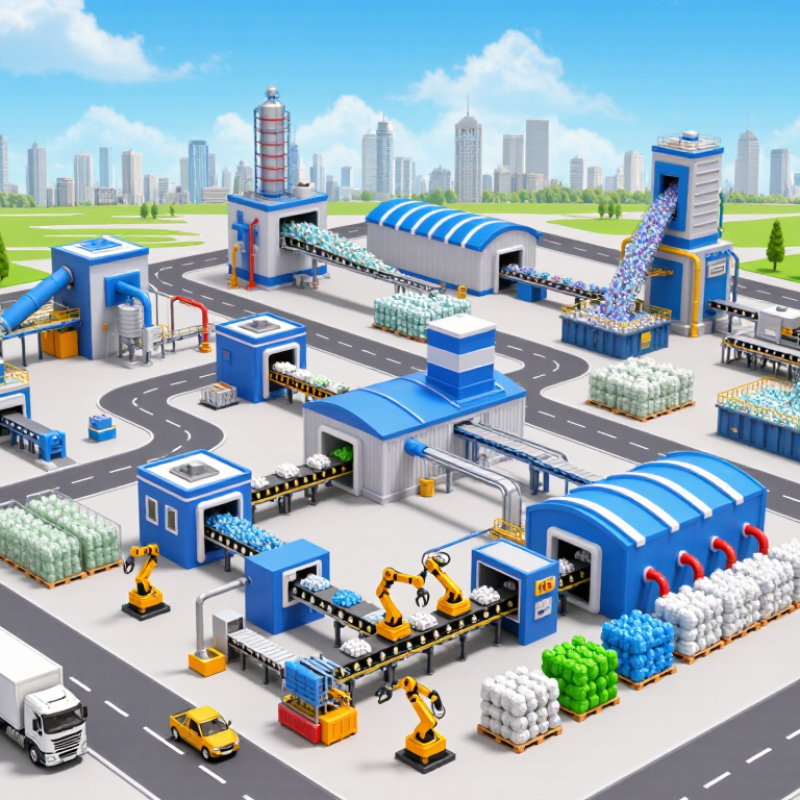
Global plastic waste recycling covers more than turning discarded packaging into pellets. It includes collection, sorting, washing, size reduction, and conversion into usable feedstock. Buyers may source flakes, reprocessed pellets, or prepared bales, depending on their equipment and product requirements. The market is shaped by local waste streams, transport routes, processing capacity, and demand for recycled content.
That matters.
Material quality varies sharply. A bale of clear bottles may contain labels, caps, moisture, or unwanted polymers. These details affect sorting time, usable yield, and the consistency of the final material. Mechanical recycling is widely used for suitable, well-sorted streams, while mixed or degraded inputs can be harder to process. No market map is perfectly tidy. Published capacity figures may not reflect actual output, especially when facilities face seasonal supply gaps or equipment downtime.
For global buyers, compare specifications alongside price: polymer type, color, contamination limits, pellet dimensions, and batch testing records. Ask how suppliers measure incoming and outgoing material, and whether they can provide representative samples. Shipping distance can change the economics, even when the quoted price looks attractive. It is also worth checking whether supply volumes remain steady across several shipments. Recycling markets are expanding, but quality, traceability, and dependable feedstock still require careful verification.
Criteria for Evaluating Companies for International Buyers
International buyers should assess more than a quoted price. Check feedstock sources, sorting methods, contamination limits, and the share of material that becomes saleable output. The OECD’s Global Plastics Outlook (2022) estimates that only 9% of global plastic waste was recycled in 2019, after recycling losses. Ask suppliers for dated input-output records, not just headline capacity. A monthly mass-balance sheet can reveal whether claimed yields match actual shipments.
Technical consistency matters. Request sample specifications for polymer type, moisture, color, and contamination, then compare them with an independent test. Ask how rejected loads are handled and how production changes across seasons. UNEP’s Turning off the Tap (2023) says systemic changes could reduce plastic pollution by 80% by 2040; buyers can support that shift by checking whether a recycler measures recovery and residue rates. Paperwork matters. Yet certificates alone cannot prove every bale is consistent.
International purchasing adds practical risks: port access, packaging durability, lead times, payment terms, and contingency plans for equipment downtime. Review audit scope, worker-safety procedures, environmental monitoring, and traceability down to shipment batches. A site visit or live production review can test written claims against real operations. No checklist is perfect. Smaller facilities may have strong practices but limited documentation, while polished reports can hide weak day-to-day controls. Record gaps, agree on corrective actions, and reassess performance after trial shipments.
Profiles of Ten Leading Plastic Waste Recycling Companies
A useful comparison of recycling companies starts with what each facility actually processes. These ten profiles represent distinct operating models, not a ranked list. One specializes in clear PET bottles, sorting them by color before washing and flaking. Another focuses on rigid HDPE containers, where labels and caps can affect the final pellet quality. A third handles mixed household plastics and invests heavily in optical sorting. That work is demanding. A fourth converts clean production scrap into reusable pellets, while a fifth serves coastal communities and aggregates collected material for processing.
Other operators build their expertise around specific stages. A sixth produces recycled resin for packaging applications and documents incoming material batches. A seventh combines mechanical recycling with testing for odor, color, and melt consistency. An eighth processes agricultural film, where soil and moisture require careful preparation. A ninth supplies recycled compounds for durable goods, adjusting blends to meet customer specifications. A tenth develops collection partnerships and provides buyers with information about feedstock origins. Details matter.
For global buyers, facility claims need verification. Ask for recent output data, accepted polymer grades, contamination limits, and sample results. Request evidence of traceability, but check what each document covers. A certificate may describe management practices without guaranteeing a particular shipment’s quality. Visit the site when practical; look at storage areas, wash lines, and finished-pellet handling. Even capable plants face inconsistent feedstock. That is worth asking about.
Recycling Technologies, Materials, and Processing Capacity
Global buyers should compare recycling companies by the materials they can reliably process, not by broad claims about “plastic waste.” Ask whether their lines accept PET bottles, rigid HDPE, polypropylene, or flexible films. These streams behave differently. Even small amounts of food residue, labels, or moisture can affect sorting and output quality.
Mechanical recycling is widely used for sorted plastics. It typically involves sorting, washing, shredding, and remelting. Some facilities also use solvent-based purification or other advanced processes for selected feedstocks. No process is magic. Ask for recent data on input specifications, reject rates, and the properties of the recycled pellets. A sample matters more than a polished brochure.
Processing capacity needs careful checking. A stated annual capacity may describe equipment design, not actual saleable output. Request operating hours, maintenance assumptions, and typical throughput for the exact material you plan to supply. Check whether washing, drying, and pelletizing can keep pace with sorting. One overlooked bottleneck can slow the whole line. It is also worth asking how output quality varies between batches; the answer may be less tidy than a spreadsheet suggests.
Top 10 Plastic Waste Recycling Companies for Global Buyers? - Recycling Technologies, Materials, and Processing Capacity
This screening table compares ten commercial recycling technology and operator categories; company names and brands are intentionally omitted. Capacity figures are indicative single-site planning ranges in metric tonnes per year, not verified company output or a ranking. Actual throughput depends on feedstock, operating hours, product specifications, and local permits.
| No. | Operator / technology category | Typical feedstock | Recycling technology and process | Indicative site capacity (t/y) | Typical output | Buyer considerations |
|---|---|---|---|---|---|---|
| 1 | PET bottle mechanical recyclers | Collected PET bottles and clear or colored PET packaging | Sorting, washing, flake production, and—where installed—melt filtration and solid-state or equivalent decontamination | 30,000–150,000 | Washed PET flakes or recycled PET pellets | Check food-contact approvals, color mix, PVC control, traceability, and bottle-to-bottle suitability. |
| 2 | HDPE rigid-plastic recyclers | Post-consumer bottles, containers, crates, and other rigid HDPE items | Sorting by polymer and color, size reduction, washing, float-sink separation, and extrusion | 20,000–100,000 | HDPE regrind, flakes, or pellets | Request melt-flow, odor, color, moisture, and contamination specifications for the intended application. |
| 3 | PP rigid-plastic recyclers | PP tubs, caps, household items, crates, and selected automotive parts | Automated sorting, washing, grinding, extrusion, and filtration; compounding may be added | 20,000–100,000 | Recycled PP flakes or pellets, sometimes compounded to a target specification | Confirm polymer purity, filler content, impact performance, and batch-to-batch consistency. |
| 4 | Flexible-film mechanical recyclers | PE agricultural, commercial, and post-consumer films; some facilities also process selected PP films | Film sorting, shredding, intensive washing, drying, densification, and extrusion | 10,000–50,000 | Recycled PE or PP pellets | Feedstock cleanliness is critical; ask about moisture, dirt, labels, multilayer content, and usable yield. |
| 5 | Mixed-plastics sorting and mechanical-recycling operators | Mixed packaging bales and sorted household plastic streams | Optical and manual sorting followed by polymer-specific washing and mechanical processing | 20,000–100,000 | Separated polymer flakes or pellets, depending on input quality and plant configuration | Review sorting yields, reject rates, accepted resin types, and the destination of residual material. |
| 6 | PET depolymerization operators | Selected PET waste, including some colored or lower-grade PET streams, subject to process requirements | Chemical depolymerization by routes such as glycolysis, methanolysis, or hydrolysis, followed by purification and repolymerization steps | 10,000–100,000 | Purified PET building blocks or polymer-grade intermediates | Verify commercial operating status, feedstock acceptance, mass balance, product quality, and energy inputs. |
| 7 | Polyolefin dissolution and purification operators | Selected PE- or PP-rich waste streams, including certain contaminated or printed materials | Selective dissolution, separation of insoluble contaminants, purification, and polymer recovery | 10,000–50,000 | Purified recycled PE or PP, depending on process and input resin | Confirm solvent management, polymer degradation limits, permitted feedstock, and commercial-scale references. |
| 8 | Polyolefin pyrolysis operators | Selected PE- and PP-rich mixed plastics that are difficult to recycle mechanically | Thermal cracking in limited oxygen, followed by condensation and downstream treatment of the resulting oil or gas | 20,000–100,000 | Pyrolysis oil, gas, and other process outputs; final use depends on upgrading and local rules | Assess actual conversion yield, chlorine and impurity controls, emissions, offtake route, and regulatory classification. |
| 9 | Polystyrene dissolution or depolymerization operators | Selected expanded or rigid polystyrene packaging and other polystyrene-rich streams | Densification and purification, dissolution-based recovery, or depolymerization to recover styrene-rich products | 5,000–30,000 | Recovered polystyrene or styrene-rich chemical intermediates | Confirm accepted polystyrene grades, contamination limits, product specification, and route to market. |
| 10 | Multilayer and hard-to-recycle packaging specialists | Selected laminated films, mixed-polymer packaging, and production scrap | Feedstock preparation plus specialized delamination, dissolution, or conversion processes; capabilities vary by facility | 5,000–30,000 | Recovered polymer fractions or chemical intermediates, depending on technology | Request material-specific trials, recovery yields, residue data, and independent verification of recycling claims. |
Before purchasing, request recent operating data, a feedstock acceptance specification, product test results, environmental permits, and a clear explanation of how capacity is calculated (input tonnes versus saleable output).
Supplier Certifications, Logistics, and Buyer Considerations
For global buyers, supplier checks should go beyond a certificate on a website. Ask for current ISO 14001 environmental-management and ISO 9001 quality-management certificates, then verify the issuing body, site address, scope, and expiry date. For recycled-content claims, request third-party chain-of-custody evidence and confirm it covers the specific material and facility. A valid certificate is useful, not conclusive.
The OECD’s Global Plastics Outlook reports that only 9% of plastic waste was ultimately recycled worldwide in 2019. That gap makes traceability and material testing important. Request recent test results for polymer type, moisture, contamination, and consistency between batches. Ask how rejected loads are handled. Small details matter. I would still treat a polished audit document as a starting point, not proof that every shipment will match the sample.
Logistics can change the economics quickly. Agree on bale or pellet specifications, packaging, shipment weight, inspection timing, and responsibility for damage before dispatch. Request sample shipping documents and a clear schedule for production and loading. The World Bank’s What a Waste 2.0 highlights how waste systems and infrastructure vary widely between regions; buyers should therefore check local handling capacity and transport routes, not assume uniform conditions. Build in time for port delays. A realistic buffer may cost less than a missed delivery.
Related Posts
-
Why Is Plastic Waste Recycling Important for Global Buyers?
-
What Is Plastic Waste Recycling and How Does It Work?
-
10 Best Plastic Recycling Factories for Global Buyers
-
What is a Plastic Recycling Factory and How Does it Work?
-

How to Choose Eco Plastic Products for a Sustainable Lifestyle
-

Best Plastic Furniture Options for Global Buyers Today?