China Best Recycled Plastic Bottles Supplier for Buyers?
Choosing a China-based supplier for recycled plastic bottles takes more than comparing unit prices. Buyers need to understand the material, production controls, and evidence behind each supplier’s claims. Recycled content can vary in color, clarity, and consistency. Small differences matter when bottles must match existing labels, closures, and filling lines.
Ask suppliers to identify the resin type and recycled-content percentage. Request relevant test reports and traceability records, then check whether they match your product and destination-market requirements. Review samples in person when possible. Look closely at the bottle’s weight, seams, odor, cap fit, and surface finish. Test performance with your own filling and packing process. Details count.
A reliable supplier should answer technical questions clearly and explain how defects are handled. Confirm minimum order quantities, sample timelines, production capacity, packaging, and shipping terms in writing. Compare more than one quotation, but treat unusually low prices with care. They may reflect different specifications or service levels. No supplier is perfect. Even careful checks can miss issues, so a small trial order may reveal problems before a larger commitment. This guide outlines practical ways to assess recycled plastic bottles suppliers in China, compare their capabilities, and make a more informed sourcing decision.
Recycled Plastic Bottle Basics: PET, rPET, and Post-Consumer Resin
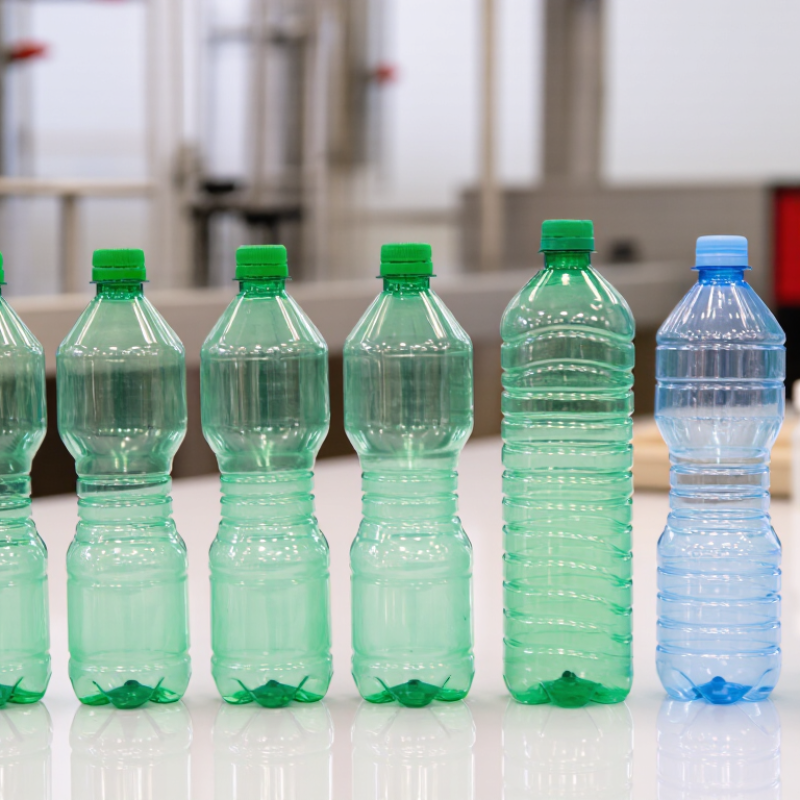
PET is the plastic commonly used for clear drink bottles. It is lightweight, shatter-resistant, and easy to shape, but it comes from virgin material unless recycled content is added. rPET means recycled PET. It may be made from collected bottles, processed flakes, or pellets. Post-consumer resin, or PCR, describes material recovered after people have used and discarded a product. PCR is a source category, not a separate plastic type; it can include PET and other polymers.
The terms can get muddled. Ask a supplier what share of the bottle is rPET, where the feedstock comes from, and whether the percentage is verified for each batch. Then inspect a sample under ordinary lighting. A faint tint, tiny specks, or a different feel may appear, depending on the feedstock and processing. Small details matter. Also test the bottle with your intended contents and filling conditions. Recycled resin can vary, and a sample alone cannot prove every production run will behave the same way. I would want clear batch records and practical test results before comparing prices. That is not glamorous, but it catches avoidable surprises.
| Topic | PET | rPET | Post-Consumer Resin (PCR) | What Buyers Should Check |
|---|---|---|---|---|
| Meaning | Polyethylene terephthalate, a thermoplastic commonly used for beverage and food packaging. | Recycled PET made from recovered PET material and processed into resin or packaging. | Plastic resin made from products collected after consumer use; it can include recycled PET and other polymer types. | Confirm the polymer type and whether the quoted content is post-consumer, post-industrial, or a blend. |
| Typical bottle applications | Water, soft-drink, food, and personal-care bottles. | New bottles, fiber, sheet, and other products, depending on resin quality and applicable requirements. | Packaging and products made from the relevant recycled polymer; suitability depends on material quality and intended use. | Match the material and bottle design to the product, filling process, shelf life, and end-use requirements. |
| Material identification | PET is commonly identified by resin identification code 1. | Still PET; “r” indicates recycled content rather than a different polymer family. | PCR describes the resin’s source, not a single polymer. Ask whether it is PET, HDPE, or another material. | Request a clear material specification and avoid treating “PCR” alone as a complete resin description. |
| How it is made | Usually produced from virgin PET resin through melting and bottle-forming processes such as injection stretch blow molding. | Often made by collecting, sorting, washing, and reprocessing PET. Mechanical recycling is widely used; other processes may also be available. | Collected consumer products are sorted and processed into resin; processes vary by polymer and recycling system. | Ask for a process overview, material traceability information, and the basis used to calculate recycled content. |
| Appearance and consistency | Color and clarity can be controlled through resin selection and bottle design. | Color, clarity, and physical properties can vary with feedstock, sorting, processing, and blend ratio. | Consistency depends on the source material, polymer separation, and quality controls. | Agree on color, clarity, odor, dimensions, and acceptable variation using samples and written specifications. |
| Food-contact use | Food-contact use is subject to the rules that apply in the destination market and to the specific resin and manufacturing conditions. | Recycled content is not automatically approved for food contact. Eligibility depends on the recycling process, intended use, and applicable regulations. | PCR is not automatically suitable for food contact; requirements depend on the polymer, process, and jurisdiction. | Request relevant compliance documentation and verify the product’s intended use against destination-market requirements. |
| Recycled-content claim | Virgin PET contains no recycled content unless blended with recycled resin. | May contain a specified proportion of recycled PET; the percentage should be supported by appropriate records. | Can refer to a stated proportion of post-consumer material in a product or resin blend. | Specify the claimed percentage, whether it applies to the resin or finished bottle, and what evidence supports the claim. |
| Recyclability considerations | PET bottles are collected for recycling in many systems, but acceptance varies by local collection and sorting infrastructure. | Using rPET does not by itself guarantee that the finished bottle is recyclable in every local system. | Recyclability depends on polymer compatibility, colorants, labels, closures, and local recycling facilities. | Check destination-market collection guidance and consider bottle, label, closure, and color as a complete package. |
| Supplier evaluation | Compare resin grade, bottle performance, production capability, and quality-control procedures. | Also assess recycled-material sourcing, batch consistency, traceability, and any applicable recycled-content documentation. | Confirm polymer identity, post-consumer share, contamination controls, and supply consistency. | Request a specification sheet, representative samples, test data relevant to the application, and written quality requirements. |
Related Posts
-
What Is Recycled Wood and How Is It Used?
-

How to Source Recycled Plastic Bags in 2026
-

10 Essential Tips for Choosing Recycled Furniture for Your Home?
-
What is Recycled Plastic Products and Why Are They Important?
-
Top Recycled Plastic Products for Sustainable Sourcing in 2026?
-
10 Best Plastic Recycling Factories for Global Buyers